
Mexican 20 Pesos Banknote (1970): Value & Prices
Familia A · algodón
Period: México Contemporáneo
Design
Banxico
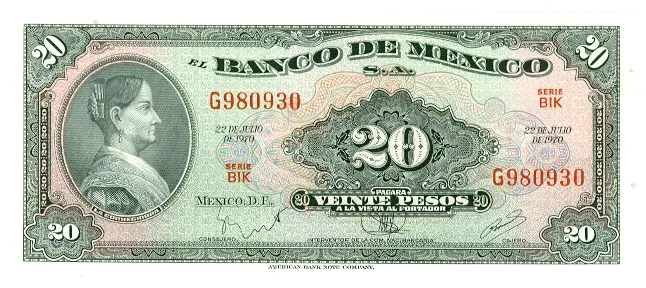
Obverse
Josefa Ortiz de Domínguez
Bust of Josefa Ortiz de Domínguez
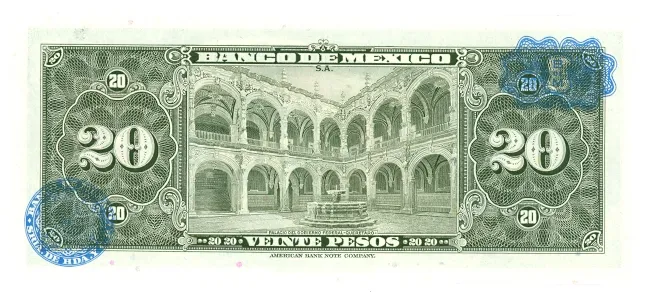
Reverse
The inner courtyard of a colonial building with arches and a fountain
About this banknote
Most 1970 Mexican 20 pesos notes are worth a few dollars in used condition, not the fortune some listings suggest. This is one of the most common banknotes Mexico printed in the 1970s. A crisp uncirculated example, or one with a special serial number or a printing error, is where the real money is.
This note belongs to the Banco de México Family A series, the group of banknotes issued through the late 1960s and 1970s. It features Josefa Ortiz de Domínguez, known in Mexican history as "la Corregidora," a heroine of the War of Independence. The back shows the interior courtyard of a colonial building, with arches and a fountain. Nearly every Mexican collector has owned one at some point: common, but a standard part of any Family A collection.
What a 1970 20 Pesos Note Is Worth in 2026
This note no longer circulates, so its value is collector value, not face value. For the vast majority of examples, that means anywhere from about 2 to 10 US dollars depending on condition. Circulated notes with folds, stains, or soft corners sit at the low end. What moves the needle:
- Grade (condition). A truly uncirculated note (no folds, no stains, sharp corners, original crispness) can bring several times what a used one does. This is the single biggest price driver.
- Serial number. Low serial numbers, radar/palindrome serials (reads the same forwards and backwards), and notes from the first series printed attract specialist buyers.
- Printing errors. Misaligned cuts, ink smears, factory folds, or off-center serials turn a common note into a genuine rarity worth many times face.
| Note | Series | Condition | Approx. value (USD) |
|---|---|---|---|
| 20 pesos, Josefa Ortiz de Domínguez | Family A | Circulated (folds, wear) | 2 to 10 |
| 20 pesos | Family A | Uncirculated, ordinary serial | 15 to 40 |
| 20 pesos | Family A | Uncirculated + special serial / error | Several times higher, case by case |
Be skeptical of inflated online asking prices. Most Family A notes are common and sell for a few dollars each. "Rare" listings are usually just optimistic sellers, not scarce notes. The exceptions are the specific variants above, and those need photos and a serial check to confirm.
The Ones People Think Are Worth a Fortune (But Aren't)
Age alone does not make this note valuable. A 1970 date sounds old, but Banco de México printed these in large quantities, and millions survive. A worn 20 pesos note with a normal serial is worth a few dollars, full stop. Normal wear, fading, or a small tear is damage, not a collectible "error." Save the premium expectations for uncirculated grade, special serials, and true factory errors.
How to Check What Yours Is Worth
Check three things:
- Condition. Look for folds, creases, stains, and corner wear. A note that has never been folded and stays crisp is worth pursuing.
- Serial number. Note whether it is low (lots of leading zeros), a palindrome, or from an early series.
- Errors. Compare the printing, cut alignment, and registration against a normal example.
For authenticity, examine the security features: hold the note to the light to check the watermark and security thread, look for microprinting, and feel for raised intaglio printing on the design. On older notes, compare the paper, colors, and signatures against official Banco de México reference images. Reproductions usually have smooth paper and flat, lifeless color. If anything looks off, post it in the forum for a second opinion.
To sell, use a verified numismatic dealer from the Pesoteca directory, which can appraise it on the spot, or the collector buy-and-sell forum. Photograph both sides in good light, and flag any low serial, palindrome, or error, since those raise the value. Skip dumping it to the first bidder on social media.
Not sure whether yours is genuine or a reprint? See Mexico's most counterfeited banknotes to get your bearings, then bring your note to the forum and let the community weigh in.
Historical context
The 20 pesos of 1970 again features Josefa Ortiz de Domínguez, this time in bust form. The Corregidora of Querétaro was a decisive link in the conspiracy of 1810: her warning to the insurgents, when the plan was about to be discovered, precipitated the start of the War of Independence. Her appearance on a denomination higher than the 5 pesos confirms the weight her figure carried in the civic imagination of the era.
The reverse shifts register from other pieces dedicated to her: it shows the interior courtyard of a colonial building, with arches and a fountain, an image of viceregal architecture that framed the provincial life of her time.
Like the rest of Family A, it is an "old peso" of the kind that circulated until the 1993 reform. In 1970 the twenty pesos still had real purchasing power; denominations in the thousands and tens of thousands would arrive only with the inflationary crisis of the 1980s.
Frequently asked questions
How much is the 1970 Mexican 20 pesos note worth?
Most circulated examples are worth about 2 to 10 US dollars as a collectible, since it no longer circulates and no longer has usable face value. An uncirculated note with sharp corners can bring several times that. A special serial number (low, palindrome, or first series) or a genuine printing error pushes it higher, case by case.
Is the 1970 20 pesos note rare?
No, it is one of the most common Banco de México Family A banknotes. Millions were printed and many survive. Age alone does not make it valuable. The exceptions are uncirculated notes, low or palindrome serial numbers, first-series examples, and factory printing errors, which are genuinely scarce.
Where can I sell a 1970 Mexican 20 pesos note?
The safest options are a [verified numismatic dealer from the Pesoteca directory](/tiendas), which can appraise it in person, or the [collector buy-and-sell forum](/foro/compra-venta). Photograph both sides in good light and note any low serial, palindrome, or printing error, since those raise the value. Avoid selling to the first bidder on social media.
How can I tell if the 1970 20 pesos note is genuine?
Check the security features: hold it to the light for the watermark and security thread, look for microprinting, and feel for the raised intaglio printing on the design. Compare the paper, colors, and signatures against official Banco de México images. Reproductions usually have smooth paper and flat color. When in doubt, post photos in the [forum](/foro).
Familia A
This banknote belongs to the BIL-A family within the Sistema PSM . Explore all the banknotes that share origin, era and design with this piece.
Ver todos los billetes de la familia A →