
Marketplace and guide 2026
Buy and sell Mexican coins · Guide 2026
How to sell your collection at the best price and where to buy authentic pieces. Marketplace, appraisals and tips for Mexican coin collectors.
Buying and selling Mexican coins is an active but fragmented market: specialized auctions, collector forums, brick-and-mortar shops and open-market platforms all coexist with different rules on price, commission and verification. This guide sums up how to move around it whether you want to buy authentic Mexican coins or sell a numismatic collection you inherited or built piece by piece.
We work with the same price ranges published in our Mexican coin value guide and connect the active listings from the Pesoteca community forum. The idea is that you arrive with a plan: that you know what you have, what it might be worth depending on grade, and which channel is best to sell or buy it. No promises of magic prices, no clickbait. Real value depends on the grade of preservation, on current demand and on the channel, and this text helps you read those three factors before you close the transaction.
For sellers
How do you sell your Mexican coins?
-
Identify what you have
Before asking for a price you need to know exactly what piece you have: exact year, denomination, mint and metal. Use the Pesoteca catalog search or cross-check the information against the Mexican coin price guide to confirm the type and rule out lookalike varieties.
-
Assess the grade of preservation
Grade sets the price. A heavily circulated piece (Fine, VF) can be worth 5 to 20 times less than the same piece uncirculated (MS). Compare your coin against reference photos and, for high-value pieces, consider sending it to NGC or PCGS for certification; the slab guarantees the grade and usually adds a premium.
-
Estimate the market value
Once identified and graded, place the piece in the Pesoteca price guide to get a realistic range between the floor (circulated piece) and the ceiling (uncirculated). Cross-check that range against recent auction results and collector marketplaces so you don't throw away the price or list off-market.
-
Choose the sales channel
For high-value pieces an auction house or an in-person specialist is best. For mid volume, the Pesoteca forum and collector marketplaces give you exposure to specialized buyers. For a quick sale, direct sales or general platforms (Mercado Libre, eBay) work, but they usually pay less than a numismatic channel.
-
Document and publish the listing
A good listing converts better: a natural-light photo of the obverse and reverse, the actual measured weight, a basic spec sheet (year, mint, denomination) and a justified price range. If the piece is certified, include the slab number so the buyer can verify it online against NGC or PCGS before transferring.
For buyers
Where to buy authentic Mexican coins?
Four channels with a different risk and price profile. Choose based on the value of the piece and your experience.
Community
Pesoteca forum
Listings from verified collectors with a photo, spec sheet and public reputation. A good middle ground between safety and price: there's room to negotiate and the seller stands behind their piece within the community.
See active listings →Auctions
Certified auctions
Greater safety for high-value pieces: the coin goes through professional cataloging and buyers compete in the open. The price is usually a premium and there's a commission, but traceability and authenticity are backed by the house.
See auctions →In person
Numismatic dealers
Brick-and-mortar shops with an in-person specialist. Recommended for gold pieces, colonial reales or premium bullion where you want to check the edge, weight and legend in hand before paying. The premium over the catalog price covers the appraisal.
Open market
Online secondary market
General platforms (Mercado Libre, eBay, Facebook groups). There are good prices but you need a critical eye: ask for a photo of the edge, the real weight and, for high-value pieces, demand a certified slab or an in-person transaction.
Active market
Top 8 most sought-after coins to sell
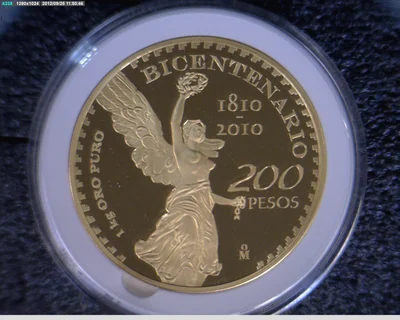
200 Pesos Bicentennial of Mexican Independence. 1 Kilo of Gold. Proof. Edge Legend: Independencia y libertad. Certificate No. 1 2010 Proof
2010 · Gold .999
MXN 2,399,764 to MXN 2,628,313
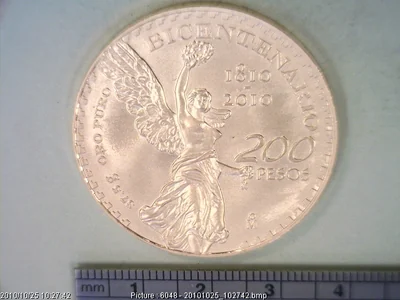
200 Pesos Gold · Bicentennial of Independence · 2010
2010 · Gold .999
MXN 100,070 to MXN 109,601
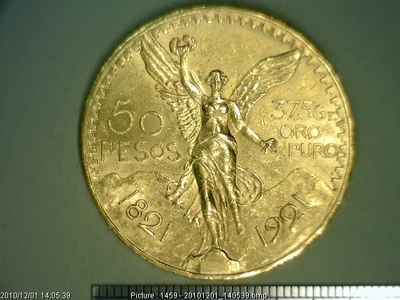
Centenario 50 Pesos Gold 1921
1921 · Gold .999
MXN 90,081 to MXN 98,660
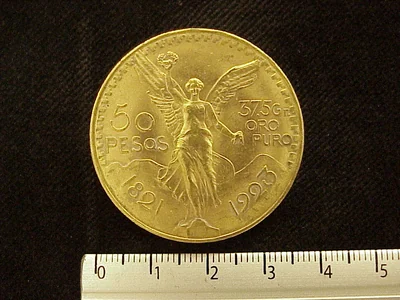
50 Pesos Oro Centenario 1923: Value & Gold Content
1923 · Gold .999
MXN 90,081 to MXN 98,660
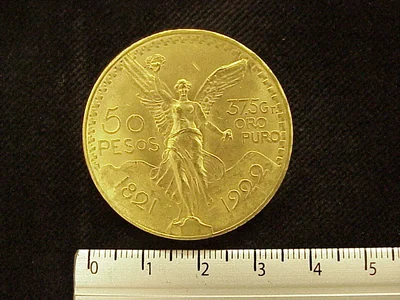
Centenario 50 Pesos Gold Coin (1922): Value & How to Sell
1922 · Gold .999
MXN 90,081 to MXN 98,660
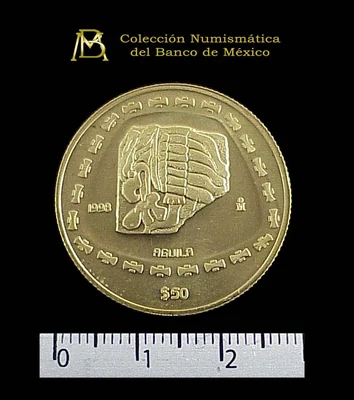
1998 Centenario 50 Pesos Gold Coin (Ángel)
1998 · Gold .999
MXN 90,081 to MXN 98,660
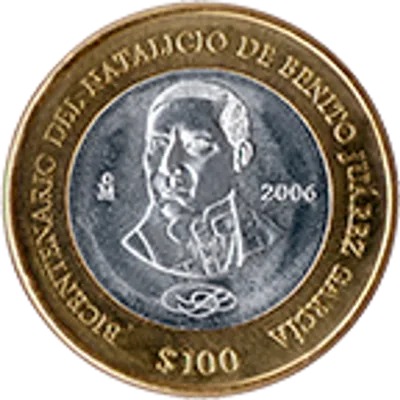
100 Pesos Gold Benito Juárez Bicentennial 2006
2006 · Gold .900
MXN 90,081 to MXN 98,660
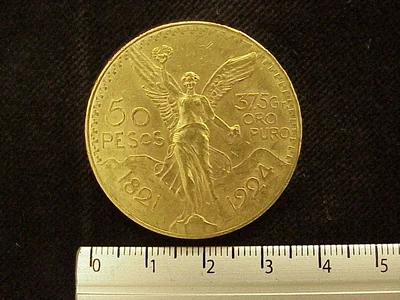
1924 Mexican 50 Pesos Gold Centenario: Value & Prices (2026)
1924 · Gold .999
MXN 90,081 to MXN 98,660
Reference ranges in Mexican pesos. The final price depends on the grade of preservation and the sales channel.
Anti-fraud
How to spot fake pieces
-
Weight and diameter out of spec
A precision scale and a caliper rule out 80% of counterfeits. The fake Onza Libertad guide lists the seven signs that tell an authentic piece from a common Chinese replica.
-
The sound when you drop it
Pure .999 silver gives off a clean, sustained ring when it falls on a hard surface. Cupronickel or low-alloy counterfeits sound dull and short. It's not conclusive proof, but it is a quick filter in hand.
-
A verifiable certified slab
Pieces certified by NGC or PCGS carry a slab number you can verify online against the certifier's database. If the slab exists but the record photo doesn't match the piece, walk away. If the seller refuses to share the number, walk away too.
Start now
Start buying or selling
Frequently asked questions about buying and selling Mexican coins
Where can I sell my Mexican coins?
The main options are the Pesoteca marketplace and collector forums, specialized auction houses (Morton, Daniel Sedwick, Heritage), certified numismatic specialists, brick-and-mortar shops in Mexico City and Guadalajara, and open-market platforms like Mercado Libre. For large collections it's worth getting a professional appraisal before listing piece by piece.
How much is my collection worth?
The value depends on the type of piece, the year, the mint and, above all, the grade of preservation. A collection of modern circulated coins may be worth a few hundred pesos per piece, while a Centenario in MS-65 or a certified colonial real can exceed 50,000 pesos. Start by identifying each piece in the catalog and cross-checking the range with the Pesoteca price guide.
What taxes do I pay when I sell gold or silver?
In Mexico, occasional sales of personal property between individuals below three times the annual minimum wage are exempt from income tax (ISR). Above that threshold, or if you sell habitually, you have to declare the profit as income. Auction houses usually withhold taxes. For high volumes, consult an accountant; this point is not tax advice.
How do I verify the authenticity of a Mexican coin?
Three quick filters: weight and diameter against the official spec sheet, the sound when you drop it on a hard surface (silver rings differently than cupronickel), and slab verification if it's certified by NGC or PCGS against the certifier's site. For high-value pieces, the serious route is an in-person specialist or sending it for certification.
Is it better to sell by the piece or as a lot?
Selling by the piece almost always gets a better total price, especially if there are scarce pieces mixed in with bullion. Selling as a lot is faster, but buyers apply a volume discount, especially when they can't inspect each piece. The exception is uniform bullion lots (Onza Libertad by year), where the price is tied to spot and there's not much room for cherry-picking.
When is the best time to sell silver?
For bullion pieces like the Onza Libertad, the price follows the silver spot plus a collector premium. Historically, silver moves in long cycles: rallies in years of inflation or crisis, and flat months in stable periods. For numismatic pieces with a high premium over the metal, spot matters less and collector demand rules, which tends to rise ahead of big auctions.
Does Pesoteca charge a commission on listings?
The basic listing on the forum is free for verified users. There are pro seller plans (premium marketplace) that offer better exposure, a verified-seller badge and inventory-management tools. Pesoteca does not act as a payment intermediary: the transaction is closed directly between buyer and seller.
Do you accept cash or bank transfer?
Transactions are arranged directly between the parties. The most common methods are interbank transfer (SPEI), cash on in-person delivery and bank deposit. We recommend avoiding advance payments to sellers with no public reputation and, for pieces above 20,000 pesos, using in-person delivery or an escrow service.