
100 Pesos Estado de México (2006): Silver-Center Coin Value
Prices updated: August 2026
Union of the States: State of Mexico, second stage.
Union of the States: State of Mexico, second stage.
Design
Banxico
Obverse
Union of the States: State of Mexico, second stage.
How much is the 100 Pesos Estado de México (2006): Silver-Center Coin Value worth?
The market value of the 100 Pesos Estado de México (2006): Silver-Center Coin Value is not yet documented with enough data to give a firm range. Weigh and measure your piece, compare it against the specifications, and check the forum for a second opinion.
The real price depends on four factors: the grade of preservation (a circulated piece is worth the low end of the range; an uncirculated one, or one still in its official blister pack, the high end), the finish (satin vs mirror/proof), the rarity within the series based on the mintage, and the metal spot price on the day of the deal when the piece is silver or gold. Check the value-by-grade table above and compare with equivalent pieces before buying or selling.
Where to buy or sell this coin?
Browse the national directory of numismatic shops or the community forum to trade directly with other collectors.
States of the Federation
The 64 pieces of the 180th Anniversary series
This coin is part of the series that dedicated one piece to each Mexican state. Two phases: Heraldic (2003) and Cultural (2005-2007).
Description
If you inherited or found a large, two-tone 100 pesos coin marked "Estado de México" dated 2006, here is the honest answer: it is not a fortune, but it is not junk either. The center is real .925 silver, so it has a floor value in metal. In 2026, circulated examples trade for roughly 10 to 30 USD, while certified high-grade pieces can reach 40 to 80 USD or more.
What you actually have
This is one of the 32-coin series the Bank of Mexico (Banxico) issued to honor each Mexican state. Yours belongs to the second phase of that program, the one that added a genuine silver core to raise the coin's real value. Each coin in this second series carries the same construction:
- Outer ring: silver-plated alpaca (a copper-nickel-zinc alloy), not precious metal.
- Center core: .925 sterling silver.
- Weight: 33.95 grams.
- Diameter: 39.06 mm.
- Edge: interrupted reeding.
- Year: 2006 only, single year of issue.
The reverse shows cultural motifs of the State of Mexico with the state coat of arms as the focal point. It is a big, heavy coin that feels substantial in hand, which is part of why collectors like the series.
Is it worth money?
The realistic value comes from three things: the silver content, the grade, and demand from people building the full 32-state set.
The silver center is small, so the melt value is modest, a few dollars, not the whole coin. What lifts the price is condition. The silver core tones and scratches easily, so an untouched example in high grade sells for meaningfully more than one that jingled around in a drawer or circulated.
| Coin | Year | Condition | Typical value (USD) |
|---|---|---|---|
| 100 Pesos Estado de México | 2006 | Circulated, worn | 10 to 30 |
| 100 Pesos Estado de México | 2006 | Uncirculated (UNC) | 30 to 50 |
| 100 Pesos Estado de México | 2006 | Certified MS-65+ (NGC/PCGS) | 50 to 80+ |
These are working ranges, not guaranteed sale prices. A single coin from a common modern series rarely breaks past that band unless it carries a verified mint error.
The myth to kill
Because the mintage figure for this specific issue is not published by Banxico, forums fill the gap with speculation. Do not read "unknown mintage" as "extremely rare and worth thousands." It usually means the coin was released in limited numismatic sets or a short run, not that it is a five-figure rarity. No confirmed record sale puts this piece anywhere near collector-legend territory. If you see a listing asking hundreds of dollars for a plain circulated example, that is wishful pricing, not market value.
How to tell if yours is genuine
Start with the numbers. A real one weighs 33.95 grams and measures 39.06 mm. If your coin misses those specs, you likely have a fake or a damaged piece. Genuine strikes have sharp, crisp relief; counterfeits and casts look flat and mushy. Compare the detail against official Banxico images.
For anything you think is high grade, third-party certification from NGC or PCGS settles the question. A slab confirms both authenticity and grade, which is exactly what a serious buyer wants to see.
About "error" coins
Genuine mint errors (off-center strikes, die rotation, doubled dies) can multiply a coin's value when they are real and verifiable. But most "errors" people post online are post-mint damage: dings, corrosion, scratches. That adds nothing. If you think you have a true error, photograph it clearly and post it in the Pesoteca forum so the community can weigh in before you assume it is valuable.
Where to sell it
Your safest options, in order:
- A verified numismatic shop from the Pesoteca directory, which appraises it on the spot with no middleman markup.
- The Pesoteca buy-and-sell forum, where you deal directly with collectors who actually want the state series.
- General marketplaces, which can work but attract the most fakes, so buyers will demand edge and weight photos.
Before you list, photograph the obverse, reverse, and edge in good light, and note the weight. If you are selling as part of the full 32-state set, keep it together; complete sets sell for a premium over loose singles.
Have a full box of these state coins and want to know what the whole set is worth? Post your photos in the Pesoteca forum and get a straight answer from collectors who track this series.
Historical context
The entry dedicated to the State of Mexico came out in 2006 as the only piece of the Cultural phase that year, between the first wave of 2005 and the three late ones of 2007. Banxico called this second stage Motivos Emblematicos and replaced the state coat of arms with a specific cultural symbol.
The reverse of the piece shows the Pyramid of the Sun at Teotihuacan, the third largest pyramidal structure in Mesoamerica at 65 meters tall. Teotihuacan, the city of the gods in Nahuatl, reached an estimated population of 125,000 inhabitants between 100 BC and 650 AD according to INAH studies, making it the sixth largest metropolis of the ancient world. The Pyramid of the Sun aligns with the solar zenith passage on May 18 and July 25, and a ceremonial tunnel-cave runs beneath it. A UNESCO World Heritage Site since 1987.
State context: The State of Mexico was established on March 2, 1824. Its capital Toluca de Lerdo sits at 2,680 meters of altitude, the highest in the country among state capitals. It surrounds Mexico City and is the most populous entity in the Republic with more than 17 million inhabitants.
In the Mexican numismatic market the Cultural phase circulated less than the 2003 Coat of Arms and today is usually found in higher grades because it reached the street late. Banxico's official mintages for this piece are not always published in the Economic Information System, but the figure reported to circulation tends to be around 250,000 pieces per state in the Cultural phase. Always confirm against the catalog of the complete 100 pesos States series before closing a large purchase.
The sister 2003 Coat of Arms of the State of Mexico is part of the first phase of the series, with the official state coat of arms on the reverse. Hunting down both pieces completes the set dedicated to the State of Mexico.
This piece belongs to the era
Nuevos Pesos y actualidad →Explore all the Mexican coins of this era, their historical context and how they connect to the monetary system of the period.
Go deeper on this coin
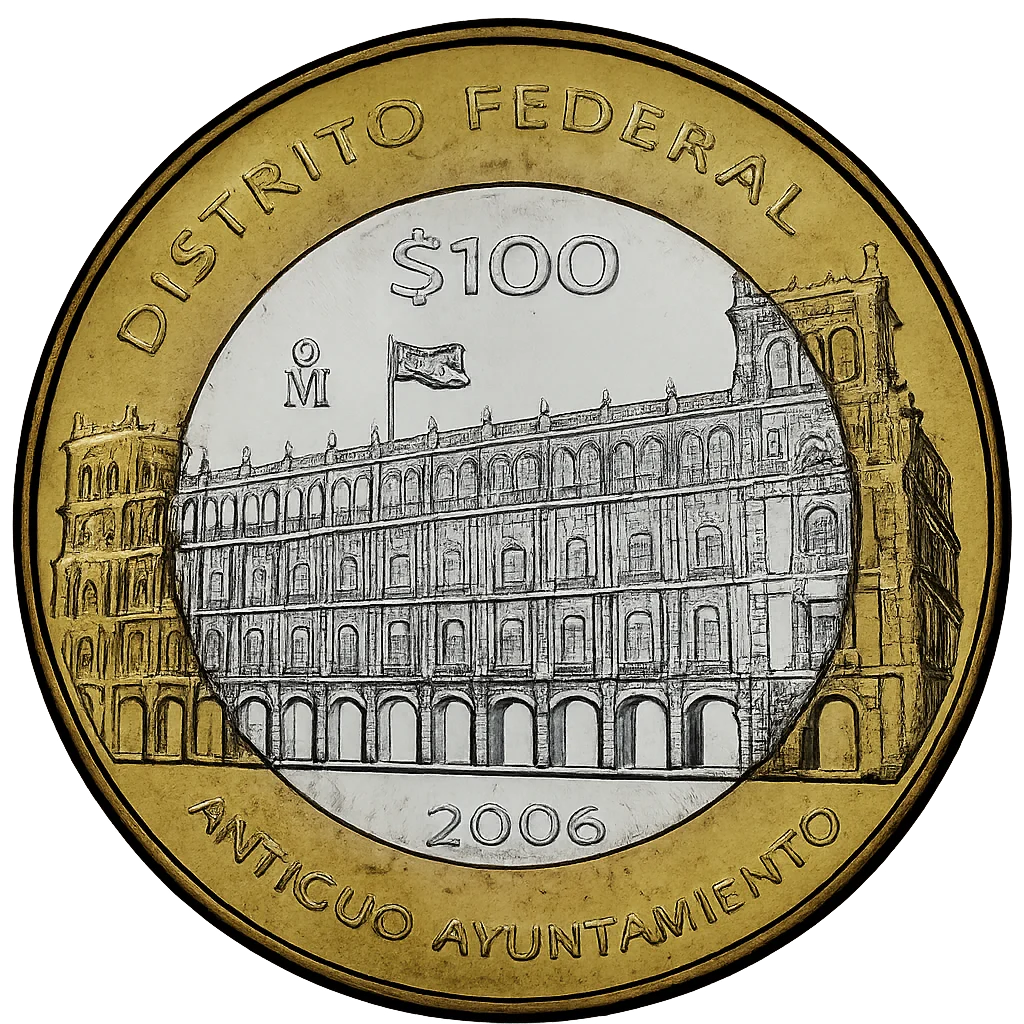
100 pesos de los Estados: la moneda de plata dedicada a tu estado (guía completa Escudo y Cultural)
Banxico acuñó una moneda de plata para cada uno de los 32 estados de México, y luego lo hizo dos veces. Aquí está la guía completa de las 100 pesos de los Estados: qué son, la diferencia entre la versión Escudo y la Cultural, por qué el centro de plata importa, cómo armar la colección y la lista de las 64 fichas para que caces la de tu tierra.
Read the full article →Value range of this piece
Value range without enough data for this piece.
See the full breakdown by grade (VG, F, VF, EF, AU, MS-60, MS-63, MS-65) for the whole series →
Same denomination, other years
100 pesos Bimetálica · 180 Aniversario de la Unión de los Estados en una Federación
Official sources
Frequently asked questions
How much is the 2006 100 Pesos Estado de México worth in USD?
It depends on grade. Circulated examples typically sell for 10 to 30 USD, uncirculated pieces for 30 to 50 USD, and certified MS-65 or higher can reach 50 to 80 USD or more. The .925 silver center gives it a small metal floor, but condition drives the price. For a precise figure, have your exact coin appraised by a verified numismatic shop.
Is the 2006 Estado de México 100 pesos rare?
Not especially. Banxico never published an official mintage for this issue, which some sellers spin as extreme rarity, but that usually just means a limited or short run, not a five-figure treasure. It was struck in 2006 only, so there are no year variants. Treat it as a collectible from a modern 32-state series, not a record-setting rarity.
How do I know if my coin is genuine?
Check the numbers first: a real one weighs 33.95 grams and measures 39.06 mm. If yours does not match, it is likely fake or damaged. Genuine coins have sharp, crisp relief; counterfeits look flat. Compare against official Banxico images, and for high-grade pieces, get it certified by NGC or PCGS for a definitive answer.
Where can I sell it?
Your safest bets are a verified numismatic shop from the Pesoteca directory, which appraises it on the spot, or the Pesoteca buy-and-sell forum where you deal directly with collectors. Photograph the obverse, reverse, and edge, and note the weight before listing. If you have the full 32-state set, keep it together for a premium.
Conversation
0 comments
Sources
Images for informational and educational purposes, attributed to their original source. Reference values; the real price depends on the grade, the specific variant and demand.
Loading comments…