
100 Pesos Sinaloa (2005): Silver-Center Coin Value
Prices updated: August 2026
Union of the States: Sinaloa, second cultural stage
Union of the States: Sinaloa, second cultural stage
Design
Banxico
Reverse
Second-phase reverse (emblematic motifs): a cluster of pitahayas with a larger image of a pitahaya in cross-section at the front, and the legend "LUGAR DE PITAHAYAS". This is the motif with which Banxico represented Sinaloa (decree of August 2, 2005). It is NOT the state coat of arms; that corresponds to the first, heraldic phase.
Obverse
Mexican National Coat of Arms with an eagle devouring a serpent on a nopal cactus. Shared obverse of the $100 States series.
How much is the 100 Pesos Sinaloa (2005): Silver-Center Coin Value worth?
The market value of the 100 Pesos Sinaloa (2005): Silver-Center Coin Value is not yet documented with enough data to give a firm range. Weigh and measure your piece, compare it against the specifications, and check the forum for a second opinion.
The real price depends on four factors: the grade of preservation (a circulated piece is worth the low end of the range; an uncirculated one, or one still in its official blister pack, the high end), the finish (satin vs mirror/proof), the rarity within the series based on the mintage, and the metal spot price on the day of the deal when the piece is silver or gold. Check the value-by-grade table above and compare with equivalent pieces before buying or selling.
Where to buy or sell this coin?
Browse the national directory of numismatic shops or the community forum to trade directly with other collectors.
States of the Federation
The 64 pieces of the 180th Anniversary series
This coin is part of the series that dedicated one piece to each Mexican state. Two phases: Heraldic (2003) and Cultural (2005-2007).
Description
If you found a Mexican 100 pesos coin with a two-tone look and a cluster of cactus fruit on the back, here is the honest answer: as a single coin it is worth about 25 to 35 US dollars in good condition, and its floor is the silver in the center, exactly half a troy ounce. The real money is in the complete 32-state album, not the single piece.
This is the Sinaloa 100 pesos from the second phase of Mexico's state coin series, the "emblematic motifs" run issued from 2005 to 2007. Mexico's central bank (Banxico) released a 100-peso bimetallic coin for each of the 32 states. The front carries the National Coat of Arms shared across the whole series. The back shows a cluster of pitahayas (dragon fruit) with one sliced open in the foreground and the legend "LUGAR DE PITAHAYAS" (Land of Pitahayas), the design Banxico chose for Sinaloa under the decree published on August 2, 2005.
What it's actually worth in 2026
As a loose coin, market catalogs (Coins & Prices) put it around 25 to 35 US dollars in good grade. That is not a fortune, and it will not become one. The series was minted in large numbers and genuinely circulated, so a single Sinaloa piece is not rare.
The hard floor under that value is the silver. The center disc holds 15.552 grams of pure silver, which is exactly half a troy ounce (Banxico's official spec). Whatever the numismatic market does, the coin is worth at least its melt value, and that half ounce alone is worth roughly 700 to 850 pesos when silver trades between 1,400 and 1,700 pesos per troy ounce. In US terms that is on the order of 15 to 18 dollars in metal, before any collector premium.
| Item | Detail |
|---|---|
| Coin | 100 Pesos Sinaloa, 2nd phase (pitahayas) |
| Year | 2005 |
| Loose coin value | 25 to 35 USD in good grade |
| Silver content | 15.552 g pure silver (half troy ounce), center only |
| Total weight | 33.94 g |
| Diameter | 39 mm |
| Composition | Silver .925 center, aluminum-bronze ring |
Is it silver? Yes, but only the center
This is a bimetallic coin. The inner disc is .925 sterling silver; the outer ring is aluminum-bronze, not silver and not gold. So when someone asks "is this a silver coin," the accurate answer is that half of it is silver and the ring is base metal. The full coin weighs 33.94 grams, but only the 15.552-gram center is precious metal.
That matters if you have a stack of these: you are holding roughly half a troy ounce of silver per coin, plus a modest collector premium, not a full ounce.
The 2004 vs 2005 Sinaloa: know which one you have
There are two different Sinaloa 100-peso coins, and they are easy to mix up.
- First phase (heraldic, 2003 to 2004): the back shows the Sinaloa state coat of arms.
- Second phase (emblematic motifs, this 2005 coin): the back shows the pitahayas with the "LUGAR DE PITAHAYAS" legend.
Same bimetallic format, same 39 mm size, same silver content. Only the reverse design changes. If your coin has the cactus fruit, it is the second phase.
The real value: the complete 32-state set
A single coin trades close to its silver plus a small premium. A complete album of all 32 states in good condition sells well above the sum of the individual coins. That is where collector demand concentrates. If you plan to hold or build a collection, the goal is completing the full 100 pesos state series, not chasing one piece.
How to tell if yours is genuine
Check the physical specs against Banxico's numbers:
- Weight: 33.94 g.
- Diameter: 39 mm.
- Edge: discontinuous reeding (segmented milling on the rim).
- The silver center should feel and sound different from the ring, and it should not stick to a magnet.
- Confirm the reverse matches the real design (pitahayas, not the state coat of arms) and compare against Banxico's official photos.
If the weight is off, the center is magnetic, or the design does not match the year, treat it as suspect.
Where to sell it
Use the store directory to find coin dealers that handle the state series. Before you sell, know the true grade of your coin: a loose piece pays close to its silver content plus a premium, while the strong price goes to a complete, well-preserved 32-state album. This coin belongs to the nuevos pesos era of modern Mexican currency.
Have a single Sinaloa piece, or are you trying to finish the whole 32-state set? Post your coin in the Pesoteca forum and we'll help you figure out its grade and what it should sell for.
Historical context
The record dedicated to Sinaloa belongs to the first wave of the Cultural phase, issued in 2005 along with most of the set. Banxico called this second stage Emblematic Motifs and replaced the state coat of arms with a specific cultural symbol.
The reverse of the piece shows the mule deer (Odocoileus hemionus) characteristic of the Sinaloan sierra, a totemic animal of the Yoreme-Mayo and Yoreme-Yaqui peoples. The mule deer inhabits the Pacific slope of the Sierra Madre Occidental and appears in the deer dance, a Yoreme ritual in which the dancer imitates the hunted animal. A deer head with antlers is worn as a headdress, and the choreography mimics the gallop, the leap, and the death of the deer under the pursuit of the pascola. Documented by INAH since the early 20th century.
State context: Sinaloa was established as a state on October 14, 1830. Its capital, Culiacán Rosales, is an agricultural powerhouse thanks to the Sinaloa River valley. Mazatlán is the main tourist port of the northwestern Pacific, founded in 1531 and with a carnival recognized since 1848.
In the Mexican numismatic market the Cultural phase circulated less than the 2003 Coat of Arms phase, and today it is usually found in higher grades because it reached the streets late. Banxico's official mintages for this piece are not always published in the Economic Information System, but the figure reported to circulation tends to be around 250,000 pieces per state in the Cultural phase. Always confirm against the catalog of the full 100 pesos States series before closing a large purchase.
The 2003 Coat of Arms sibling for Sinaloa is part of the first phase of the series, with the state's official coat of arms on the reverse. Hunting both pieces completes the set dedicated to Sinaloa.
This piece belongs to the era
Nuevos Pesos y actualidad →Explore all the Mexican coins of this era, their historical context and how they connect to the monetary system of the period.
Go deeper on this coin
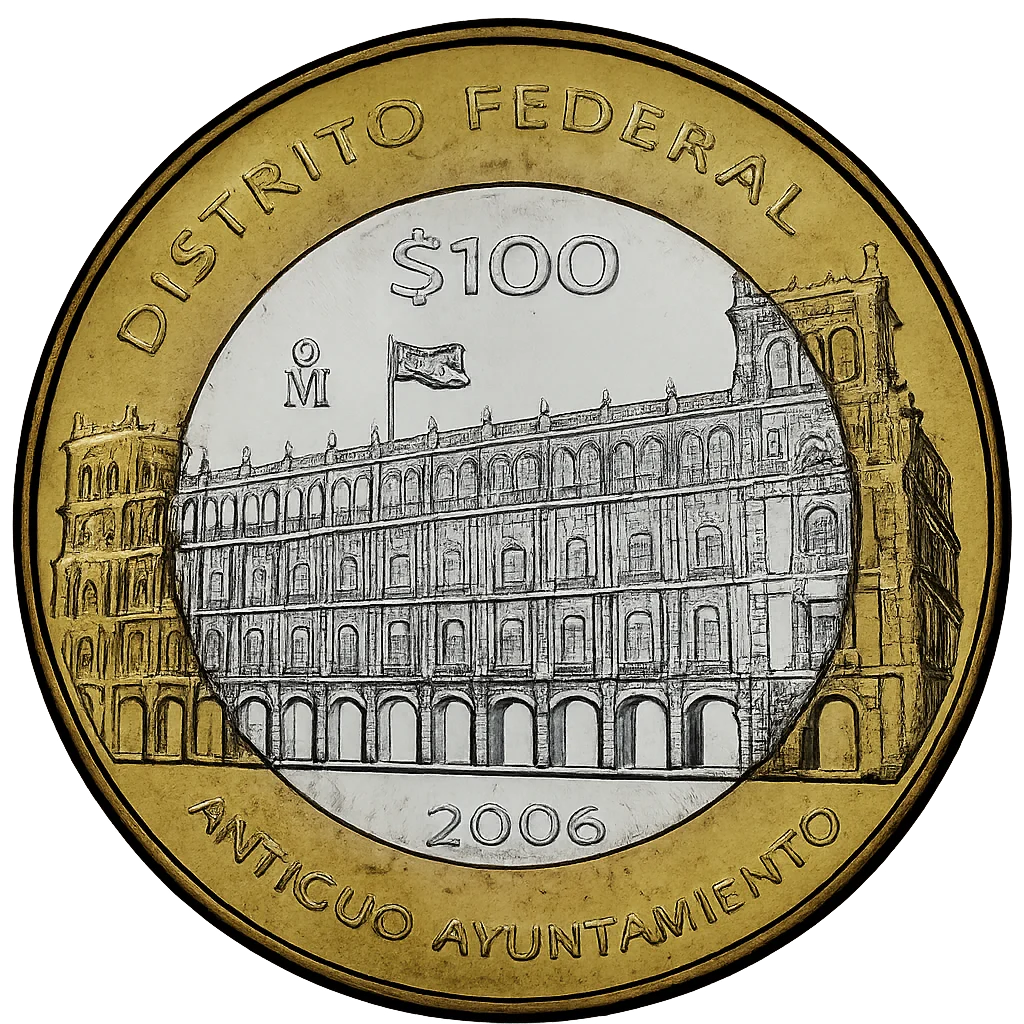
100 pesos de los Estados: la moneda de plata dedicada a tu estado (guía completa Escudo y Cultural)
Banxico acuñó una moneda de plata para cada uno de los 32 estados de México, y luego lo hizo dos veces. Aquí está la guía completa de las 100 pesos de los Estados: qué son, la diferencia entre la versión Escudo y la Cultural, por qué el centro de plata importa, cómo armar la colección y la lista de las 64 fichas para que caces la de tu tierra.
Read the full article →Value range of this piece
Value range without enough data for this piece.
See the full breakdown by grade (VG, F, VF, EF, AU, MS-60, MS-63, MS-65) for the whole series →
Other denominations from 2005
180 Aniversario de la Unión de los Estados en una Federación · Bimetálica
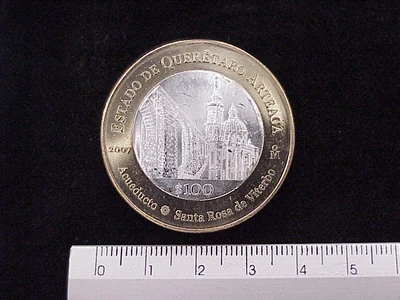
Same denomination, other years
100 pesos Bimetálica · 180 Aniversario de la Unión de los Estados en una Federación
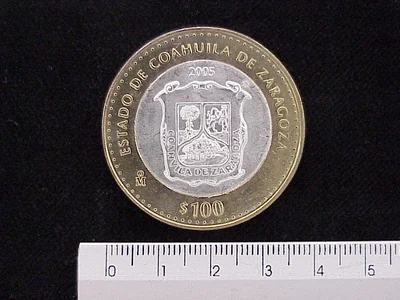
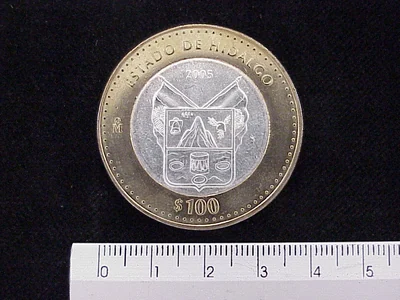
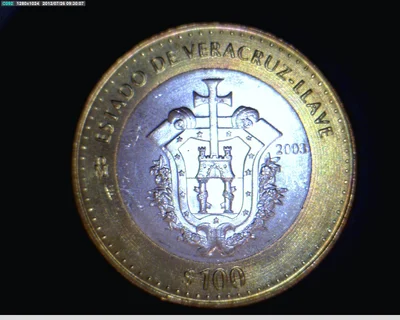
Frequently asked questions
How much is the 2005 Sinaloa 100 pesos coin worth?
As a single coin in good condition, market catalogs (Coins & Prices) put it around 25 to 35 US dollars. Its floor is the silver: the center holds half a troy ounce, worth roughly 700 to 850 pesos in metal alone in {{AÑO}}. The real value is in a complete, well-preserved 32-state album.
Is this coin actually silver?
Partly. It is bimetallic: the center disc is .925 sterling silver and the outer ring is aluminum-bronze. Only the center is precious metal. It contains 15.552 grams of pure silver, exactly half a troy ounce, per Banxico's official specification.
How can I tell if it's genuine?
It should weigh 33.94 g, measure 39 mm, and have discontinuous reeding on the edge. The silver center should not stick to a magnet and feels different from the ring. Confirm the reverse shows the pitahayas with the LUGAR DE PITAHAYAS legend, not the state coat of arms, and compare to Banxico's official photos.
Where can I sell this coin?
Use the Pesoteca store directory to find numismatic dealers that handle the state series. Know your coin's real grade first: a loose piece pays close to its silver content plus a premium, while a complete 32-state album sells well above the sum of the individual coins.
Conversation
0 comments
Sources
Images for informational and educational purposes, attributed to their original source. Reference values; the real price depends on the grade, the specific variant and demand.
Loading comments…