
100 Pesos Herencia Numismática III (2013): Carlos y Juana 3 Reales Value
Prices updated: August 2026
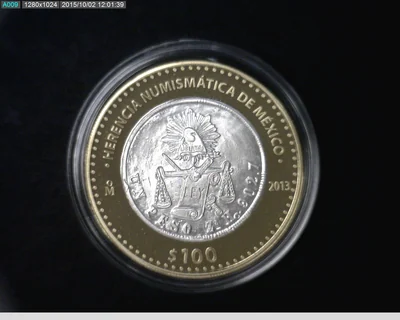
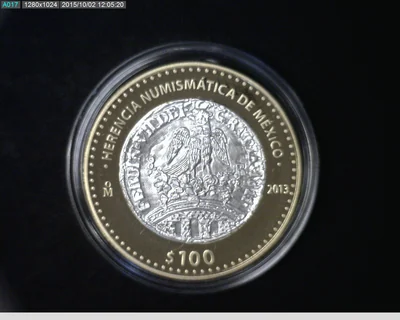
Reproduction of the 3 reales Charles and Joanna assayer R. Matte-brilliant finish.
Reproduction of the 3 reales Charles and Joanna assayer R. Matte-brilliant finish.
How much is the 100 Pesos Herencia Numismática III (2013): Carlos y Juana 3 Reales Value worth?
The market value of the 100 Pesos Herencia Numismática III (2013): Carlos y Juana 3 Reales Value is not yet documented with enough data to give a firm range. Weigh and measure your piece, compare it against the specifications, and check the forum for a second opinion.
The real price depends on four factors: the grade of preservation (a circulated piece is worth the low end of the range; an uncirculated one, or one still in its official blister pack, the high end), the finish (satin vs mirror/proof), the rarity within the series based on the mintage, and the metal spot price on the day of the deal when the piece is silver or gold. Check the value-by-grade table above and compare with equivalent pieces before buying or selling.
Where to buy or sell this coin?
Browse the national directory of numismatic shops or the community forum to trade directly with other collectors.
Description
If you inherited or picked up a 2013 Mexican 100 Pesos coin showing a design labeled "Carlos y Juana 3 Reales," here is the honest answer: this is a modern commemorative, not a rare antique, and its value is driven by condition and whether it still sits in the original Banxico blister pack. Most examples trade in the range of a few dollars to a few tens of dollars, with pristine sealed pieces bringing the most.
This coin belongs to the Herencia Numismática de México series ("Numismatic Heritage of Mexico"), a modern program from the Bank of Mexico (Banxico) that reissues designs inspired by historic pieces. This one reproduces the 3 reales of Carlos and Juana with the assayer mark R. It carries a matte-and-brilliant finish and was struck in 2013.
What it actually is
The "3 Reales Carlos y Juana" design references one of the earliest coin types struck in colonial Mexico under Carlos I and his mother Juana. But the piece you are holding was made in 2013, not in the 1500s. It is a legal-tender commemorative with a 100-peso face value, produced for collectors. That distinction matters: age here does not equal fortune. This is a recent mint product, and it is valued as such.
Specifications (keep these exact)
| Feature | Detail |
|---|---|
| Face value | 100 Pesos |
| Year | 2013 |
| Weight | 33.96 grams |
| Diameter | 39 mm |
| Composition | Bimetallic |
| Edge | Discontinuous reeded |
| Series | Herencia Numismática de México III |
| Finish | Matte-brilliant |
Note for US readers: despite the "silver" look many buyers expect from an old Mexican coin, this piece is bimetallic, not a solid precious-metal bullion coin. It does not carry a melt-value floor the way an Onza Libertad silver ounce or a gold Centenario does. Its worth comes from collector demand, not metal content.
What it's worth in USD
Because this is a modern commemorative with modest collector demand, expect a realistic range rather than a headline number:
- Circulated or loose, handled coin: a few US dollars over face value.
- Uncirculated, clean surfaces: roughly 10 to 30 US dollars depending on eye appeal.
- Still sealed in the original Banxico blister with certificate: the top of the range, since collectors pay a premium for untouched packaging.
Condition (what collectors call "grade") is the single biggest factor. Two identical coins can differ several times in price based on how well they were preserved. Use our coin grading guide to place yours before you buy or sell.
The myth to drop
Searches for "Carlos y Juana coin" turn up pages hinting at colonial fortunes worth thousands. A genuine 16th-century Carlos y Juana coin can indeed be valuable. A 2013 reproduction with a 100-peso face value is not that coin. If yours is dated 2013 and is bimetallic at 39 mm, you have the modern commemorative. Do not let a listing claiming "rare Spanish colonial silver" set your expectations.
How to tell if yours is genuine
- Weigh it. It should read 33.96 grams on a jewelry scale. A wrong weight is a red flag.
- Measure it. Diameter should be 39 mm with calipers.
- Check the edge. It should show discontinuous reeding.
- Inspect the relief. Genuine strikes have crisp detail; fakes often look flat, and the two metal tones should sit cleanly in their zones, not blurred or discolored.
Most "errors" people post online (dents, corrosion, scratches) are post-mint damage, not valuable mint errors. Real mint errors (off-center strikes, die rotation, doubling) can raise value, but they must be verified. If you think you have one, post clear photos in the Pesoteca forum and let the community weigh in.
Where to sell it
- A verified coin shop from the Pesoteca dealer directory will appraise it on the spot at fair market, no middleman markup.
- The Pesoteca buy-and-sell forum connects you directly with collectors who want this series.
- Photograph the obverse, reverse, and edge before you sell, and check the grade range above so you do not undersell.
Avoid dumping it to the first bidder on social media. A sealed blister piece in particular deserves a buyer who values the packaging.
Have a 2013 Carlos y Juana 100 Pesos sitting in a drawer, or unsure whether yours is sealed or circulated? Post your photos in the Pesoteca forum and get a straight read from people who handle this series.
Historical context
100 pesos silver Herencia Numismática de México series III, 2013, reproduction of the 3 reales Carlos y Juana, assayer R. A piece of the Banco de México Herencia project dedicated to the 3 reales struck under Carlos I and Juana I at the first Mint of Mexico between 1536 and 1555. It was one of the first official issues of the capital's mint after its founding in 1535 by Royal Decree. The assayer R appears recorded in the mint's administrative documentation as the technical signature of the initial workshop. The design shows the pillars of Hercules crowned with the band PLVS VLTRA on the obverse and the quartered shield with castles and lions on the reverse, early Habsburg iconography. Official weight of the Herencia reproduction near 31.10 grams with silver fineness 0.999. The matte-brilliant finish combines a satin field with mirror relief. Under the administration of the Banco de México led by Agustín Carstens. Series III included six pieces in 2013. Pieces collectible for reproducing in modern format the numismatic beginning of the Mint of Mexico, the first mint of continental America, founded in 1535.
This piece belongs to the era
Nuevos Pesos y actualidad →Explore all the Mexican coins of this era, their historical context and how they connect to the monetary system of the period.
Go deeper on this coin
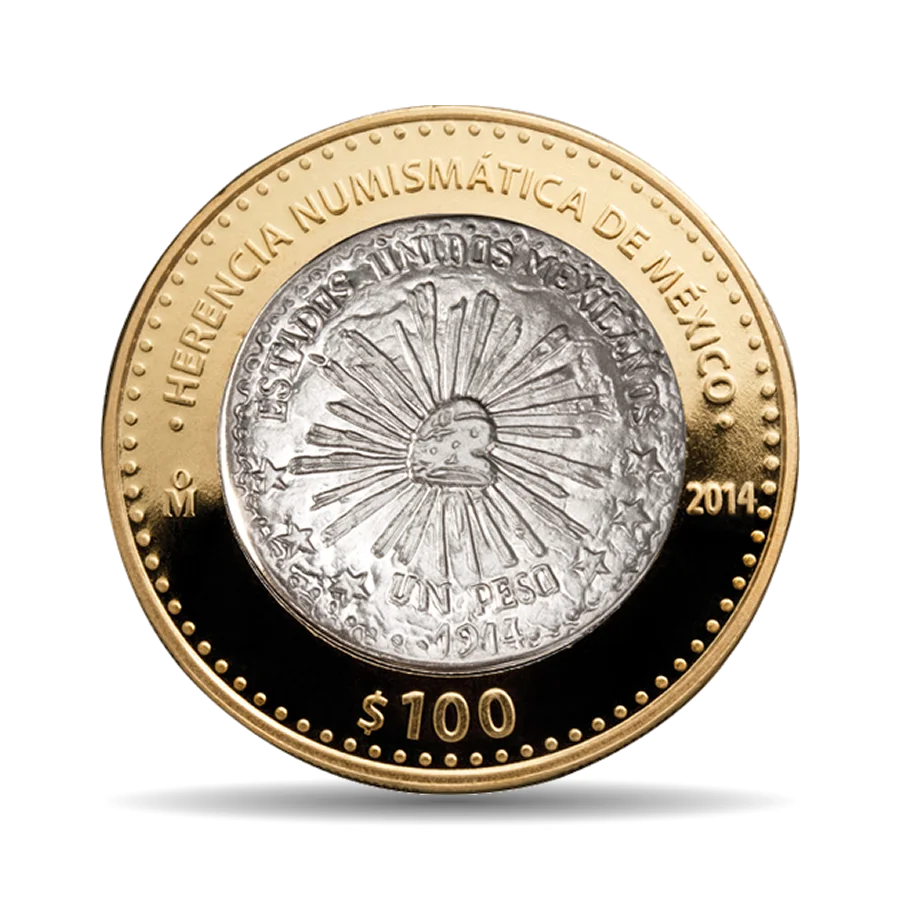
Herencia Numismática de México: la guía completa de la serie de 100 pesos de plata
La única serie mexicana de plata donde cada moneda reproduce otra moneda de nuestra historia: el Caballito, la Macuquina, el Columnario. Aquí te la explico completa, emisión por emisión, para que la caces sin que te vean la cara.
Read the full article →Value range of this piece
Value range without enough data for this piece.
See the full breakdown by grade (VG, F, VF, EF, AU, MS-60, MS-63, MS-65) for the whole series →
Other denominations from 2013
Herencia Numismática de México · Bimetálica
Same denomination, other years
100 pesos Bimetálica · Herencia Numismática de México
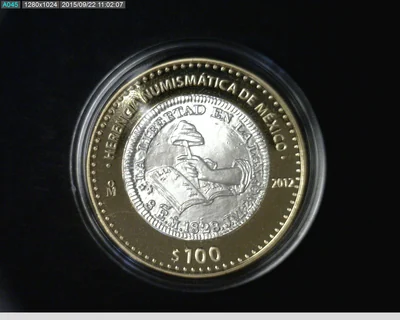
100 Pesos Herencia Numismatica II, Peso de Manita
2012
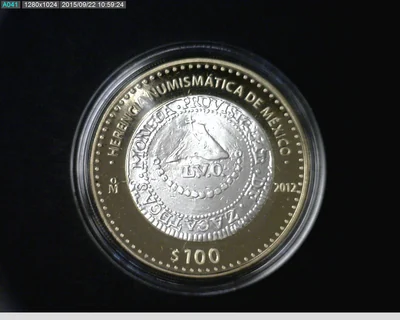
100 Pesos Herencia Numismática II, Zacatecas Tipo LVO
2012
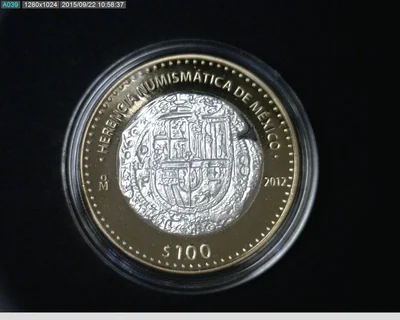
100 Pesos Herencia Numismatica II, Macuquina
2012
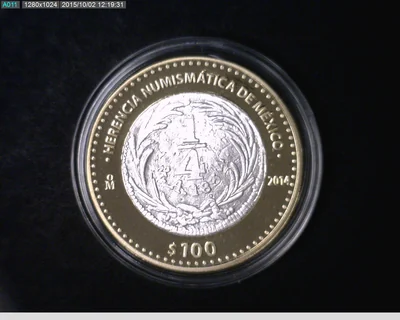
100 Pesos Herencia Numismática IV, Cuarto Republicano de Cobre
2014
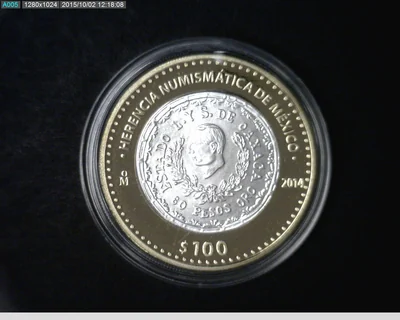
100 Pesos Herencia Numismática IV, 60 Pesos de Oaxaca
2014
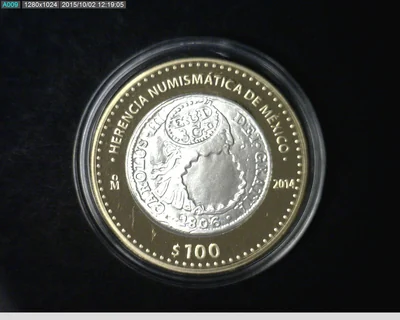
100 Pesos Herencia Numismática IV, Resello Guayana Inglesa
2014
Frequently asked questions
How much is the 2013 100 Pesos Carlos y Juana 3 Reales coin worth?
It is a modern commemorative, so figure a few US dollars over face for a handled coin, roughly 10 to 30 US dollars uncirculated, and the top of that range if it's still sealed in the original Banxico blister pack. Condition drives the price, so grade yours before selling.
Is the 2013 Carlos y Juana 100 Pesos coin rare or valuable?
No, it is not rare. It's a recent Bank of Mexico collector issue from the Herencia Numismática series, not the 16th-century colonial coin it depicts. Value comes from collector demand and packaging, not age or metal content. It is bimetallic, not solid silver or gold.
Where can I sell my 2013 100 Pesos Carlos y Juana coin?
The safest routes are a verified shop from the [Pesoteca dealer directory](/tiendas), which appraises it on the spot, or the [Pesoteca buy-and-sell forum](/foro/compra-venta) where collectors of this series look for it. Photograph the obverse, reverse, and edge first, and check the grade range before you accept an offer.
How do I tell if my Carlos y Juana 100 Pesos coin is genuine?
Weigh it (should be 33.96 grams) and measure the diameter (39 mm) with a jewelry scale and calipers. Check for discontinuous reeding on the edge and crisp relief with cleanly separated metal tones. Wrong weight, wrong size, flat detail, or blurred colors point to a fake.
Conversation
0 comments
Loading comments…