
100 Pesos Oaxaca (Cultural) 2005: Value & Where to Sell
Prices updated: August 2026
Union of the States: Oaxaca, second cultural stage
Union of the States: Oaxaca, second cultural stage
Design
Banxico
Reverse
Cultural motif representative of Oaxaca (architecture, fauna, flora, archaeological site, dance or traditional costume). Reverse of the second stage of the Union of the States series. Verify the exact design against the Banxico catalog before cataloging your piece.
Obverse
Mexican National Coat of Arms with the eagle devouring a serpent atop a nopal cactus. Shared obverse of the $100 States series.
How much is the 100 Pesos Oaxaca (Cultural) 2005: Value & Where to Sell worth?
The market value of the 100 Pesos Oaxaca (Cultural) 2005: Value & Where to Sell is not yet documented with enough data to give a firm range. Weigh and measure your piece, compare it against the specifications, and check the forum for a second opinion.
The real price depends on four factors: the grade of preservation (a circulated piece is worth the low end of the range; an uncirculated one, or one still in its official blister pack, the high end), the finish (satin vs mirror/proof), the rarity within the series based on the mintage, and the metal spot price on the day of the deal when the piece is silver or gold. Check the value-by-grade table above and compare with equivalent pieces before buying or selling.
Where to buy or sell this coin?
Browse the national directory of numismatic shops or the community forum to trade directly with other collectors.
States of the Federation
The 64 pieces of the 180th Anniversary series
This coin is part of the series that dedicated one piece to each Mexican state. Two phases: Heraldic (2003) and Cultural (2005-2007).
Description
If you inherited or found a heavy two-tone Mexican 100 Pesos coin dated 2005 with "Oaxaca" on it, here is the honest answer: it is worth more than face value, but not a fortune. Most examples trade between 15 and 40 USD in 2026, because the coin's silver center gives it a real floor. Sealed, high-grade examples with the original Banco de México packaging bring more.
What you actually have
This is part of a Mexican commemorative series honoring the country's 31 states plus Mexico City, issued under the theme "180th Anniversary of the Union of the States into a Federation." The Oaxaca coin belongs to the second, cultural phase of that series. Collectors in the US usually call these "Mexican state 100 peso coins."
The reason this coin matters is the metal. It is bimetallic: an outer ring of aluminum-bronze around a center made of .925 sterling silver. That silver core is what keeps the coin above face value no matter what. Even a worn example is worth its silver content, which sets a real floor under the price.
Value by condition (2026)
Condition drives everything here. A coin that circulated and got scratched is worth close to its silver melt. A pristine coin still in the sealed Banco de México blister pack is worth the most.
| Condition | What it looks like | Approximate value (USD) |
|---|---|---|
| Circulated | Handling marks, dull luster | 12 to 18 |
| Uncirculated (raw) | Full luster, no wear | 20 to 35 |
| Sealed in original blister | Factory packaging intact | 35 to 60 |
| Certified MS68+ (NGC/PCGS) | Graded, top pop | 60 to 150+ |
These are collector market ranges, not fixed prices. The exact figure depends on demand for the Oaxaca design specifically and on how many buyers are chasing the full state set at that moment.
Technical specs (check yours against these)
Use these numbers to confirm you have the genuine coin and not a fake or a different denomination:
- Weight: 33.94 grams
- Diameter: 39 mm
- Composition: bimetallic, .925 sterling silver center, aluminum-bronze ring
- Edge: interrupted reeding
- Year: 2005
- Obverse: the Mexican national coat of arms (eagle devouring a serpent on a cactus), shared across the whole state series
- Reverse: a cultural motif representing Oaxaca (architecture, a heritage site, regional dress, or local flora and fauna, depending on the exact design)
Is it rare?
Not in the strict sense. These were minted for collectors in the millions across the series, so surviving examples are common. What gives the coin value is the silver content and steady demand from people building the complete 32-piece state set. The Oaxaca piece is one of the more attractive designs, which helps it hold the upper end of the range.
Where real money shows up is in top-grade certified coins. An example graded MS68 or higher by NGC or PCGS is genuinely scarce and can bring several times the raw price. If yours looks flawless, having it graded may pay off.
The "error coin worth thousands" myth
You may have seen social media claims that these coins are worth thousands because of a mint error. Be skeptical. Genuine, verifiable striking errors (off-center strikes, die rotation, doubled dies) can multiply a coin's value, but almost everything people post online is post-mint damage: dings, corrosion, or scratches that happened after the coin left the mint. That kind of damage lowers value, it does not raise it. If you think you have a real error, get a second opinion before you believe a big number.
How to tell if yours is genuine
- Weigh it. A jewelry scale should read 33.94 grams. A significant difference is a red flag.
- Measure it. The diameter should be 39 mm. Use calipers if you have them.
- Check the relief and color. Genuine coins have sharp detail and a clean line between the silver center and the bronze ring. Fakes often show flat relief or messy, bleeding color.
- Look at the edge. It should show interrupted reeding, not smooth or fully continuous.
For a full condition walkthrough, see our Mexican coin grading guide.
Where to sell it
To sell the 2005 Oaxaca 100 Pesos, your safest option is a verified coin dealer from the Pesoteca shop directory, who can appraise it on the spot, or the Pesoteca buy-and-sell forum where collectors trade directly. Photograph the coin front, back, and edge, and compare against the ranges above before you accept an offer. Avoid dumping it on general marketplaces to the first buyer, where sterling silver coins routinely sell below their real value.
Collecting the full state series? The rest of the set lives on our 100 Pesos state coins series page.
Got the Oaxaca coin, or the whole set, and want a second opinion on grade before you sell? Post clear photos on the Pesoteca forum and let the community weigh in.
Historical context
The coin dedicated to Oaxaca belongs to the first wave of the Cultural phase, issued in 2005 along with most of the set. Banxico called this second stage Emblematic Motifs and replaced the state coat of arms with a specific cultural symbol.
The reverse of the piece shows the Stone of the Dancers of Monte Alban, Zapotec reliefs that originally formed part of the base of Building L. The Dancers are around 300 stone slabs carved between 500 and 200 BC that depict human bodies in contorted postures. Archaeologists today interpret them as sacrificed captives or leaders defeated in conquest, not as dancers. Monte Alban was the Zapotec capital from 500 BC to 850 AD and a UNESCO World Heritage Site since 1987.
State context: Oaxaca was established as a state on February 3, 1824. Its capital, Oaxaca de Juarez, is the birthplace of Benito Juarez and Porfirio Diaz, two decisive presidents of nineteenth-century Mexico. The insurgent Oa mint operated from 1811 to 1814, striking wartime 8 reales with improvised dies during the War of Independence.
In the Mexican numismatic market the Cultural phase circulated less than the Coat of Arms 2003 and today is usually found in higher grades because it reached the street late. Banxico's official mintages for this piece are not always published in the Economic Information System, but the figure reported for circulation tends to be around 250,000 pieces per state in the Cultural phase. Always confirm against the catalog of the complete 100 pesos States series before closing a large purchase.
The Coat of Arms 2003 sister of Oaxaca is part of the first phase of the series, with the state's official coat of arms on the reverse. Hunting down both pieces completes the set dedicated to Oaxaca.
This piece belongs to the era
Nuevos Pesos y actualidad →Explore all the Mexican coins of this era, their historical context and how they connect to the monetary system of the period.
Go deeper on this coin
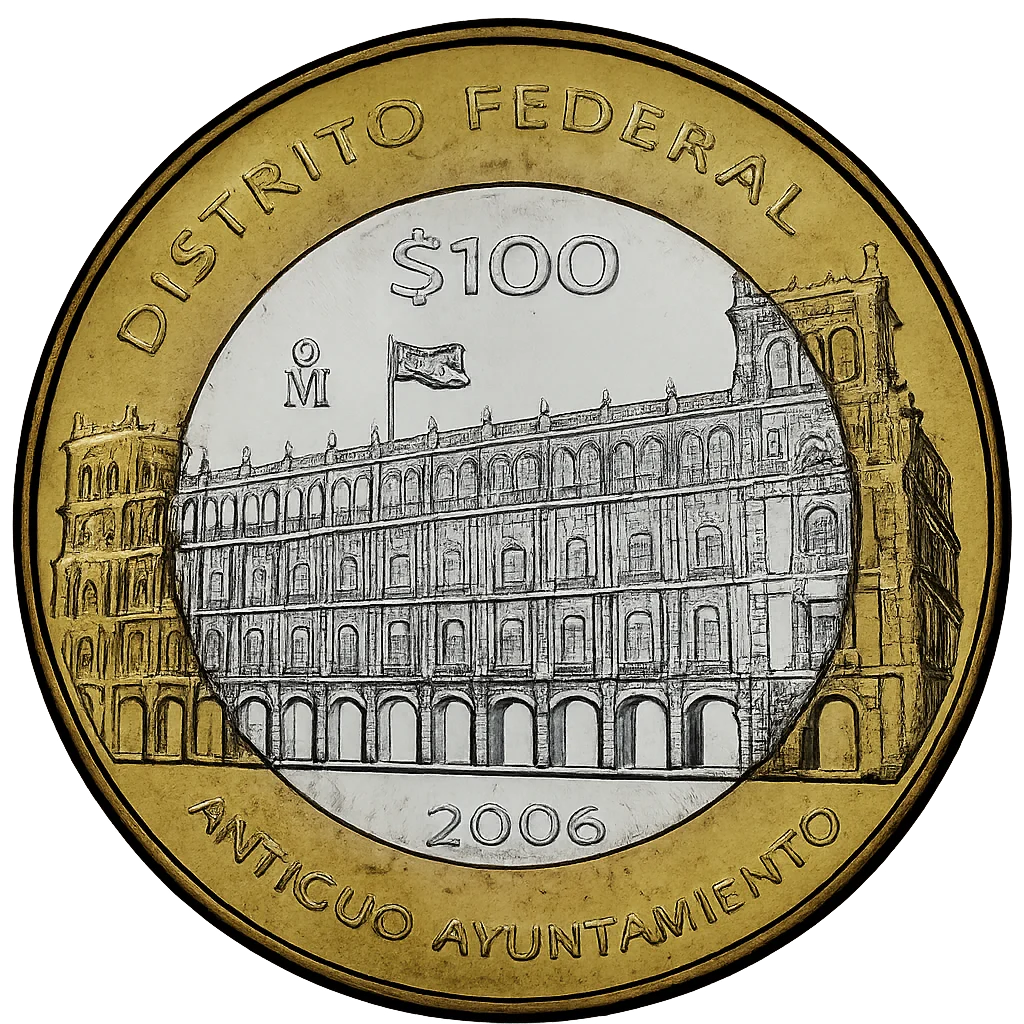
100 pesos de los Estados: la moneda de plata dedicada a tu estado (guía completa Escudo y Cultural)
Banxico acuñó una moneda de plata para cada uno de los 32 estados de México, y luego lo hizo dos veces. Aquí está la guía completa de las 100 pesos de los Estados: qué son, la diferencia entre la versión Escudo y la Cultural, por qué el centro de plata importa, cómo armar la colección y la lista de las 64 fichas para que caces la de tu tierra.
Read the full article →Value range of this piece
Value range without enough data for this piece.
See the full breakdown by grade (VG, F, VF, EF, AU, MS-60, MS-63, MS-65) for the whole series →
Other denominations from 2005
180 Aniversario de la Unión de los Estados en una Federación · Bimetálica
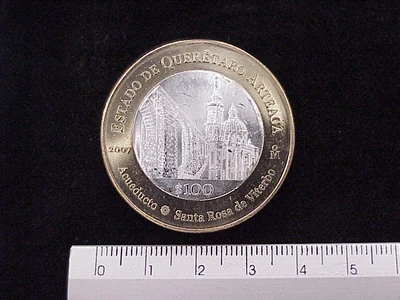
Same denomination, other years
100 pesos Bimetálica · 180 Aniversario de la Unión de los Estados en una Federación
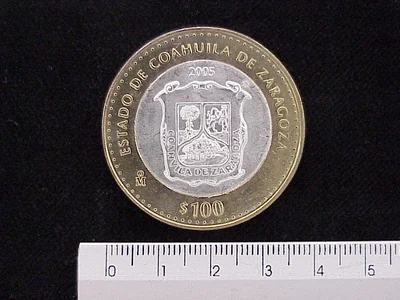
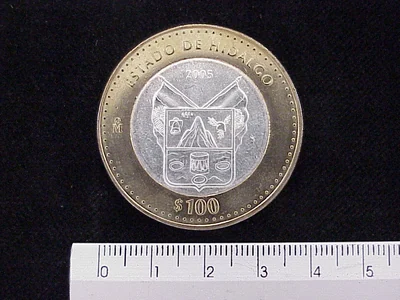
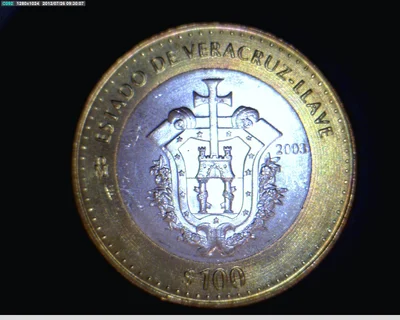
Frequently asked questions
How much is the 2005 100 Pesos Oaxaca coin worth?
Most circulated examples sell for 12 to 18 USD, and uncirculated ones for 20 to 35 USD. Coins still sealed in the original Banco de México blister can bring 35 to 60 USD, and top-grade certified examples (MS68 or higher) can exceed 150 USD. The silver center sets a floor, so it is always worth more than face value.
Is the 2005 100 Pesos Oaxaca coin rare?
Not really. It was minted in large numbers for collectors, so ordinary examples are common. Its value comes from the .925 sterling silver center and steady demand from people building the full 32-coin state set. Only pristine certified examples in top grades are genuinely scarce.
Where can I sell the 2005 100 Pesos Oaxaca coin?
The safest options are a verified dealer from the [Pesoteca shop directory](/tiendas), who can appraise it on the spot, or the [Pesoteca buy-and-sell forum](/foro/compra-venta) among collectors. Photograph the front, back, and edge and check the value ranges above before accepting any offer.
How do I know if my 2005 100 Pesos Oaxaca coin is genuine?
Weigh it (it should be 33.94 grams) and measure the diameter (39 mm) against the specs above. Genuine coins have sharp relief, a clean line between the silver center and bronze ring, and interrupted reeding on the edge. Fakes usually show wrong weight, flat relief, or bleeding color.
Conversation
0 comments
Sources
Images for informational and educational purposes, attributed to their original source. Reference values; the real price depends on the grade, the specific variant and demand.
Loading comments…