
100 Pesos Puebla (2005): What This Bimetallic Coin Is Worth
Prices updated: August 2026
Union of the States: Puebla, second cultural stage
Union of the States: Puebla, second cultural stage
Design
Banxico
Reverse
Cultural motif representative of Puebla (architecture, fauna, flora, archaeological site, dance, or traditional dress). Reverse of the second stage of the Union of the States series. Verify the exact design against the Banxico catalog before cataloging your piece.
Obverse
Mexican National Coat of Arms with an eagle devouring a serpent on a nopal cactus. Shared obverse of the $100 States series.
How much is the 100 Pesos Puebla (2005): What This Bimetallic Coin Is Worth worth?
The market value of the 100 Pesos Puebla (2005): What This Bimetallic Coin Is Worth is not yet documented with enough data to give a firm range. Weigh and measure your piece, compare it against the specifications, and check the forum for a second opinion.
The real price depends on four factors: the grade of preservation (a circulated piece is worth the low end of the range; an uncirculated one, or one still in its official blister pack, the high end), the finish (satin vs mirror/proof), the rarity within the series based on the mintage, and the metal spot price on the day of the deal when the piece is silver or gold. Check the value-by-grade table above and compare with equivalent pieces before buying or selling.
Where to buy or sell this coin?
Browse the national directory of numismatic shops or the community forum to trade directly with other collectors.
States of the Federation
The 64 pieces of the 180th Anniversary series
This coin is part of the series that dedicated one piece to each Mexican state. Two phases: Heraldic (2003) and Cultural (2005-2007).
Description
If you inherited or found a Mexican 100 pesos Puebla coin from 2005, here is the honest answer: in circulated or plain uncirculated condition, it is a modern collector coin, not a jackpot. The version that carries real value is the silver center proof/uncirculated piece sold by the Bank of Mexico. That is the coin worth chasing.
Most people find one of these in a drawer and assume any large, heavy, two-tone coin must be valuable. Some of these 100 pesos coins are, but only specific variants and only in top condition. Let's sort out which one you have.
What this coin actually is
The 100 Pesos Puebla belongs to a Mexican commemorative program marking the 180th anniversary of the union of the states into a federation. Each state in Mexico got its own reverse design, and Puebla was issued in the second, cultural phase of the series. The reverse shows a cultural motif tied to Puebla (architecture, a typical costume, flora or fauna, depending on the exact design), while the obverse carries the shared Mexican national coat of arms: the eagle devouring a serpent on a cactus.
Here is the part that matters for value. This denomination was struck in two very different forms:
- Bimetallic circulating/base version. An aluminum-bronze center surrounded by an outer ring, no precious metal. This is common and worth close to face value.
- Silver center version. The same design but with a 0.925 sterling silver core inside the bimetallic collar, sold by Banxico for collectors in a blister pack. This is the one with real upside.
If yours came in a sealed Bank of Mexico blister with a certificate, you likely have the silver-center collector piece. If you got it in change or loose in a coin jar, it is almost certainly the base version.
Specifications
| Spec | Detail |
|---|---|
| Denomination | 100 pesos |
| Year | 2005 |
| Weight | 33.94 grams |
| Diameter | 39 mm |
| Composition | Bimetallic (silver-center collector version has a 0.925 sterling core) |
| Edge | Discontinuous reeded |
| Series | Union of the States, cultural phase (Puebla) |
What it's worth in USD
Be realistic. The base bimetallic version trades for roughly 5 to 15 USD to a collector, and near face value otherwise. It is not rare.
The silver-center collector version is where the money is. These typically sell in the range of 20 to 60 USD depending on condition and whether the original Banxico blister and certificate are intact. Complete, high-grade examples with packaging bring the top of that range. Loose, handled coins bring the bottom.
Anyone telling you a single one of these 2005 pieces is worth thousands of dollars is repeating clickbait. The value driver here is the silver content plus collector demand for the complete state series, not scarcity or age. To see how condition changes the number, use our coin grading guide.
The myth to ignore
The common belief is "big two-tone Mexican coin, must be silver, must be valuable." Wrong on the first count for most examples. The everyday circulating version has no silver at all. The color contrast comes from two base metals, not silver and gold. Weigh and measure before you get excited, and check whether you have the blister-packed collector coin.
How to tell if yours is genuine
Counterfeits of modern Mexican commemoratives exist, though they are less common than fakes of older silver pesos. Do these checks:
- Weigh it. A genuine coin is 33.94 grams. A jeweler's scale settles most questions fast.
- Measure the diameter. It should be exactly 39 mm. Fakes often miss on size.
- Inspect the strike. Real coins have crisp, well-defined relief. Flat, mushy detail or uneven metal coloring between center and ring are red flags.
- Check the edge. It should show the discontinuous reeding described above.
Most "error coins" people post online are actually post-mint damage: scratches, corrosion, or wear, not factory mistakes. Genuine, verifiable mint errors (off-center strikes, die rotation, doubling) can raise value, but they are rare and need expert confirmation.
Where to sell it
- A verified coin shop from the Pesoteca dealer directory will appraise it on the spot, no middleman markup.
- The Pesoteca buy-and-sell forum puts you in front of collectors who actually want the complete state series.
Before you sell, photograph the obverse, reverse, and edge, note whether you have the original blister, and compare against the price ranges above. Don't dump it to the first Facebook offer.
Have the silver-center version or think you spotted a genuine mint error? Post clear photos in the Pesoteca forum and let collectors weigh in before you decide what it's worth.
Historical context
The record dedicated to Puebla belongs to the first wave of the Cultural phase, issued in 2005 along with most of the set. Banxico called this second stage Emblematic Motifs and replaced the state coat of arms with a specific cultural symbol.
The reverse of the piece shows the Great Pyramid of Cholula, or Tlachihualtépetl, the largest pyramidal structure in the world by volume, with a 400-meter base and 65 meters in height. The Pyramid of Cholula was built in stages between 200 B.C. and A.D. 800 by the Olmec-Xicallanca and later the Cholultecs. The Spanish took it for a natural hill and built the Sanctuary of Los Remedios at its summit in 1594, a syncretic practice documented by Bernardino de Sahagún. It has been an INAH Archaeological Zone since 1931.
State context: Puebla was established as a state on December 21, 1823. Its capital, Puebla de Zaragoza, has been a UNESCO World Heritage Site since 1987 for its viceregal historic center. Ignacio Zaragoza defeated the French army on May 5, 1862 at the forts of Loreto and Guadalupe.
In the Mexican numismatic market the Cultural phase circulated less than the 2003 Coat of Arms phase, and today it is usually found in higher grades because it reached the streets late. Banxico's official mintages for this piece are not always published in the Economic Information System, but the figure reported to circulation tends to be around 250,000 pieces per state in the Cultural phase. Always confirm against the catalog of the full 100 pesos States series before closing a large purchase.
The 2003 Coat of Arms sibling for Puebla is part of the first phase of the series, with the state's official coat of arms on the reverse. Hunting both pieces completes the set dedicated to Puebla.
This piece belongs to the era
Nuevos Pesos y actualidad →Explore all the Mexican coins of this era, their historical context and how they connect to the monetary system of the period.
Go deeper on this coin
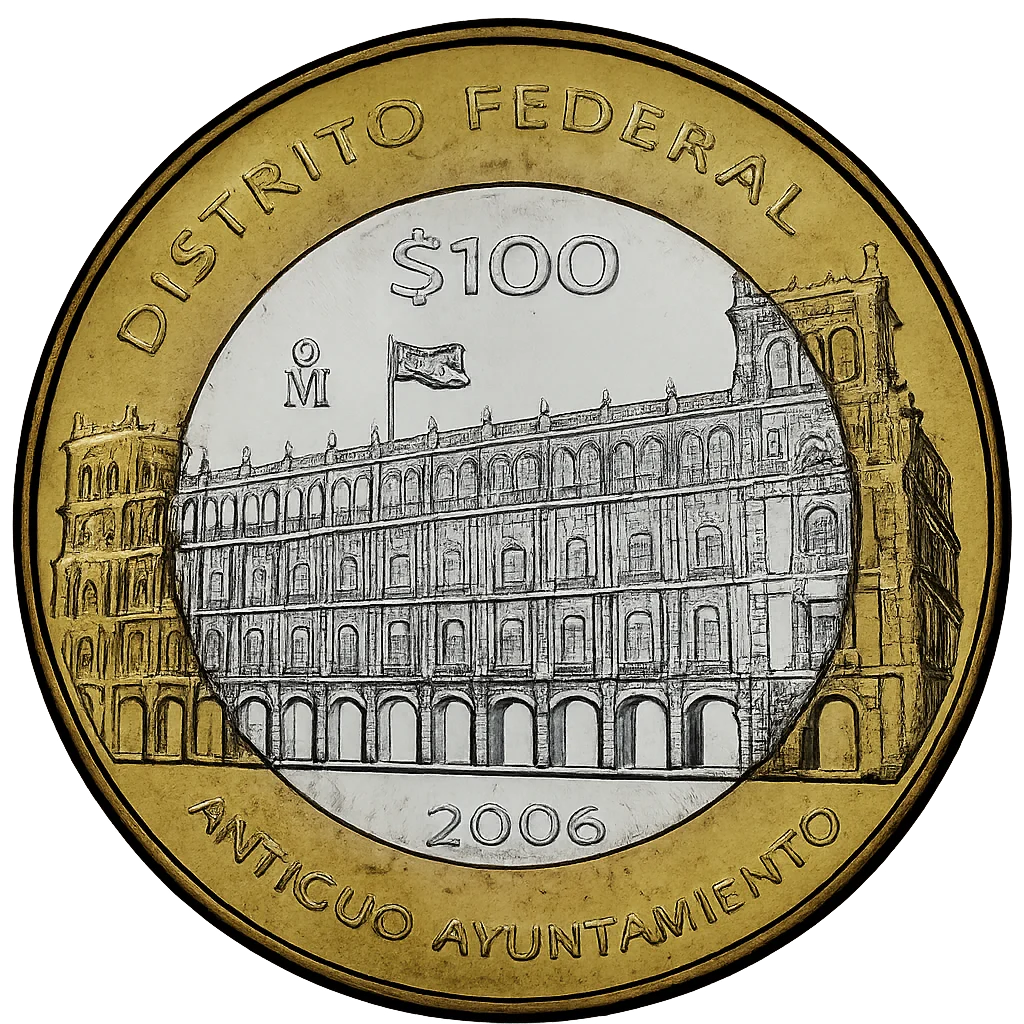
100 pesos de los Estados: la moneda de plata dedicada a tu estado (guía completa Escudo y Cultural)
Banxico acuñó una moneda de plata para cada uno de los 32 estados de México, y luego lo hizo dos veces. Aquí está la guía completa de las 100 pesos de los Estados: qué son, la diferencia entre la versión Escudo y la Cultural, por qué el centro de plata importa, cómo armar la colección y la lista de las 64 fichas para que caces la de tu tierra.
Read the full article →Value range of this piece
Value range without enough data for this piece.
See the full breakdown by grade (VG, F, VF, EF, AU, MS-60, MS-63, MS-65) for the whole series →
Other denominations from 2005
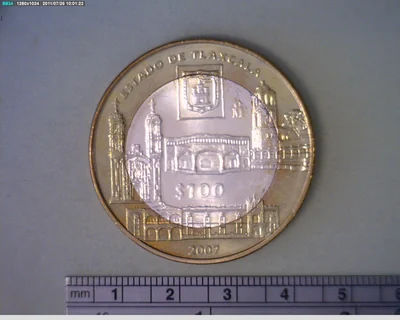
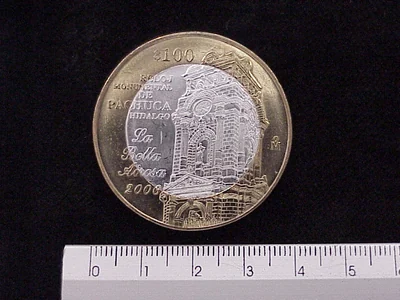
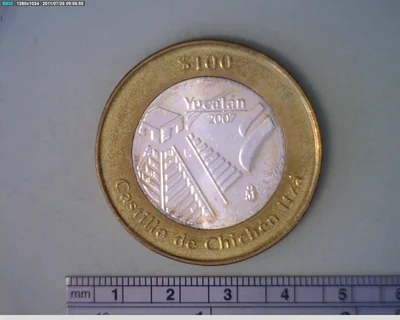
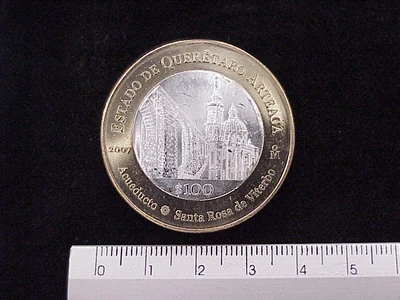
180 Aniversario de la Unión de los Estados en una Federación · Bimetálica
Same denomination, other years
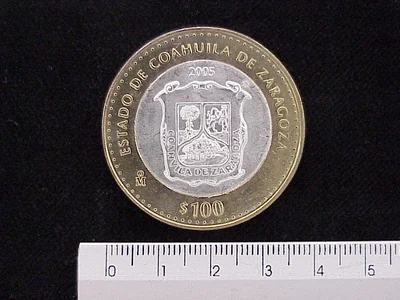
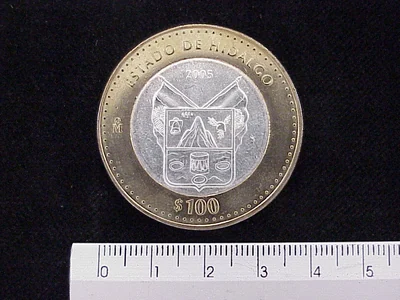
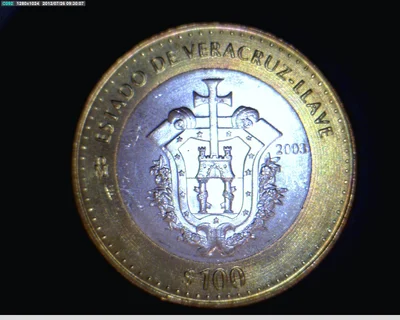
100 pesos Bimetálica · 180 Aniversario de la Unión de los Estados en una Federación
Frequently asked questions
How much is the 100 Pesos Puebla 2005 coin worth?
The base bimetallic version is worth roughly 5 to 15 USD to a collector, near face value otherwise. The silver-center collector version (0.925 sterling core, sold by Banxico in a blister pack) typically brings 20 to 60 USD depending on condition and whether the original packaging and certificate are intact.
Is the 100 Pesos Puebla 2005 coin rare?
No. The everyday bimetallic version is common and not scarce. The silver-center collector version is less common but still widely available among collectors. Its value comes from silver content and demand for the complete state series, not from rarity or age.
Where can I sell my 100 Pesos Puebla 2005 coin?
The safest options are a verified coin shop from the Pesoteca dealer directory, which appraises it on the spot, or the Pesoteca buy-and-sell forum, where collectors want the complete state series. Photograph the obverse, reverse, and edge, and note whether you have the original Banxico blister before you sell.
How can I tell if my 100 Pesos Puebla 2005 is genuine?
Weigh it (33.94 grams) and measure the diameter (39 mm) against the specs above. Counterfeits usually miss on weight or size, or show flat relief and uneven coloring between the center and outer ring. If you suspect a genuine mint error, post clear photos in the Pesoteca forum for review, since most 'errors' online are just post-mint damage.
Conversation
0 comments
Sources
Images for informational and educational purposes, attributed to their original source. Reference values; the real price depends on the grade, the specific variant and demand.
Loading comments…