
100 Pesos Tabasco (2007): Value & How to Sell
Prices updated: August 2026
Union of the States: Tabasco, second stage.
Union of the States: Tabasco, second stage.
Design
Banxico
Obverse
Union of the States: Tabasco, second stage.
How much is the 100 Pesos Tabasco (2007): Value & How to Sell worth?
The market value of the 100 Pesos Tabasco (2007): Value & How to Sell is not yet documented with enough data to give a firm range. Weigh and measure your piece, compare it against the specifications, and check the forum for a second opinion.
The real price depends on four factors: the grade of preservation (a circulated piece is worth the low end of the range; an uncirculated one, or one still in its official blister pack, the high end), the finish (satin vs mirror/proof), the rarity within the series based on the mintage, and the metal spot price on the day of the deal when the piece is silver or gold. Check the value-by-grade table above and compare with equivalent pieces before buying or selling.
Where to buy or sell this coin?
Browse the national directory of numismatic shops or the community forum to trade directly with other collectors.
States of the Federation
The 64 pieces of the 180th Anniversary series
This coin is part of the series that dedicated one piece to each Mexican state. Two phases: Heraldic (2003) and Cultural (2005-2007).
Description
If you found a large, heavy Mexican coin marked "100 Pesos" with the word Tabasco and a two-tone look, here is the honest answer: it is not a rare treasure, but it is not junk either. It contains real silver in the center, and that gives it a value floor. Circulated examples typically trade for 20 to 40 USD, with uncirculated pieces worth more.
What this coin actually is
The 100 Pesos Tabasco is part of a 32-coin series that Mexico's central bank (Banco de México, or Banxico) issued to honor each of the country's states. This one belongs to the second phase, often called the "cultural" series, which each state carries a design tied to its history or heritage. The Tabasco coin shows the famous Olmec colossal head, the ancient stone sculpture that region is known for. The other side carries the Mexican national coat of arms (an eagle on a cactus with a serpent).
It is a bimetallic coin, meaning two metals: an outer ring and a distinct center. On this series the center is .925 sterling silver, which is what gives the coin its weight and shine, and what sets a real minimum value regardless of collector demand.
Specifications (check yours against these)
| Feature | Value |
|---|---|
| Denomination | 100 Pesos |
| Year | 2007 (single year of issue) |
| Total weight | 33.94 g |
| Diameter | 39 mm |
| Center metal | .925 silver |
| Edge | Interrupted reeding |
| Series | States of Mexico, Second Phase (cultural) |
If your coin does not match the 33.94 g weight and 39 mm diameter, treat it as suspect. Counterfeits and altered pieces almost always miss these numbers.
How much is it worth in USD?
Value comes down to two things: the silver in the center and the condition of the coin.
- Circulated, with visible wear: roughly 20 to 40 USD. This is close to the silver floor plus a small collector premium.
- Uncirculated (BU) with clean fields and sharp relief: commonly 45 to 90 USD.
- Certified in top mint state (NGC or PCGS, MS-66 and up): can reach into the low hundreds when a strong-grade example meets a motivated buyer.
Do not expect thousands of dollars. This is a modern commemorative issue, not a scarce historic rarity. Its appeal is that it is part of a set, and it holds real silver. That combination gives it a steady, modest value rather than an explosive one.
Why collectors want it
The real driver is the set. Completing all 32 states is a classic goal for collectors of modern Mexican coinage, and Tabasco is one of the required pieces. A coin needed to finish a collection always has buyers, which keeps demand consistent even without high rarity. See our overview of the 100 Pesos States series for how the full set works and which coins in it command the most.
How to tell if yours is genuine
- Weigh it. A real one is 33.94 g. A digital kitchen scale accurate to 0.1 g will flag most fakes.
- Measure it. Diameter should be 39 mm.
- Look at the relief. Compare the Olmec head and lettering against official Banxico images. Counterfeits tend to look flat and mushy, with soft edges on the lettering.
- Check the center metal. The silver center should show a slightly different tone than the outer ring and take on a natural patina over time.
For anything you think might grade high, professional certification by NGC or PCGS is the definitive answer. Their sealed holders confirm authenticity and assign a grade that buyers trust. Learn more in our guide to coin grading and certification.
Where to sell it
- Verified numismatic dealers give you an on-the-spot appraisal and a fair offer without middleman markups. Use the Pesoteca dealer directory to find one by city.
- Collector marketplaces and forums often get you a better price because you are selling to someone who actually needs the coin for a set. Post it in the Pesoteca buy-and-sell forum.
- Online auction sites can work, but photograph the front, back, and edge clearly, and list the exact weight. These platforms also carry the most fakes, so honest documentation is what earns trust.
Before you sell, take clear photos of both faces and the edge, and compare your coin's condition against the value ranges above. Selling to the first buyer on social media almost always leaves money on the table.
Got one in a box of inherited coins and not sure what grade it is? Post photos of the front, back, and edge in the Pesoteca forum and let the community help you pin down its value.
Historical context
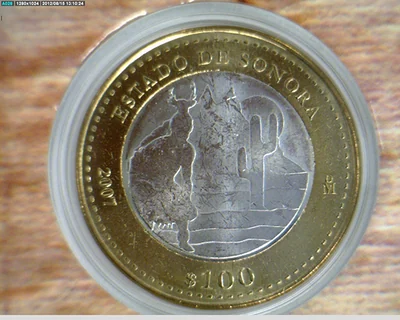
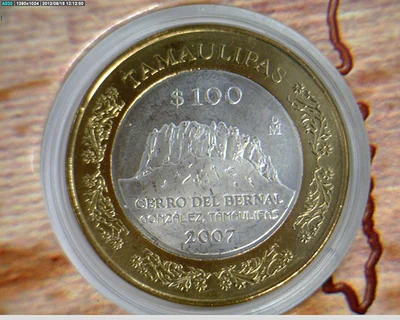
The piece dedicated to Tabasco came out in 2007 as part of the third and last wave of the Cultural phase, alongside Sonora and Tamaulipas. Banxico called this second stage "Motivos Emblemáticos" (Emblematic Motifs) and replaced the state coat of arms with a specific cultural symbol.
The reverse of the piece shows the colossal Olmec head from La Venta, a basaltic monolith 2.4 meters tall and 24 tons, carved around 800 BC. The colossal Olmec heads are the first monumental sculptural expression of Mesoamerica. Seventeen are known in total, four from La Venta, three from Tres Zapotes and ten from San Lorenzo. Each represents a ruler with a ball-game helmet and individualized features. The basaltic stone was transported more than 100 kilometers from the Tuxtlas, a logistical feat documented by Matthew Stirling in the 1938–1946 expeditions.
State background: Tabasco was established as a state on February 7, 1824. Its capital, Villahermosa, is home to the La Venta Park-Museum, where the Olmec heads rescued from the original archaeological zone —flooded by oil extraction— are preserved in the open air. The Olmec culture is regarded by Miguel Covarrubias as the mother culture of Mesoamerica.
In the Mexican numismatic market the Cultural phase circulated less than the 2003 Escudo and today is usually found in higher grades because it reached the streets late. Banxico's official mintages for this piece are not always published in the Economic Information System, but the figure reported to circulation tends to be around 250,000 pieces per state in the Cultural phase. Always confirm against the catalog of the complete 100-pesos States series before closing a large purchase.
The sister 2003 Escudo of Tabasco belongs to the first phase of the series, with the state's official coat of arms on the reverse. Hunting both pieces completes the set dedicated to Tabasco.
This piece belongs to the era
Nuevos Pesos y actualidad →Explore all the Mexican coins of this era, their historical context and how they connect to the monetary system of the period.
Go deeper on this coin
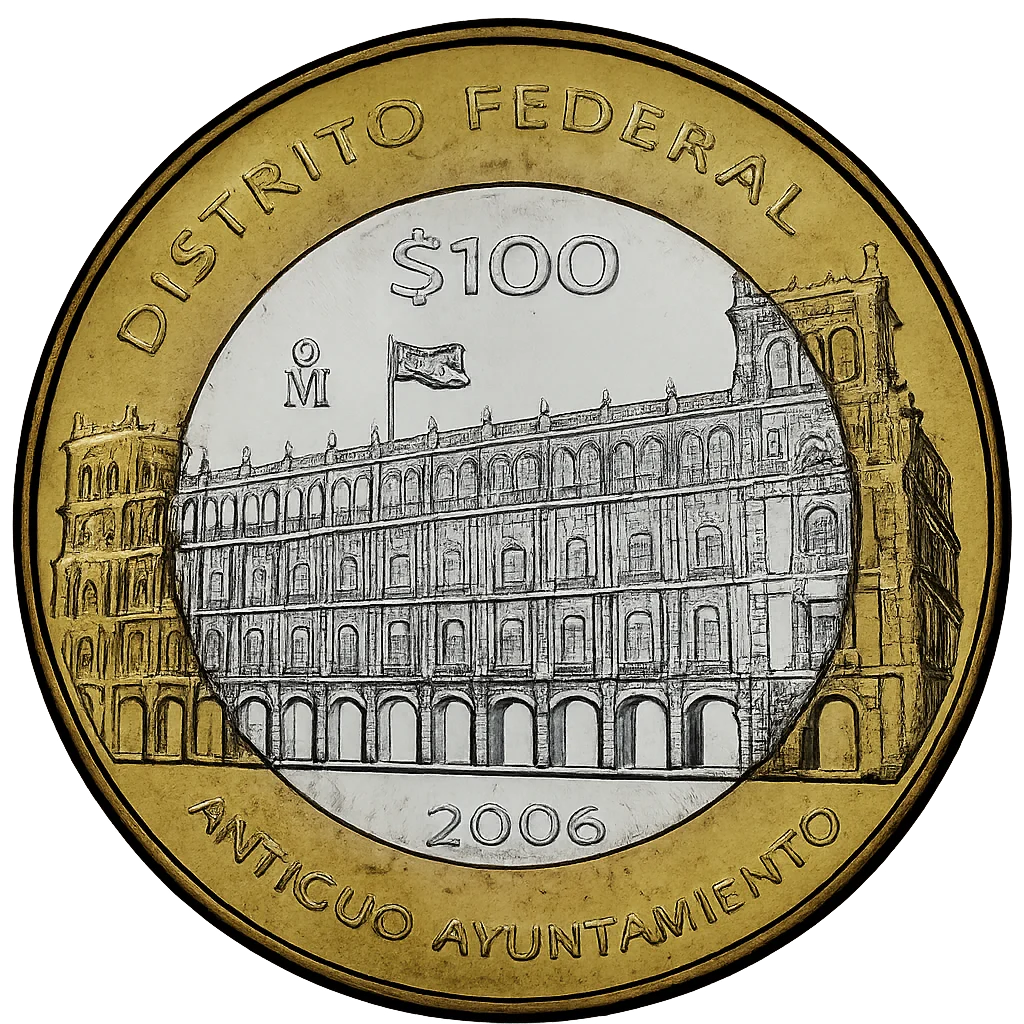
100 pesos de los Estados: la moneda de plata dedicada a tu estado (guía completa Escudo y Cultural)
Banxico acuñó una moneda de plata para cada uno de los 32 estados de México, y luego lo hizo dos veces. Aquí está la guía completa de las 100 pesos de los Estados: qué son, la diferencia entre la versión Escudo y la Cultural, por qué el centro de plata importa, cómo armar la colección y la lista de las 64 fichas para que caces la de tu tierra.
Read the full article →Value range of this piece
Value range without enough data for this piece.
See the full breakdown by grade (VG, F, VF, EF, AU, MS-60, MS-63, MS-65) for the whole series →
Other denominations from 2007
180 Aniversario de la Unión de los Estados en una Federación · Bimetálica
Same denomination, other years
100 pesos Bimetálica · 180 Aniversario de la Unión de los Estados en una Federación
Official sources
Frequently asked questions
How much is a 100 Pesos Tabasco 2007 worth?
It depends heavily on condition. Circulated examples with wear generally sell for 20 to 40 USD, close to the silver value plus a small premium. Uncirculated pieces run 45 to 90 USD, and top certified mint-state coins can reach into the low hundreds. For an exact figure on your specific coin, have it appraised by a verified dealer.
Is the 100 Pesos Tabasco 2007 rare?
It is not rare. It is a modern commemorative from a 32-coin series, and plenty exist. Its value comes from the real .925 silver center and from collector demand to complete the full set of states, not from scarcity. It is a steady, modest-value coin, not a fortune.
Where can I sell my 100 Pesos Tabasco 2007?
The safest options are a verified numismatic dealer from the Pesoteca directory, who appraises it on the spot, or the Pesoteca buy-and-sell forum where set collectors often pay more. Photograph the front, back, and edge, and check the value ranges before selling. Avoid dumping it on the first social media buyer.
How do I know if my 100 Pesos Tabasco 2007 is genuine?
A real one weighs 33.94 g and measures 39 mm in diameter. If yours misses those numbers, treat it as suspect. Compare the Olmec head and lettering against official Banxico images, since fakes look flat. For valuable pieces, NGC or PCGS certification is the definitive proof of authenticity.
Conversation
0 comments
Sources
Images for informational and educational purposes, attributed to their original source. Reference values; the real price depends on the grade, the specific variant and demand.
Loading comments…