
4 Reales Carlos y Juana: Value of Early Colonial Silver
The 4 Reales Carlos y Juana: Value of Early Colonial Silver is worth between $358 and $415 MXN depending on its grade of preservation.
Prices updated: August 2026
Viceroyalty · Mexico City Mint · Assayer G
Viceroyalty · Mexico City Mint · Assayer G
The 4 Reales Carlos y Juana: Value of Early Colonial Silver is worth between $358 and $415 MXN depending on its grade of preservation.
Prices updated: August 2026
How much is the 4 Reales Carlos y Juana: Value of Early Colonial Silver worth?
The estimated value of the 4 Reales Carlos y Juana: Value of Early Colonial Silver ranges from $358 (circulated, XF) up to $415 (official blister pack), with $394 as a reference for an uncirculated (UNC) piece. The estimate is based on the official mintage and the historical behavior of the family.
The real price depends on four factors: the grade of preservation (a circulated piece is worth the low end of the range; an uncirculated one, or one still in its official blister pack, the high end), the finish (satin vs mirror/proof), the rarity within the series based on the mintage, and the metal spot price on the day of the deal when the piece is silver or gold. Check the value-by-grade table above and compare with equivalent pieces before buying or selling.
Where to buy or sell this coin?
Browse the national directory of numismatic shops or the community forum to trade directly with other collectors.
Description
If you inherited an old, heavy silver coin marked with early Spanish colonial designs, you may be holding a 4 Reales Carlos y Juana, one of the earliest coins struck in the Americas. Value ranges widely: worn, uncertified examples trade in the tens to low hundreds of dollars, while well-preserved, third-party graded pieces can reach several thousand USD. Condition and authenticity drive everything.
Here is the honest breakdown before you sell, buy, or get one appraised.
What this coin actually is
The "4 Reales Carlos y Juana" refers to a denomination from Mexico's earliest colonial coinage, named for Charles I and his mother Juana, the monarchs whose names appear on the design. A "real" was the standard Spanish silver unit; four reales was a mid-size denomination. These were struck at the Mexico City mint (Ceca México) during the Viceroyalty period, making genuine examples among the oldest struck coins on the continent.
For a US reader: this is not a modern commemorative. It is a hand-produced silver coin from the colonial era, and that is exactly why grade and authenticity matter so much.
Real specifications (verify yours against these)
| Feature | Specification |
|---|---|
| Denomination | 4 Reales |
| Metal | Silver, .900 fine |
| Weight | 13.02 grams |
| Diameter | 31 mm |
| Edge | Plain (unmilled) |
| Mint | Mexico City (Ceca México) |
| Assayer | G |
| Era | Colonial / Viceroyalty |
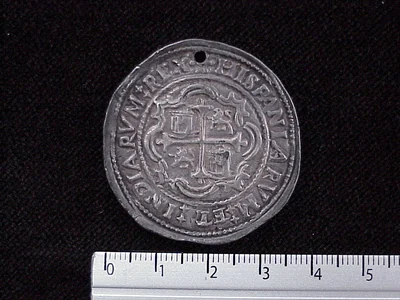
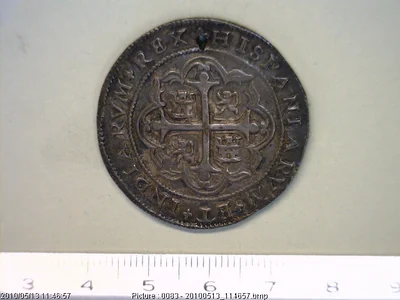
If your coin does not match the weight and diameter closely, treat it as suspect until proven otherwise. Early colonial silver was struck by hand, so slight shape irregularity is normal, but the metal weight should be near 13.02 grams.
What it is worth in 2026
There is no single price, and any site quoting one exact figure is guessing. What drives the value:
- Silver content floor. With 13.02 grams of .900 silver, roughly 11.7 grams of pure silver, the coin has a bullion floor tied to the spot price. That is the absolute minimum a genuine, badly worn example is worth.
- Grade. A certified, sharp example can sell for many multiples of a corroded, damaged one. Early colonial coins with clear designs and strong detail are scarce, and collectors pay for that.
- Authenticity certification. Coins graded by NGC or PCGS consistently bring more than raw coins with only a seller's opinion, because the buyer is protected against fakes.
- Demand at the moment. The market for early Spanish-American silver is active among world-coin collectors, which supports prices at auction.
Honest range: expect low tens of dollars for a worn, uncertified piece near melt, up into the low thousands of USD for a genuine, well-graded example. The exact mintage of this issue is not officially documented, so "rarity" is judged by how many survive in collectible condition, not by an original production number.
The myth to avoid
Because these coins are old, sellers love to imply they are worth a fortune automatically. Age alone does not make a coin valuable. A heavily cleaned, holed, or corroded 4 Reales is worth close to its silver, no matter how ancient it looks. And this denomination is one of the most reproduced colonial types, so many "finds" circulating online are modern copies or period-questionable pieces. Confirm authenticity first, then talk about value.
How to tell if yours is genuine
- Weigh it. A digital scale should read close to 13.02 grams. Underweight is a red flag; the metal cannot be faked without changing weight.
- Measure it. 31 mm diameter.
- The ring test. Genuine silver produces a high, sustained ring when balanced on a fingertip and lightly tapped. Base-metal fakes sound dull and short. This is a hint, not proof.
- Get it certified. For any piece you think is worth more than a modest sum, submit it to NGC or PCGS. Their grading is the definitive safeguard against fakes and the single best way to raise resale value.
For grading terminology and how condition maps to price, see our coin grading guide.
Where to sell or buy it
- Verified numismatic dealers in the Pesoteca shop directory will value the coin on the spot and give you a fair figure, especially useful for a piece with real silver content.
- Collector-to-collector through the Pesoteca buy and sell forum, where you deal with people who know the type.
- Because this is a precious-metal coin, only buy or sell where you can see the piece, its weight, and clear photos of the front, back, and edge before money changes hands.
This coin belongs to the broader Colonial Reales series (1/2 to 4 reales), which is worth exploring if you have more than one old silver piece from the same box.
Got a 4 Reales Carlos y Juana in hand and not sure if it is genuine or a reproduction? Post clear photos of both sides and the edge in the Pesoteca forum and let collectors weigh in before you sell.
Historical context
This piece belongs to the first series of the Mexico City Mint, struck in the name of Carlos I of Spain and his mother Juana I of Castile, known as the Mad. These are the first metal coins struck in the Americas, authorized by the Royal Decree of May 11, 1535 and produced between 1536 and 1572 in the palace of the Marques del Valle in Mexico City.
The 4 reales denomination theoretically weighed 13.54 grams with a silver fineness of 0.9028 (early) / 0.903 (late). The 4 reales, or half peso, was a coin of regional commerce: buying small livestock, paying for short hauls, and covering rents in the towns and villages of the viceroyalty.
The G signature is the initial of the assayer engraved on the die. Collectors of the mint's origins hunt for these marks to assemble the complete mosaic of signatures documented in the first series.
The 4 reales of the first series have a generous size that better preserves the design of the royal shield and the Pillars of Hercules with the motto PLVS VLTRA. When buying one on one, it pays to check that the flan keeps an identifiable design on both faces, and to consult public catalogs before accepting a middleman's markup.
This piece belongs to the era
Colonial / Virreinato →Explore all the Mexican coins of this era, their historical context and how they connect to the monetary system of the period.
Value range of this piece
Market estimate: $358 - $415 MXN depending on the grade of preservation (typical range between a circulated and an uncirculated piece).
See the full breakdown by grade (VG, F, VF, EF, AU, MS-60, MS-63, MS-65) for the whole series →
Same denomination, other years
4 reales Plata 0.900 · Reales Coloniales (1/2 a 4 reales)
Frequently asked questions
How much is a 4 Reales Carlos y Juana worth?
It depends heavily on condition and authenticity. A worn, uncertified example sits near its silver melt value, in the low tens to low hundreds of USD. A genuine, well-preserved piece graded by NGC or PCGS can reach the low thousands. Certified coins always sell for more than raw ones, so grade the best piece you own before selling.
Is the 4 Reales Carlos y Juana rare?
The original mintage is not officially documented, so rarity is measured by how many survive in collectible condition rather than by a production figure. Genuine examples with strong detail are scarce and command real premiums, but worn or cleaned pieces are common and trade close to their silver value.
How do I know if my 4 Reales Carlos y Juana is genuine?
Weigh and measure it: a real one is close to 13.02 grams and 31 mm in diameter. Genuine silver also rings high and long when lightly tapped, while fakes sound dull. This denomination is heavily reproduced, so for anything you believe is valuable, submit it to NGC or PCGS for certification, which is the definitive test.
Where can I sell a 4 Reales Carlos y Juana?
The safest routes are a verified dealer from the [Pesoteca shop directory](/tiendas), which values it on the spot, or the [Pesoteca buy and sell forum](/foro/compra-venta) among collectors. Photograph the front, back, and edge, and because it is a precious-metal coin, only deal where the buyer can verify the weight before paying. Avoid dumping it on the first social-media offer.
Conversation
0 comments
Sources
Images for informational and educational purposes, attributed to their original source. Reference values; the real price depends on the grade, the specific variant and demand.
Loading comments…