
4 Reales Luis I 1725: Value of a Rare Colonial Silver Coin
The 4 Reales Luis I 1725: Value of a Rare Colonial Silver Coin is worth between $372 and $1,567 MXN depending on its grade of preservation.
Prices updated: August 2026
Viceroyalty · Mexico City Mint · Assayer D
Viceroyalty · Mexico City Mint · Assayer D
The 4 Reales Luis I 1725: Value of a Rare Colonial Silver Coin is worth between $372 and $1,567 MXN depending on its grade of preservation.
Prices updated: August 2026
How much is the 4 Reales Luis I 1725: Value of a Rare Colonial Silver Coin worth?
The estimated value of the 4 Reales Luis I 1725: Value of a Rare Colonial Silver Coin ranges from $372 (circulated, XF) up to $1,567 (official blister pack), with $1,132 as a reference for an uncirculated (UNC) piece. The estimate is based on the official mintage and the historical behavior of the family.
The real price depends on four factors: the grade of preservation (a circulated piece is worth the low end of the range; an uncirculated one, or one still in its official blister pack, the high end), the finish (satin vs mirror/proof), the rarity within the series based on the mintage, and the metal spot price on the day of the deal when the piece is silver or gold. Check the value-by-grade table above and compare with equivalent pieces before buying or selling.
Where to buy or sell this coin?
Browse the national directory of numismatic shops or the community forum to trade directly with other collectors.
Description
If you inherited or found a silver coin bearing the name Luis I dated 1725, you have one of the genuinely scarce pieces of Spanish colonial numismatics, not a common old coin. Authentic, well-preserved examples routinely sell in the four-figure range in USD, and the reason is a king who reigned for only a few months.
Quick answer: what it is and why it matters
The 4 Reales of Luis I is a Spanish colonial silver coin struck at the Mexico City mint. "Reales" was the old Spanish silver denomination used across the Americas for centuries. This particular type carries the name of Luis I, and that is the whole story of its value.
Luis I became King of Spain in 1724 after his father Felipe V abdicated. He reigned for barely a few months and died the same year. Because his reign was so short, the number of coins issued in his name is tiny compared to the decades-long reigns before and after him. Pieces dated 1725 correspond to posthumous or transitional strikes still carrying his title. That short window is exactly why collectors chase these coins.
What it's actually worth
There is no single fixed price. For a coin this rare, condition (grade) and current collector demand drive everything. A worn, damaged example is worth far less than a sharp, problem-free one, and a coin certified by a grading service outsells a raw, uncertified coin every time.
As a general frame:
- Silver floor: the coin contains real silver, so it always has a bullion baseline (see the melt figure below). That is the absolute minimum, and for a coin this scarce, nobody sells at melt.
- Collector value: authentic Luis I 4 reales trade well above the price of equivalent coins from long reigns, because so few exist. Grade is the multiplier.
Be careful with the name Luis I online. Many pieces offered under this heading are misattributed, damaged, or outright fakes. The value only applies to a genuine, correctly identified coin. If you have a candidate, get it authenticated before you assume any figure.
Specifications
| Attribute | Detail |
|---|---|
| Denomination | 4 Reales (silver) |
| Ruler | Luis I |
| Date on coin | 1725 |
| Mint | Mexico City (colonial) |
| Weight | 13.52 grams |
| Fineness | .900 silver |
| Diameter | 35 mm |
| Edge | Plain (unlettered) |
Use these numbers as your first authenticity check. If your coin does not match the weight and diameter closely, it is very likely not genuine.
The silver content, in plain terms
At 13.52 grams and .900 fineness, the coin holds about 12.17 grams of pure silver, roughly 0.39 troy ounces. Multiply that by the current silver spot price to get the melt value in USD. That number is your floor, not your target. For a coin as scarce as the Luis I 4 reales, the collector premium is where the real money sits, so never sell one for silver weight alone.
How to tell if yours is genuine
Colonial silver is heavily counterfeited, and Luis I coins are a favorite target precisely because they are valuable.
- Weigh and measure it. It should be very close to 13.52 grams and 35 mm. A digital jewelry scale settles most cases fast.
- Ping test. Genuine .900 silver gives a clear, sustained ring when balanced on a fingertip and tapped gently. Fakes made of base metal sound dull and short.
- Look at the edge and surfaces. Cast counterfeits often show seams, soft details, or a grainy surface. Struck genuine coins have crisp detail.
- Get it certified. For a coin at this value level, professional grading from NGC or PCGS is the only real proof. They authenticate, grade, and seal the coin, which also boosts what a buyer will pay.
No home test replaces certification for a coin worth four figures.
Where to sell it in the US
- Certified auction houses. For a genuine, high-grade Luis I 4 reales, an established house such as Heritage Auctions or Stack's Bowers reaches the collectors who pay top prices. This is the best route for a valuable, verified coin.
- Reputable coin dealers. A dealer who handles colonial Spanish and Latin American material can make an offer on the spot. Expect a wholesale price below auction retail.
- Vetted collector communities. Serious numismatic forums and specialist groups can connect you with buyers, but always transact with proof of authenticity.
Before you sell anything, photograph the obverse, reverse, and edge, and get the coin certified if it looks genuine. A raw coin sold in a hurry almost always leaves money on the table.
The reality check
Rarity is real here, but so is misidentification. Plenty of listings under "Luis I 1725" are not what they claim. Confirm the weight, the fineness, and the strike, then confirm again with a grading service. A verified Luis I 4 reales is a legitimately scarce coin. An unverified one is just a claim.
Have a Luis I coin you cannot pin down, or want a second opinion on grade before you sell? Post clear photos of both sides and the edge in the Pesoteca forum and let collectors weigh in before you accept an offer.
Historical context
This piece belongs to the brief reign of Luis I of Spain (January to August 1724), son of Felipe V, who reigned barely seven months before dying of smallpox at 17, forcing his father's return to the throne. Coinages in the name of Luis I are among the briefest of the viceregal system and rarities of a short reign.
Although the piece is dated 1725, the entry is kept within the Luis I series for continuity of type. That year the viceroy of New Spain was Juan de Acuna, Marquis of Casafuerte, who was launching defense and treasury reforms under the new Bourbon order.
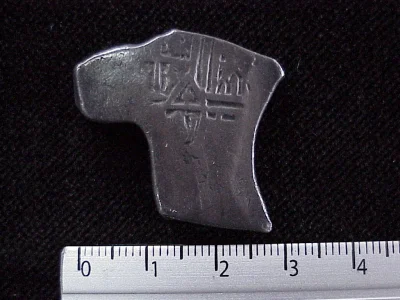
The numismatic type is cob (macuquina), with planchets cut by shears and struck by hammer. The 4 reales denomination theoretically weighed 13.54 grams at .9028 silver fineness (early) / .903 (late). The 4 reales, or half peso, was a coin of regional commerce: buying small livestock, paying short freight and rents in the towns and villages of the viceroyalty.
The D initial identifies the mint's assayer in the period. In Luis I issues the initials are a key element for attributing the reign, given how brief the cycle was.
Luis I pieces are hunted by collectors of short reigns and of the early Bourbon succession. When buying peer to peer, it is worth confirming the attribution against public colonial catalogs before accepting a middleman markup, because pieces dated 1724 and 1725 may actually be Felipe V struck with a recycled die.
This piece belongs to the era
Colonial / Virreinato →Explore all the Mexican coins of this era, their historical context and how they connect to the monetary system of the period.
Value range of this piece
Market estimate: $372 - $1,567 MXN depending on the grade of preservation (typical range between a circulated and an uncirculated piece).
See the full breakdown by grade (VG, F, VF, EF, AU, MS-60, MS-63, MS-65) for the whole series →
Other denominations from 1725
Reales Coloniales (1/2 a 4 reales) · Plata 0.900
Same denomination, other years
4 reales Plata 0.900 · Reales Coloniales (1/2 a 4 reales)
Frequently asked questions
How much is a 4 Reales Luis I 1725 worth?
There is no single price. Because the coin is genuinely rare, value depends heavily on condition and current collector demand, with authentic high-grade examples reaching the four-figure range in USD. The silver content sets a floor, but a scarce coin like this always trades above melt. A coin certified by NGC or PCGS sells for more than a raw one, so grade the best piece you own before selling.
Is the 4 Reales Luis I 1725 rare?
Yes. Luis I reigned for only a few months in 1724 before he died, so very few coins were struck in his name compared to the long reigns around him. The exact mintage is not officially documented, which itself points to a very limited issue. Any genuine Luis I coin is considered a rarity by colonial collectors.
How do I know if my 4 Reales Luis I 1725 is genuine?
Start with the specs: it should weigh about 13.52 grams and measure 35 mm. If yours is off, it is likely a fake. Genuine .900 silver gives a clear, sustained ring when tapped gently; fakes sound dull and short. For a coin at this value, professional certification from NGC or PCGS is the only definitive proof of authenticity.
Where can I sell a 4 Reales Luis I 1725?
For a verified, high-grade example, established auction houses such as Heritage or Stack's Bowers reach the buyers who pay the most. A reputable dealer in colonial Spanish coins can make a faster offer at a wholesale price. Photograph the obverse, reverse, and edge, get the coin certified if it looks genuine, and never sell to the first bidder in a rush.
Conversation
0 comments
Sources
Images for informational and educational purposes, attributed to their original source. Reference values; the real price depends on the grade, the specific variant and demand.
Loading comments…