
4 Reales Felipe II: Silver Coin Value
The 4 Reales Felipe II: Silver Coin Value is worth between $378 and $438 MXN depending on its grade of preservation.
Prices updated: August 2026
Viceroyalty · Mexico City Mint · Assayer F
Viceroyalty · Mexico City Mint · Assayer F
The 4 Reales Felipe II: Silver Coin Value is worth between $378 and $438 MXN depending on its grade of preservation.
Prices updated: August 2026
How much is the 4 Reales Felipe II: Silver Coin Value worth?
The estimated value of the 4 Reales Felipe II: Silver Coin Value ranges from $378 (circulated, XF) up to $438 (official blister pack), with $416 as a reference for an uncirculated (UNC) piece. The estimate is based on the official mintage and the historical behavior of the family.
The real price depends on four factors: the grade of preservation (a circulated piece is worth the low end of the range; an uncirculated one, or one still in its official blister pack, the high end), the finish (satin vs mirror/proof), the rarity within the series based on the mintage, and the metal spot price on the day of the deal when the piece is silver or gold. Check the value-by-grade table above and compare with equivalent pieces before buying or selling.
Where to buy or sell this coin?
Browse the national directory of numismatic shops or the community forum to trade directly with other collectors.
Description
If you inherited or found a Spanish colonial 4 Reales attributed to Felipe II, here is the honest answer up front: most circulated examples trade for roughly 5 to 30 USD depending on wear, but sharp, well-struck or certified pieces can reach several hundred dollars or more. The metal itself sets the floor, and the grade sets the ceiling.
This coin comes from the Spanish colonial period in Mexico, struck at the Casa de Moneda de México (the Mexico City mint), which was the first mint established in the Americas. It belongs to the broader family of colonial reales, denominations from 1/2 real up to 4 and 8 reales. The 8 reales is the famous "pieces of eight" that circulated worldwide; the 4 reales is its half-value cousin.
What the coin actually is
The 4 reales is a silver coin. Here are the exact specifications to check yours against:
- Metal: Silver, .900 fine (90 percent pure silver)
- Weight: 13.75 grams
- Diameter: 28 millimeters
- Edge: plain (unmarked)
- Mint: Mexico City (ceca México)
- Assayer mark: F
The .900 silver content is what gives this coin a hard price floor. Even the most worn, unremarkable example is worth its melt value in silver, and it will always find a buyer at or above spot. That is the difference between a real silver coin and a modern base-metal piece worth face value only.
Value by condition
With colonial silver, condition drives nearly everything above the metal floor. Genuine early colonial reales were often hand-struck (cob coinage), which means strike quality varies wildly and full, well-centered examples command a strong premium.
| Condition | What it looks like | Approximate value (USD) |
|---|---|---|
| Heavily worn / damaged | Design mostly flat, corrosion or holes | Melt value, roughly 5 to 12 |
| Circulated (VG to VF) | Readable design, honest wear | 15 to 60 |
| Extra Fine (XF/AU) | Sharp detail, light wear | 80 to 300 |
| Uncirculated / certified high grade | Full strike, no wear, NGC or PCGS slab | Several hundred and up |
These are general ranges for colonial reales in this size class. The exact figure for your specific coin depends on the date, assayer, strike quality and eye appeal, which is why a firm appraisal beats any online range.
How to tell if yours is genuine
Colonial Spanish silver is one of the most heavily counterfeited categories out there, both period counterfeits and modern fakes aimed at tourists and inheritors. Run these checks before you believe you have a fortune:
- Weigh it. A genuine 4 reales weighs 13.75 grams. If your coin is meaningfully lighter or heavier, be suspicious. Use a scale accurate to 0.1 gram.
- Measure it. Diameter should be about 28 millimeters.
- Sound test. Real .900 silver rings with a clear, sustained high tone when you balance it on a fingertip and tap it lightly. Fakes and base-metal copies sound dull and short.
- Look at the edge and surfaces. Cast fakes often show seams, bubbles or a soft, sandy texture. Genuine struck coins have crisp, sharp detail even when worn.
- Get it certified. For anything you think might be worth real money, NGC or PCGS grading is the definitive answer. A slabbed, authenticated coin also sells for more and faster.
The myth to kill
"It's from the 1500s, it must be worth thousands." Age alone does not equal value. Millions of colonial reales were struck over centuries, and a common, worn example is worth its silver and little else. What actually moves the price is rarity of the specific date and mint combination, strike quality, and grade. A high-grade certified piece can outsell a rare-date coin in poor condition every time.
Also be careful with "error" claims circulating online. Genuine mint errors (off-center strikes, die rotations, doubled dies) can multiply value, but most "errors" people spot are post-mint damage: dings, corrosion, and handling marks. Damage lowers value; it does not raise it.
Where to sell it
Because this is a precious-metal coin, you have real options:
- US coin dealers and shows. A reputable local dealer or a regional coin show will give you an on-the-spot offer. For colonial material, find a dealer who handles world and ancient coins, not just US pieces.
- Certified auction houses. For higher-grade or scarce examples, Heritage Auctions and Stack's Bowers regularly sell Mexican and Spanish colonial silver and reach the widest buyer base.
- Online marketplaces. eBay reaches many buyers but also carries the most counterfeits, which hurts trust and price. Sell certified if you go this route.
Before you sell anything, photograph the obverse, reverse and edge in good light, weigh it, and check it against the grade ranges above. Don't dump it to the first buyer at a flea market. If you want a second opinion, post clear photos in the Pesoteca forum and let collectors weigh in on authenticity and value.
Have a colonial 4 reales in hand and not sure what you're holding? Share the photos and weight in our community and get a read before you sell.
Historical context
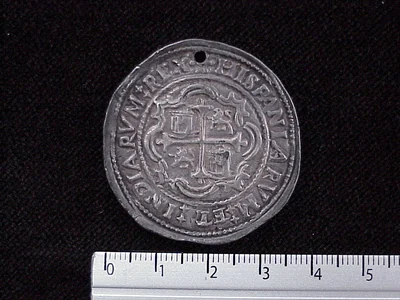
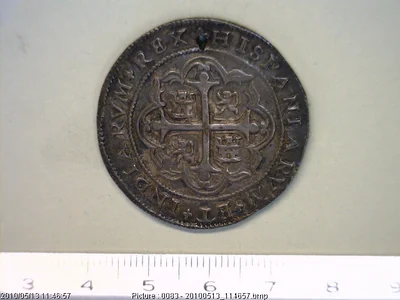
This piece belongs to the reign of Felipe II of Spain (1556-1598), son of Carlos I and the first king under whose rule the Spanish empire reached its maximum territorial extent. The Mexico Mint moved to the definitive cob type around 1572, with planchets cut with shears and hammer-struck between hand dies, without an edge or a perfectly circular shape.
The 4 reales denomination theoretically weighed 13.54 grams with a silver fineness of 0.9028 (early) / 0.903 (late). The 4 reales, or half peso, was a regional trade coin: buying small livestock, paying for short freight and rents in towns and villages of the viceroyalty.
The F signature identifies the assayer active at the mint during the period, an official of the Royal Treasury charged with certifying the fineness of the metal. On cobs of Felipe II the initials are a basic reference for narrowing down the piece within the 42-year reign.
When hunting Felipe II cobs it's wise to verify that the royal shield and the Jerusalem cross retain enough detail, and to compare piece by piece against the photographic reference in public catalogs before closing. The naive premium appears on pieces presented as rare without verifying the signature.
This piece belongs to the era
Colonial / Virreinato →Explore all the Mexican coins of this era, their historical context and how they connect to the monetary system of the period.
Value range of this piece
Market estimate: $378 - $438 MXN depending on the grade of preservation (typical range between a circulated and an uncirculated piece).
See the full breakdown by grade (VG, F, VF, EF, AU, MS-60, MS-63, MS-65) for the whole series →
Same denomination, other years
4 reales Plata 0.900 · Reales Coloniales (1/2 a 4 reales)
Frequently asked questions
How much is a 4 Reales Felipe II worth?
It depends heavily on grade and condition. Worn, circulated silver examples typically run about 15 to 60 USD, while sharp Extra Fine pieces reach 80 to 300 USD and certified high-grade coins go into the hundreds or more. Even the most worn genuine piece holds its silver melt value, roughly 5 to 12 USD. For a precise figure, have your specific coin appraised or certified.
How can I tell if my 4 Reales is genuine silver?
A genuine coin weighs 13.75 grams and measures about 28 millimeters, in .900 fine silver. If your piece is off on weight or size, be cautious. Real silver rings with a clear, sustained high tone when tapped; fakes sound dull and short. For anything potentially valuable, NGC or PCGS certification is the definitive authentication.
Is the 4 Reales Felipe II rare?
Colonial reales were struck in large numbers over many years, so most examples are not rare and trade close to silver value. Value climbs with strike quality, specific date and assayer, and grade. A common worn coin is worth its metal; a high-grade or certified example, or a genuine mint error, can be worth many times more.
Where can I sell a 4 Reales Felipe II?
Reputable coin dealers who handle world and colonial coins, and regional coin shows, will give on-the-spot offers. For higher-grade pieces, auction houses like Heritage or Stack's Bowers reach the most buyers. eBay works but carries more counterfeits, so sell certified there. Always weigh and photograph the obverse, reverse and edge before selling, and get a second opinion in the Pesoteca forum if unsure.
Conversation
0 comments
Sources
Images for informational and educational purposes, attributed to their original source. Reference values; the real price depends on the grade, the specific variant and demand.
Loading comments…