
4 Reales Carlos y Juana: One of the First Silver Coins of the Americas
The 4 Reales Carlos y Juana: One of the First Silver Coins of the Americas is worth between $369 and $427 MXN depending on its grade of preservation.
Prices updated: August 2026
Viceroyalty · Mexico City Mint · Assayer P
Viceroyalty · Mexico City Mint · Assayer P
The 4 Reales Carlos y Juana: One of the First Silver Coins of the Americas is worth between $369 and $427 MXN depending on its grade of preservation.
Prices updated: August 2026
How much is the 4 Reales Carlos y Juana: One of the First Silver Coins of the Americas worth?
The estimated value of the 4 Reales Carlos y Juana: One of the First Silver Coins of the Americas ranges from $369 (circulated, XF) up to $427 (official blister pack), with $406 as a reference for an uncirculated (UNC) piece. The estimate is based on the official mintage and the historical behavior of the family.
The real price depends on four factors: the grade of preservation (a circulated piece is worth the low end of the range; an uncirculated one, or one still in its official blister pack, the high end), the finish (satin vs mirror/proof), the rarity within the series based on the mintage, and the metal spot price on the day of the deal when the piece is silver or gold. Check the value-by-grade table above and compare with equivalent pieces before buying or selling.
Where to buy or sell this coin?
Browse the national directory of numismatic shops or the community forum to trade directly with other collectors.
Description
If you found a rough, hand-struck silver coin with the arms of Spain and the letters that read "CAROLVS ET IOHANA," you may be holding one of the first silver coins ever made in the Americas. Genuine, well-preserved examples of the 4 Reales Carlos y Juana sell in the thousands of dollars. Circulated, damaged, or reproduction pieces are worth far less, and fakes are common. Here is how to tell what you actually have.
Quick answer: what is it worth in 2026?
Value swings hard on authenticity and condition. This is not a coin where every example is a fortune, and it is not a coin you should sell cheap without checking either.
- Genuine, heavily worn (low grade): roughly a few hundred dollars, driven mostly by rarity and demand, not just silver content.
- Genuine, clear detail (higher grade, certified): commonly in the low thousands of dollars, and top examples in exceptional state have sold higher at specialist auctions.
- Uncertified or damaged: buyers discount steeply, since forgeries and modern casts of early Spanish colonial silver circulate widely.
Because these are early hand-struck coins with irregular strikes, two genuine pieces of the same type can be worth very different amounts. Certification by NGC or PCGS is what turns a guess into a real number.
What this coin actually is
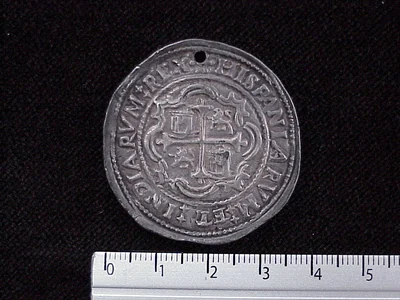
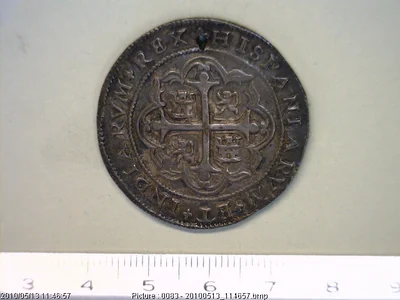
The 4 Reales Carlos y Juana were struck at the Casa de Moneda de México (the Mexico City Mint), founded in 1535, during the joint reign of Carlos I of Spain and his mother Juana. "Carlos y Juana" simply means "Charles and Joanna," the two monarchs named on the coin. These are among the first silver coins minted anywhere in the Americas.
The 4 reales was a high denomination, essentially half of the famous "piece of eight" (the 8 reales, or real de a ocho) that came later. It was minted for real commerce in early New Spain, not as a collector item, which is why surviving pieces show heavy wear.
Technical specifications
| Feature | Detail |
|---|---|
| Denomination | 4 Reales |
| Metal | Silver, .900 fine (90% silver) |
| Weight | 13.4 grams |
| Diameter | 30 mm |
| Edge | Plain (unmilled) |
| Mint | Casa de Moneda de México (est. 1535) |
| Reign | Carlos I and Juana of Spain |
The silver content gives the coin a floor value at melt (its bullion worth), but for a genuine early colonial piece the collector premium is far above the metal. Nobody sells a real Carlos y Juana for scrap.
Why the value is all over the map
Three things decide the price, in this order:
- Authenticity. Early Spanish colonial silver is one of the most faked areas in world numismatics. Cast copies, tourist reproductions, and modern struck fakes are everywhere. A coin that cannot be authenticated is worth very little to a serious buyer.
- Grade and eye appeal. These were struck by hand on irregular blanks, so strike quality varies enormously even among genuine coins. A piece with a full, readable design brings a large multiple of a worn, corroded one.
- Demand. Collectors of early Americas silver are a specialized group, but they pay strongly for correctly attributed pieces. That demand is what keeps prices well above melt.
How to check what yours is worth
Weigh and measure it first. A genuine piece weighs about 13.4 grams and measures 30 mm across. If your coin is meaningfully off on both, be skeptical. Note that hand-struck coins were often trimmed or clipped in circulation, so a slightly light coin is not automatically fake, but a coin that is way off is a red flag.
Do a quick sound test. Genuine .900 silver gives a clear, ringing tone when balanced on a fingertip and tapped gently. Base-metal fakes sound dull and short. This is a rough screen, not proof.
Get it certified. For anything you suspect is genuine, submit it to NGC or PCGS. Certification confirms authenticity, assigns a grade, and is the single biggest factor in getting a fair price. A raw (uncertified) early colonial coin sells at a discount purely because the buyer is taking the risk.
Do not clean it. Cleaning early silver destroys value. Leave any patina or toning alone and let a grader evaluate it as-is.
Where to sell it
Because authenticity drives everything here, sell through channels where the coin can be verified:
- Specialist auction houses (Heritage, Stack's Bowers, and similar) are where high-grade early colonial silver reaches its highest prices. Worth it if your certified coin grades well.
- A reputable dealer who handles Spanish colonial material will make an offer on the spot and can point you toward certification.
- Collector marketplaces work for mid-value pieces, but you carry the burden of proving authenticity to buyers, so certification helps.
Avoid dumping it to the first buyer on a general social media group. Early silver is exactly the material where uninformed sellers get lowballed.
If you want a second set of eyes before you sell, post clear photos of the front, back, and edge, plus the weight, in the Pesoteca forum. The community can help you separate a genuine early strike from a modern reproduction, and that check alone can save you from selling a real piece for pocket change or overpaying for a fake.
Historical context
This piece belongs to the first series of the Mexican Mint, struck in the name of Charles I of Spain and his mother Joanna I of Castile, called the Mad. They are the first metal coinages in America, authorized by Royal Decree of May 11, 1535, and produced between 1536 and 1572 in the palace of the Marqués del Valle in Mexico City.
The 4 reales denomination theoretically weighed 13.54 grams with a silver fineness of 0.9028 (early) / 0.903 (late). The 4 reales, or half peso, were coinage for regional commerce: buying small livestock, paying for short freight, and rents in the towns and villages of the viceroyalty.
The P mark identifies the initial of the assayer registered on the blank. The piece usually appears with the irregular edge typical of sixteenth-century hammer striking, without milling or uniform beading.
The 4 reales of the first series have a generous size that better preserves the design of the royal shield and the Pillars of Hercules with the motto PLVS VLTRA. When buying piece by piece, it is worth checking that the blank retains an identifiable design on both faces, and consulting public catalogs before accepting a middleman's premium.
This piece belongs to the era
Colonial / Virreinato →Explore all the Mexican coins of this era, their historical context and how they connect to the monetary system of the period.
Value range of this piece
Market estimate: $369 - $427 MXN depending on the grade of preservation (typical range between a circulated and an uncirculated piece).
See the full breakdown by grade (VG, F, VF, EF, AU, MS-60, MS-63, MS-65) for the whole series →
Same denomination, other years
4 reales Plata 0.900 · Reales Coloniales (1/2 a 4 reales)
Frequently asked questions
How much is a 4 Reales Carlos y Juana worth?
It depends heavily on authenticity and grade. A genuine, heavily worn example typically brings a few hundred dollars, while a certified, higher-grade piece commonly reaches the low thousands, and exceptional examples have sold higher at specialist auctions. The silver gives it a melt floor, but the collector premium is far above metal value. Get it certified by NGC or PCGS for a real figure.
How can I tell if my 4 Reales Carlos y Juana is genuine?
Start with the specs: a real one weighs about 13.4 grams, measures 30 mm, and is .900 fine silver. Genuine silver rings clear and long when tapped gently on a fingertip; fakes sound dull and short. Early Spanish colonial silver is heavily counterfeited, so the only definitive proof is certification by NGC or PCGS.
Is the 4 Reales Carlos y Juana rare?
Yes. It is among the first silver coins struck in the Americas, minted at the Mexico City Mint founded in 1535 under Carlos I and Juana of Spain. Surviving genuine examples are scarce and in demand among specialists in early colonial silver, which is what keeps prices well above the coin's melt value.
Where can I sell a 4 Reales Carlos y Juana?
Sell where the coin can be verified. Specialist auction houses like Heritage and Stack's Bowers get the highest prices for certified, high-grade pieces. A reputable dealer in Spanish colonial coins can make an on-the-spot offer. Before selling, post photos of the front, back, and edge plus the weight in the Pesoteca forum for a free authenticity check, and never let a genuine piece go to the first lowball buyer.
Conversation
0 comments
Sources
Images for informational and educational purposes, attributed to their original source. Reference values; the real price depends on the grade, the specific variant and demand.
Loading comments…