
8 Escudos Carlos II 1695 (Mexico Gold Cob): Value Guide
The 8 Escudos Carlos II 1695 : Value Guide is worth between $51,289 and $86,382 MXN depending on its grade of preservation.
Prices updated: August 2026
Mexico City Mint
Mexico City Mint
The 8 Escudos Carlos II 1695 : Value Guide is worth between $51,289 and $86,382 MXN depending on its grade of preservation.
Prices updated: August 2026
How much is the 8 Escudos Carlos II 1695 (Mexico Gold Cob): Value Guide worth?
The estimated value of the 8 Escudos Carlos II 1695 (Mexico Gold Cob): Value Guide ranges from $51,289 (circulated, XF) up to $86,382 (official blister pack), with $73,621 as a reference for an uncirculated (UNC) piece. The estimate is based on the official mintage and the historical behavior of the family.
The real price depends on four factors: the grade of preservation (a circulated piece is worth the low end of the range; an uncirculated one, or one still in its official blister pack, the high end), the finish (satin vs mirror/proof), the rarity within the series based on the mintage, and the metal spot price on the day of the deal when the piece is silver or gold. Check the value-by-grade table above and compare with equivalent pieces before buying or selling.
Where to buy or sell this coin?
Browse the national directory of numismatic shops or the community forum to trade directly with other collectors.
Description
If you inherited a heavy gold coin dated 1695 with a cross and a shield, you may be holding a Mexican 8 escudos struck under King Carlos II. The short answer: even a worn, damaged example is worth its gold, roughly 0.759 troy ounces, so at recent gold prices that is a floor of several thousand dollars. Genuine, well-struck survivors have sold for tens of thousands at auction. This is one of the few old coins where the myth of "worth a fortune" can actually be true.
What this coin is
The 8 escudos was the largest gold denomination of the Spanish colonial system, popularly called an "onza" (ounce). Your piece was minted in Mexico City, which under Spanish rule was the main precious-metal mint of the empire. The date is 1695, during the reign of Carlos II, the last Habsburg king of Spain.
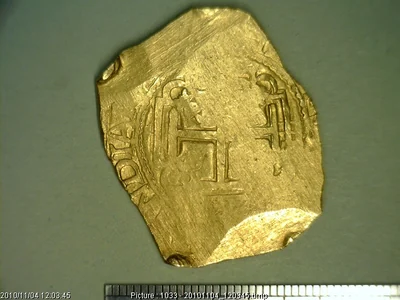
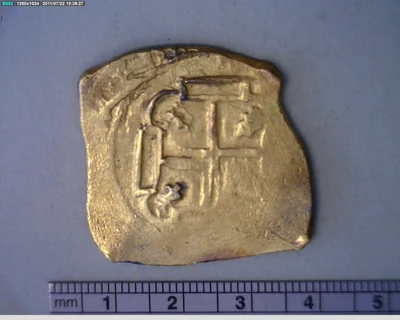
Most 1695 8 escudos are what collectors call cobs: hand-struck coins made from a cut piece of a gold bar, then hammered between dies. They are irregular in shape, often off-center, and rarely show the full design. That irregular look is normal and correct for the period. It is not damage, and a crude shape does not mean the coin is fake.
Technical specs (verify yours against these)
| Feature | Value |
|---|---|
| Denomination | 8 escudos (gold) |
| Date | 1695 |
| Mint | Mexico City |
| Assayer initial | L |
| Metal | Gold, 0.875 fine (about 21 karat) |
| Weight | 26.97 g |
| Diameter | 37 mm |
| Edge | Plain (smooth) |
| Gold content | About 0.759 troy oz |
| Catalog reference | 56 |
The assayer was the mint official who certified the fineness of the metal. On this issue the initial is L. Assayer letters and mint marks are exactly what specialists check to confirm a genuine colonial piece, so do not clean or scratch them off.
What it's actually worth
Value on this coin splits into two very different worlds.
The metal floor. With about 0.759 troy ounces of gold, the coin can never be worth less than its melt value. At recent gold prices that alone puts a genuine, worn example in the range of a few thousand dollars, regardless of how ugly it looks.
The collector premium. A genuine 1695 cob with a clear date, readable legends, sharp cross and shield, and no damage sells well above melt. Colonial Mexican gold cobs in solid grade routinely trade in the mid four figures to low five figures. Exceptional, high-grade or well-provenanced examples of Carlos II 8 escudos have reached tens of thousands of dollars at major auctions such as Heritage and Stack's Bowers.
We give a range here rather than a single price because condition drives everything. Two coins of the same date and mint can be worth 3,000 dollars and 30,000 dollars depending on strike, wear, and eye appeal. A professional grade from NGC or PCGS often decides which end of that range you land on.
The catch: fakes are common
Colonial gold is heavily counterfeited, and 8 escudos are a favorite target because the metal value alone justifies the effort. Cast copies, tooled dates, and modern replicas circulate widely, and some are sold as "authentic" to buyers who never check.
Before you get excited or sell, do this:
- Weigh it on a jeweler's scale. It should be near 26.97 g. A significant miss suggests a fake or heavy wear.
- Measure the diameter, around 37 mm, though cobs vary in shape.
- Check the details: mint mark, the assayer initial L, and the style of the cross and Habsburg shield. Fakes usually get the engraving style or the assayer/date pairing wrong.
- Be suspicious of any offer far below the gold value. If someone lowballs a genuine gold coin, they either doubt it is real or they are hoping you do not know what the metal is worth.
For a coin at this value level, third-party certification (NGC or PCGS) is worth the fee. It confirms authenticity and grade, and it makes the coin far easier to sell for full price.
Where to sell it
Do not dump a gold colonial coin to the first Facebook offer. Better options:
- A verified coin dealer from the Pesoteca shop directory, where you can get an in-person appraisal and see the offer against the current gold price.
- The Pesoteca buy-and-sell forum, where collectors who actually understand colonial gold will value it fairly.
- For a high-grade or certified example, a specialist auction house (Heritage, Stack's Bowers) can reach the buyers who pay the top numbers.
Whatever route you choose, photograph the obverse, reverse, and edge in good light, and confirm the weight before you negotiate. If you want a second opinion first, post clear photos in the Pesoteca forum and let the community weigh in.
Related pages
Have a 1695 8 escudos, or another old Spanish colonial gold piece you cannot identify? Post the weight and photos in the forum and we will help you figure out what it really is.
Value range of this piece
Market estimate: $51,289 - $86,382 MXN depending on the grade of preservation (typical range between a circulated and an uncirculated piece).
See the full breakdown by grade (VG, F, VF, EF, AU, MS-60, MS-63, MS-65) for the whole series →
Same denomination, other years
8 escudos Oro 0.875 (21k) · 8 Escudos Carlos II
Frequently asked questions
How much is an 8 Escudos Carlos II 1695 worth?
It has a hard floor at its gold value, about 0.759 troy ounces (roughly a few thousand dollars at recent prices). Genuine collector-grade examples typically sell from the mid four figures into the low five figures, and exceptional certified pieces have reached tens of thousands at auction. Condition, strike, and NGC/PCGS grade decide where yours lands.
Is the 1695 8 Escudos rare?
Well-struck, high-grade survivors are scarce and command strong premiums, but the coin was minted as gold bullion for empire-wide trade, so worn and damaged examples do appear. Rarity depends heavily on grade and eye appeal, not just the date.
Where can I sell an 8 Escudos Carlos II 1695?
Use a verified dealer from the [Pesoteca directory](/tiendas) for an in-person appraisal, or the [buy-and-sell forum](/foro/compra-venta) among collectors. For a certified high-grade piece, a specialist auction house (Heritage, Stack's Bowers) reaches the top buyers. Photograph the obverse, reverse, and edge, and confirm the weight before you negotiate.
How can I tell if my 1695 8 Escudos is genuine?
Weigh it (should be near 26.97 g) and measure it (about 37 mm), then check the mint mark, the assayer initial L, and the engraving style of the cross and shield against the specs above. Colonial gold is heavily faked, so for a coin this valuable, get it certified by NGC or PCGS. Be wary of any offer far below the gold value.
Conversation
0 comments
Loading comments…