
8 Escudos Gold Coin, Carlos II 1700 (Mexico)
The 8 Escudos Gold Coin, Carlos II 1700 is worth between $51,232 and $86,286 MXN depending on its grade of preservation.
Prices updated: August 2026
Last year of the House of Austria.
Last year of the House of Austria.
The 8 Escudos Gold Coin, Carlos II 1700 is worth between $51,232 and $86,286 MXN depending on its grade of preservation.
Prices updated: August 2026
How much is the 8 Escudos Gold Coin, Carlos II 1700 (Mexico) worth?
The estimated value of the 8 Escudos Gold Coin, Carlos II 1700 (Mexico) ranges from $51,232 (circulated, XF) up to $86,286 (official blister pack), with $73,539 as a reference for an uncirculated (UNC) piece. The estimate is based on the official mintage and the historical behavior of the family.
The real price depends on four factors: the grade of preservation (a circulated piece is worth the low end of the range; an uncirculated one, or one still in its official blister pack, the high end), the finish (satin vs mirror/proof), the rarity within the series based on the mintage, and the metal spot price on the day of the deal when the piece is silver or gold. Check the value-by-grade table above and compare with equivalent pieces before buying or selling.
Where to buy or sell this coin?
Browse the national directory of numismatic shops or the community forum to trade directly with other collectors.
Description
If you have a genuine 1700 Carlos II 8 escudos, you are holding roughly an ounce of gold and one of the most sought-after colonial coins ever struck in Mexico. Even a worn, authentic example is worth thousands of dollars, and a well-preserved piece can reach five figures at auction. This is not a common coin, and that changes everything about how you handle it.
What this coin actually is
The 8 escudos was the largest gold denomination of the Spanish colonial period in Mexico (then called New Spain). Collectors often call it a gold "onza" (ounce), because its weight is close to a troy ounce. This particular one is dated 1700, the final year of King Carlos II's reign, which makes it the last gold coinage of the Habsburg dynasty struck in Mexico.
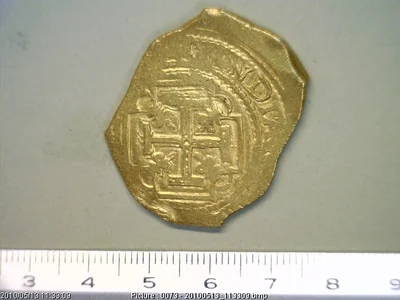
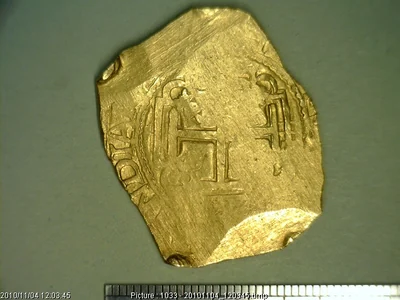
Most 1700-era 8 escudos are cob coins ("macuquinas"), meaning they were hand-struck on irregular, hammered gold planchets rather than perfectly round machine-made blanks. That crude, off-center look is normal for the type and does not mean the coin is damaged or fake.
Technical specs (verify yours against these)
- Metal: Gold, 0.875 fineness (21 karat)
- Weight: 26.94 grams
- Diameter: 33 millimeters
- Denomination: 8 escudos
- Ruler: Carlos II (Habsburg)
- Year: 1700
- Mint: Mexico City
How much is it worth?
Start with the floor. At 26.94 grams of 0.875 gold, this coin contains about 23.6 grams (0.76 troy ounces) of pure gold. That gives it a melt value in the low thousands of dollars at current gold prices, before any collector premium. No authentic 8 escudos of this type sells for less than its gold content.
Above that floor, price depends on date, mint, and condition. The 1700 date carries extra demand because it closes the Habsburg line. Genuine, attributable examples in collectible grades typically trade from the mid-thousands into the low five figures. Exceptional, well-struck, higher-grade pieces certified by NGC or PCGS can climb higher still.
| Coin | Year | Metal | Typical value range (USD) |
|---|---|---|---|
| 8 escudos Carlos II | 1700 | Gold, 0.875, 26.94 g | Melt floor (~2,000+) up to low five figures depending on grade |
| Same, low grade / heavily worn cob | 1700 | Gold | Around gold content plus a modest premium |
| Same, high grade, certified | 1700 | Gold | Strong premium, five figures possible |
We give ranges rather than one number on purpose. Colonial cob gold is priced coin by coin. Two 8 escudos of the same date can sell for very different amounts based on how much of the design survives, whether the date and assayer are legible, and whether it has been certified. Get an actual appraisal before you accept any offer.
Why it commands these prices
Three things drive the value here, and none of them is just "it's old":
- Gold content. Almost 24 grams of gold gives every genuine example a hard cash floor.
- Historical significance. Carlos II died in 1700 without a direct heir, triggering the War of the Spanish Succession and the shift to the Bourbon dynasty. Coins dated 1700 mark the end of Habsburg gold coinage in the Americas, which collectors pay a premium for.
- Scarcity. High-denomination colonial gold was made in small numbers and used in large-scale commerce. Few survived, and fewer survived in collectible condition.
How to tell if yours is genuine
Colonial gold is heavily counterfeited, so authentication matters more here than with almost any Mexican coin.
- Weigh it. Use a jewelry scale. A genuine full-weight piece is close to 26.94 grams. A coin that is significantly light is a red flag.
- Measure it. Around 33 millimeters in diameter.
- Check the details. Look at the cross and shield design, the mint mark, and the assayer's initial. Fakes often have soft, wrong, or invented engraving styles.
- Be suspicious of any "bargain." If someone offers to sell you one well below its gold value, assume it is fake or stolen.
Because the stakes are high, do not rely on eyeballing alone. For a coin in this value class, professional certification from NGC or PCGS is worth the cost. A certified 8 escudos sells faster and for more, because the buyer no longer has to gamble on authenticity.
Where to sell it (safely)
Do not dump a coin like this to the first Facebook buyer. For a piece worth thousands, your best options are:
- A verified numismatic dealer from the Pesoteca directory, who can appraise it in person and pay fair market value without middleman markup.
- The Pesoteca buy-and-sell forum, where collectors who actually understand colonial gold gather.
- For top-grade certified examples, a major auction house that regularly handles Latin American gold.
Before you sell, photograph the obverse, reverse, and edge in good light, and know the gold spot price that day so you can sanity-check any offer. Never mail or hand over a precious-metal coin before you have verified the buyer and been paid.
About "error" coins
Genuine mint errors (off-center strikes, die rotation, doubled strikes) can add value, but most of what people post online as errors on cob coins is just the normal irregular shape, or post-mint damage like scratches and corrosion. If you think yours has a real error, upload clear photos to the Pesoteca forum and let experienced collectors weigh in before you assume it is worth more.
Have one sitting in a drawer or an inherited box? Post clear photos of both sides to the Pesoteca forum and get a read on what your specific example is worth in 2026 before you sell.
Historical context
Carlos II, the last monarch of the House of Austria in Spain, reigned between 1665 and 1700. His death without direct heirs in 1700 set off the War of the Spanish Succession and brought the House of Bourbon to the throne with Felipe V.
The 8 escudos of gold dated 1700, known as the gold onza, were struck by the cob (macuquino) method at the Mexican Mint and represent the highest gold denomination of the viceroyalty. Coinciding with the end of the reign, these pieces close the Habsburg minting stage in New Spain.
Because of its status as a transitional issue between dynasties, its high intrinsic value and its scarcity, the gold onza of Carlos II is one of the most prized pieces of Mexican colonial gold.
This piece belongs to the era
Colonial / Virreinato →Explore all the Mexican coins of this era, their historical context and how they connect to the monetary system of the period.
Value range of this piece
Market estimate: $51,232 - $86,286 MXN depending on the grade of preservation (typical range between a circulated and an uncirculated piece).
See the full breakdown by grade (VG, F, VF, EF, AU, MS-60, MS-63, MS-65) for the whole series →
Same denomination, other years
8 escudos Oro 0.875 (21k) · 8 Escudos Carlos II
Frequently asked questions
How much is a 1700 Carlos II 8 escudos worth?
It contains about 0.76 troy ounces of gold, so its melt floor is in the low thousands of dollars. Above that, genuine collectible examples typically sell from the mid-thousands into the low five figures depending on grade, legibility, and certification. Get an in-person appraisal before selling.
Is the 8 escudos Carlos II 1700 rare?
Yes. It is the highest gold denomination of colonial Mexico and dated to the final year of Habsburg rule, so surviving examples are scarce, especially in collectible condition. That scarcity, plus almost an ounce of gold, is why it commands strong prices.
Where can I sell a 1700 Carlos II 8 escudos?
Use a verified dealer from the Pesoteca directory for an in-person appraisal, or the Pesoteca buy-and-sell forum among collectors. For a top certified example, a major auction house that handles Latin American gold is best. Never sell a gold coin unseen or to the first online buyer.
How do I know if my 8 escudos Carlos II is genuine?
Weigh it (about 26.94 grams) and measure it (about 33 millimeters). Check the shield, mint mark, and assayer initial against known genuine examples. Colonial gold is heavily faked, so for a coin worth this much, professional certification from NGC or PCGS is strongly recommended.
Conversation
0 comments
Loading comments…