
8 Escudos Carlos IV 1792 Gold Coin: Value & Where to Sell
The 8 Escudos Carlos IV 1792 Gold Coin: Value & Where to Sell is worth between $51,403 and $86,574 MXN depending on its grade of preservation.
Prices updated: August 2026
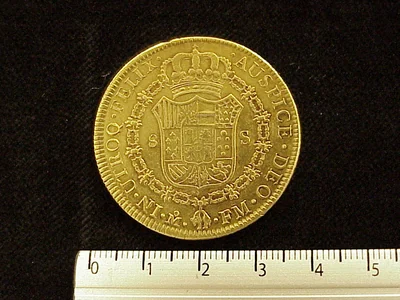
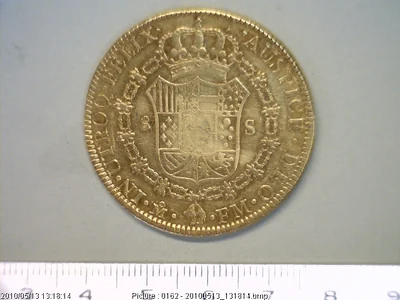
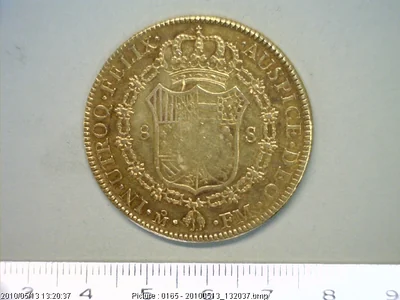
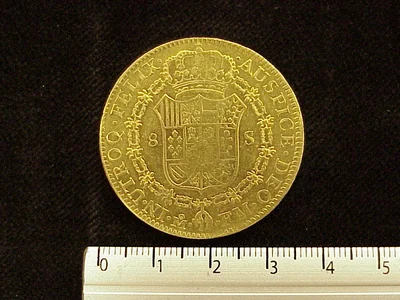
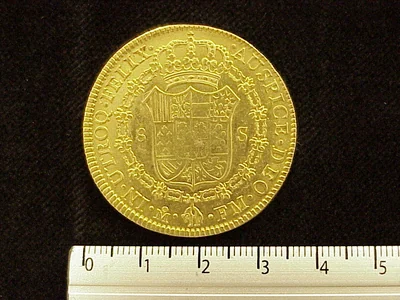
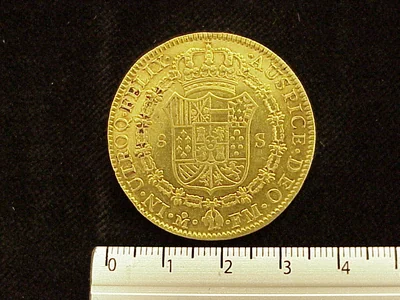
Third type; bust and Charles IIII legend.
Third type; bust and Charles IIII legend.
The 8 Escudos Carlos IV 1792 Gold Coin: Value & Where to Sell is worth between $51,403 and $86,574 MXN depending on its grade of preservation.
Prices updated: August 2026
How much is the 8 Escudos Carlos IV 1792 Gold Coin: Value & Where to Sell worth?
The estimated value of the 8 Escudos Carlos IV 1792 Gold Coin: Value & Where to Sell ranges from $51,403 (circulated, XF) up to $86,574 (official blister pack), with $73,785 as a reference for an uncirculated (UNC) piece. The estimate is based on the official mintage and the historical behavior of the family.
The real price depends on four factors: the grade of preservation (a circulated piece is worth the low end of the range; an uncirculated one, or one still in its official blister pack, the high end), the finish (satin vs mirror/proof), the rarity within the series based on the mintage, and the metal spot price on the day of the deal when the piece is silver or gold. Check the value-by-grade table above and compare with equivalent pieces before buying or selling.
Where to buy or sell this coin?
Browse the national directory of numismatic shops or the community forum to trade directly with other collectors.
Description
If you inherited an 1792 gold coin marked "CAROLUS IIII" from the Mexico City mint, here is the honest answer: it is a genuine gold piece with a real floor value, and its condition decides whether it is worth about 1,800 USD or several thousand more. This is a Spanish colonial 8 Escudos, popularly called an "onza," and it was the highest-denomination coin in the entire colonial system.
What you actually have
The 8 Escudos of Carlos IV, dated 1792, was struck at the Casa de Moneda de México (the Mexico City mint) while Mexico was still under Spanish rule. At that time the Mexico mint was the largest silver and gold producer in the Spanish Empire, so these pieces were made in real numbers, but survivors in good condition are another story.
Key specs to confirm what you own:
- Metal: Gold, 0.875 fine (21 karat)
- Weight: 27.03 grams (about 0.761 troy ounces of pure gold)
- Diameter: 38 mm
- Edge: Diagonally reeded
- Catalog reference: KM#159
- Assayer initials: FM (the mint official who certified the metal's fineness)
- Type: Third type, bust and legend "CAROLUS IIII"
The assayer letters (FM here) and the mint mark matter for identification and for spotting fakes, so look closely at both.
How much is it worth in 2026?
Because this coin contains roughly 0.761 troy ounces of gold, it has a melt floor that moves with the gold price. At current levels that floor sits well above 1,800 USD, and no genuine, undamaged example should ever sell below its metal value. That is the single most important fact for someone who just wants to know "is it worth money." Yes, it is.
Above the melt floor, price depends on grade (condition) and eye appeal:
| Condition | What it looks like | Approximate value (USD) |
|---|---|---|
| Damaged / holed / heavily worn | Mount marks, scratches, smooth details | At or slightly above melt (~1,800+) |
| Circulated (Fine to VF) | Clear design, honest wear | ~2,000 to 3,000 |
| About Uncirculated | Sharp detail, minimal wear | ~3,000 to 5,000+ |
| Uncirculated / certified high grade | Original luster, strong strike | 5,000 to five figures for the finest |
These are working ranges, not guarantees. Colonial gold is priced piece by piece, and a certified example from NGC or PCGS commands a premium over a raw coin because the buyer knows exactly what they are getting.
The myth to ignore
A lot of online chatter treats any old Spanish colonial gold coin as an automatic fortune. Reality: the 8 Escudos was minted for decades, and common dates in worn condition are essentially bullion with a small collector bump. The record prices you see for colonial gold belong to rare dates, rare mints, or exceptional grades. A worn, common-date 1792 is valuable because of its gold, not because it is unique.
How to check what yours is worth
- Weigh and measure it. Use a jewelry scale and a caliper. It should hit 27.03 grams and 38 mm. A coin that is light, thin, or the wrong diameter is a red flag for a fake or a cast copy.
- Inspect the edge and details. The edge should be diagonally reeded. Look at the sharpness of the bust and legend; cast fakes usually show mushy, soft detail and a grainy surface.
- Confirm the mint mark and assayer (FM). Mismatched or wrong-style lettering points to a counterfeit. Colonial gold is heavily faked, so this step matters.
- Get it authenticated. For a coin worth thousands, professional grading (NGC or PCGS) pays for itself. It confirms authenticity and locks in a grade buyers trust.
- Never accept an offer below melt. If someone offers you less than the gold content is worth, walk away.
If you are unsure about authenticity or an unusual detail, post clear photos of the front, back, and edge in the Pesoteca forum and the community can weigh in before you commit to anything.
Where to sell it
Because this is a precious-metal coin, sell only where you can show the piece and its weight in person or with verified certification. Your safest options are a verified numismatic dealer from the Pesoteca directory, who can value it on the spot, or the Pesoteca buy-and-sell forum where collectors trade directly. Photograph the obverse, reverse, and edge, check the range in this page first, and avoid dumping it to the first buyer on social media.
Want a second opinion on your 1792 8 Escudos before you sell? Bring your photos and weight to the Pesoteca forum and let the community confirm what you have.
Historical context
Eight escudos Carlos IV, 1792, Mexico City mint. The listing records the third type with bust and the legend Carlos IIII. The year Manuel Godoy took over the ministry in Spain as Carlos IV's favorite, a position that would dominate the reign's politics for the next fifteen years. In New Spain the second Count of Revillagigedo continued his enlightened administration: he created the Real Colegio de Minería under the direction of Fausto de Elhuyar, inaugurated the botanical garden, and organized the viceroyalty's archive. In Europe the French Revolution was radicalizing with the assault on the Tuileries in August and the proclamation of the First Republic in September. Louis XVI would be executed in January of the following year. The onza weighs 27.06 grams with .875 fineness. Produced by mill with a standardized round planchet. The obverse shows the laureate bust of Carlos IV with the legend CAROLUS IIII DEI GRATIA. The assayer's signature appears in the field of the reverse. Pieces of 1792 are collectible for the dense European context: Godoy's rise to power in Spain and revolutionary radicalization in France occurring at the same time.
This piece belongs to the era
Colonial / Virreinato →Explore all the Mexican coins of this era, their historical context and how they connect to the monetary system of the period.
Value range of this piece
Market estimate: $51,403 - $86,574 MXN depending on the grade of preservation (typical range between a circulated and an uncirculated piece).
See the full breakdown by grade (VG, F, VF, EF, AU, MS-60, MS-63, MS-65) for the whole series →
Same denomination, other years
8 escudos Oro 0.875 (21k) · 8 Escudos Carlos IV
Frequently asked questions
How much is the 1792 Carlos IV 8 Escudos worth?
It contains about 0.761 troy ounces of gold, so its melt floor sits above 1,800 USD at current prices and it never sells below that. Circulated examples typically bring 2,000 to 3,000 USD, and About Uncirculated to certified high-grade pieces can reach 5,000 USD or more depending on condition and eye appeal.
Is the 1792 8 Escudos rare?
The type was minted for years and common dates are not rare, which is why worn examples trade close to their gold value. Rarity and record prices come from exceptional grades and scarce date-and-mint combinations. A common-date 1792 in worn shape is valuable mainly for its gold content, not its rarity.
Where can I sell my 1792 Carlos IV 8 Escudos?
Sell through a verified numismatic dealer from the Pesoteca directory, who can appraise it on the spot, or the Pesoteca buy-and-sell forum among collectors. Since it is a gold coin, only deal where the piece and its weight can be verified. Photograph the obverse, reverse, and edge, and never accept an offer below the metal value.
How can I tell if my 8 Escudos is genuine?
Weigh it (27.03 grams) and measure it (38 mm) and compare to the specs above. Check for the diagonally reeded edge, the Mexico mint mark, and the FM assayer initials, and look for sharp, crisp detail. Colonial gold is heavily counterfeited, so for a coin worth thousands, professional authentication through NGC or PCGS is the safest confirmation.
Conversation
0 comments
Loading comments…