
8 Escudos Carlos IV 1795 Gold Coin: Value & Prices
The 8 Escudos Carlos IV 1795 Gold Coin: Value & Prices is worth between $51,308 and $86,414 MXN depending on its grade of preservation.
Prices updated: August 2026
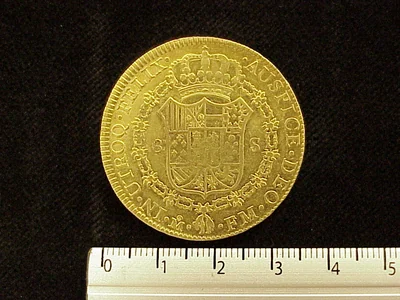
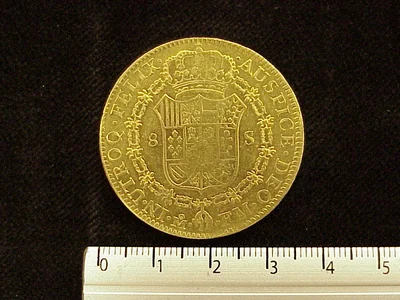
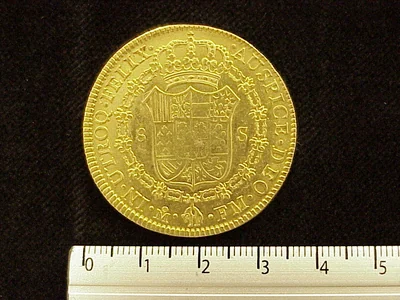
Third type; bust and Charles IIII legend.
Third type; bust and Charles IIII legend.
The 8 Escudos Carlos IV 1795 Gold Coin: Value & Prices is worth between $51,308 and $86,414 MXN depending on its grade of preservation.
Prices updated: August 2026
How much is the 8 Escudos Carlos IV 1795 Gold Coin: Value & Prices worth?
The estimated value of the 8 Escudos Carlos IV 1795 Gold Coin: Value & Prices ranges from $51,308 (circulated, XF) up to $86,414 (official blister pack), with $73,648 as a reference for an uncirculated (UNC) piece. The estimate is based on the official mintage and the historical behavior of the family.
The real price depends on four factors: the grade of preservation (a circulated piece is worth the low end of the range; an uncirculated one, or one still in its official blister pack, the high end), the finish (satin vs mirror/proof), the rarity within the series based on the mintage, and the metal spot price on the day of the deal when the piece is silver or gold. Check the value-by-grade table above and compare with equivalent pieces before buying or selling.
Where to buy or sell this coin?
Browse the national directory of numismatic shops or the community forum to trade directly with other collectors.
Description
If you inherited a heavy gold coin dated 1795 with a man's bust and the name CAROLUS IIII, you have a Spanish colonial 8 Escudos struck at the Mexico City mint. This is a genuine gold coin, not a token or a medal, and it carries real value. In 2026, even a worn example is worth well over 1,500 USD for its gold alone, and better-preserved pieces sell for several thousand.
The short answer: this coin is worth money because it is gold, not because it is old. That distinction matters, and we will explain it below.
What you actually have
The 8 Escudos was the largest gold denomination of the Spanish colonial system. Collectors and dealers call it an "onza" (Spanish for "ounce"), though it is not a full troy ounce of pure gold. Here are the hard numbers, which you should verify on your own coin:
| Feature | Specification |
|---|---|
| Denomination | 8 Escudos (gold) |
| Date | 1795 |
| Ruler | Carlos IV (bust and legend read CAROLUS IIII) |
| Mint | Mexico City (Mo mint mark) |
| Assayer initials | FM |
| Weight | 26.98 g |
| Diameter | 37 mm |
| Fineness | .875 gold (about 23.6 g pure gold) |
| Edge | Diagonal reeding |
| Catalog reference | KM#159 |
The FM initials belong to the assayer, the mint official who certified the gold content. The bust type on this issue is the third type, showing the aged portrait of Carlos IV, even though the legend still spells his name in the older Latin form, CAROLUS IIII.
What it's worth in 2026
With about 23.6 grams of pure gold, this coin has a hard floor at melt value. That number moves with the gold market, but at recent prices the metal alone is worth well over 1,500 USD. No genuine 8 Escudos of this era trades below its gold content, so that is your baseline.
Above melt, condition drives everything:
- Heavily worn, cleaned, or damaged: near melt value, roughly 1,600 to 2,000 USD depending on the gold spot price.
- Circulated but honest, original surfaces: commonly 2,000 to 3,500 USD.
- Sharp detail, minimal wear (high grade): 4,000 USD and up, with the best certified examples reaching five figures.
Date, mint, and assayer combination affect the premium. Mexico City 8 Escudos from the 1790s are the most available of the colonial gold onzas, so they trade closer to bullion than the truly scarce dates from smaller mints. If you want a broader picture of how grade multiplies value, see our guide to coin grading and condition.
The myth: "it's from 1795, it must be a fortune"
Age alone does not make a coin valuable. Millions of Spanish colonial coins survive, and most trade close to metal value. What actually commands a premium is a combination of scarcity (low mintage or few survivors), collector demand, and grade. A common date in average condition is worth its gold plus a modest bump, not a life-changing sum.
The flip side: because this is a large gold coin, it is heavily counterfeited. Some fakes are gold-plated base metal (light and worth nothing), and others are cast copies in real gold that still carry a premium over melt when sold as genuine. Both cost buyers real money. Read the authenticity section before you buy or sell.
How to tell if yours is genuine
- Weigh it. Use a jewelry scale. A genuine coin should be very close to 26.98 g. A coin that is light is almost certainly a fake or heavily worn beyond collector interest.
- Measure the diameter. It should be 37 mm. Check the edge too: genuine pieces show diagonal reeding.
- Study the strike. Colonial dies have a specific engraving style. Fuzzy, soft, or "melted-looking" detail suggests a cast copy. Compare the mint mark (Mo) and assayer initials (FM) against reference images.
- Be suspicious of a bargain. Any offer far below the coin's gold value is a red flag, not a lucky find.
For a coin this valuable, professional authentication is worth it. A verified numismatic dealer from the Pesoteca directory can examine it in person, and third-party grading (NGC or PCGS) both authenticates and grades the piece, which raises its resale value.
Do error coins add value?
Genuine mint errors (off-center strikes, die rotation, doubled strikes) can multiply value when they are verifiable. But most "errors" people spot on colonial coins are post-mint damage: scratches, corrosion, or edge dents. If you think yours has a real error, post clear photos on the Pesoteca forum and let collectors weigh in before you assume anything.
Where to sell it
Because this is a precious-metal coin, sell only where the piece can be examined and weighed:
- A verified numismatic dealer in the Pesoteca directory will appraise it on the spot and pay fairly, without middleman markups.
- The Pesoteca buy-and-sell forum connects you directly with collectors, who often pay more than a dealer for the right coin.
Before you sell, photograph the obverse, reverse, and edge, and check the price range in this listing so you know your floor. Do not dump a gold coin to the first Facebook buyer, and never let anyone quote a price below its melt value.
Have a 1795 8 Escudos in hand and not sure whether it's the common Mexico City date or something scarcer? Post the mint mark and assayer initials on the Pesoteca forum and we'll help you pin it down.
Historical context
Eight escudos Carlos IV, 1795, Mexico mint. The record lists the third type with bust and the legend Carlos IIII. Year of the Treaty of Basel, which ended the War of the Convention between Spain and the French Republic: Spain ceded the Spanish part of Hispaniola (Santo Domingo) to France, the first significant American colonial loss of the reign of Carlos IV. In Mexico, Miguel de la Grúa Talamanca, Marquis of Branciforte, governed as viceroy from July 1794. In the same year Manuel Godoy received the title of Prince of the Peace for the Treaty of Basel, a distinction that consolidated his power at court. The ounce weighs 27.06 grams with .875 fineness. Produced by mill with a round planchet, the reverse showing the royal crowned shield and the assayer's signature. Pieces of this year are testimony to the political turning point of the reign when Spain lost diplomatic autonomy before France. The cession of Santo Domingo opened the signal of territorial erosion that would widen over the following thirty years until the continental American independences.
This piece belongs to the era
Colonial / Virreinato →Explore all the Mexican coins of this era, their historical context and how they connect to the monetary system of the period.
Value range of this piece
Market estimate: $51,308 - $86,414 MXN depending on the grade of preservation (typical range between a circulated and an uncirculated piece).
See the full breakdown by grade (VG, F, VF, EF, AU, MS-60, MS-63, MS-65) for the whole series →
Same denomination, other years
8 escudos Oro 0.875 (21k) · 8 Escudos Carlos IV
Frequently asked questions
How much is a 1795 8 Escudos Carlos IV gold coin worth?
It has a hard floor at its gold value, well over 1,500 USD in {{AÑO}} depending on the spot price. Worn examples sell near melt (roughly 1,600 to 2,000 USD), honest circulated pieces bring 2,000 to 3,500 USD, and high-grade certified coins reach 4,000 USD and up. Condition and grade drive the premium above metal.
Is the 1795 8 Escudos rare?
Not especially, in average condition. Mexico City 8 Escudos from the 1790s are the most available of the Spanish colonial gold onzas, so common dates trade close to their gold value with a modest premium. Real scarcity, and higher prices, come from top grades or unusual mint and assayer combinations, not from the 1795 date alone.
Where can I sell a 1795 8 Escudos Carlos IV?
Sell where the coin can be examined and weighed: a verified dealer in the Pesoteca directory who appraises it in person, or the Pesoteca buy-and-sell forum among collectors. Photograph the obverse, reverse, and edge, check the price range in this listing first, and never accept an offer below the coin's gold value.
How do I tell if my 1795 8 Escudos is genuine?
Weigh it (should be very close to 26.98 g) and measure it (37 mm, with diagonal reeding on the edge). Compare the strike style, the Mo mint mark, and the FM assayer initials to reference images. Because these gold coins are heavily counterfeited, get a valuable example authenticated by a professional dealer or a grading service like NGC or PCGS.
Conversation
0 comments
Loading comments…