
8 Escudos Fernando VII 1814: Value & Real Prices
The 8 Escudos Fernando VII 1814: Value & Real Prices is worth between $51,441 and $86,638 MXN depending on its grade of preservation.
Prices updated: August 2026
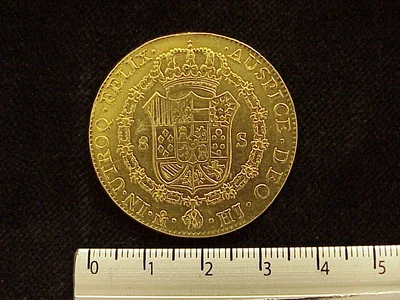
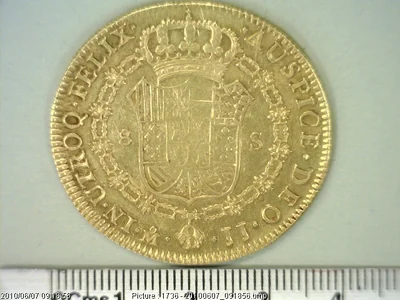
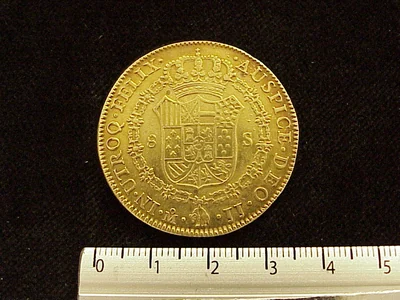
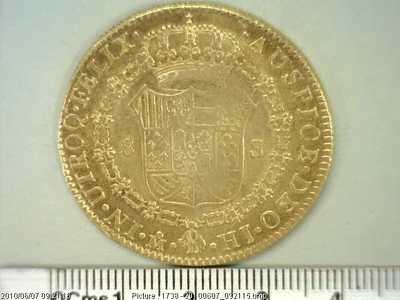
Second type; bare bust.
Second type; bare bust.
The 8 Escudos Fernando VII 1814: Value & Real Prices is worth between $51,441 and $86,638 MXN depending on its grade of preservation.
Prices updated: August 2026
How much is the 8 Escudos Fernando VII 1814: Value & Real Prices worth?
The estimated value of the 8 Escudos Fernando VII 1814: Value & Real Prices ranges from $51,441 (circulated, XF) up to $86,638 (official blister pack), with $73,839 as a reference for an uncirculated (UNC) piece. The estimate is based on the official mintage and the historical behavior of the family.
The real price depends on four factors: the grade of preservation (a circulated piece is worth the low end of the range; an uncirculated one, or one still in its official blister pack, the high end), the finish (satin vs mirror/proof), the rarity within the series based on the mintage, and the metal spot price on the day of the deal when the piece is silver or gold. Check the value-by-grade table above and compare with equivalent pieces before buying or selling.
Where to buy or sell this coin?
Browse the national directory of numismatic shops or the community forum to trade directly with other collectors.
Description
Found an 1814 8 escudos of Fernando VII in a family collection? Here is the honest bottom line: this is a real gold coin, so it has a hard floor of over 1,700 USD in melt value alone (at current gold prices), and desirable examples sell for 2,000 to 5,000 USD or more at auction. It is worth real money whether it is common or scarce, which makes it one of the few old coins that is almost never worth just a few dollars.
What you actually have
The 8 escudos was the largest gold coin of the Spanish colonial system, popularly called an onza de oro (a gold "ounce"). Fernando VII was the Spanish king, and coins bearing his portrait were struck in colonial Mexico (then the Viceroyalty of New Spain) during the war of independence that began in 1810.
The specifications matter because they set the value floor:
- Weight: 27.05 grams
- Diameter: 37 mm
- Edge: diagonal reeded
- Metal: gold, roughly 0.875 fine (21 karat) for the milled Bourbon issues, giving close to 24 grams of pure gold
- Denomination: 8 escudos, the top of the escudo system
That gold content is the key. Nearly 24 grams of pure gold means the coin can never be worth less than its melt value, which as of 2026 sits above 1,700 USD. No amount of wear takes it below that floor.
What it is worth in USD
Value splits into two layers: the metal, and the numismatic premium on top.
A worn, common-date example trades close to gold value, in the 1,800 to 2,200 USD range. Coins with a sharp portrait of the king and clean surfaces move into collector territory, typically 2,500 to 5,000 USD. Scarce mint-and-assayer combinations, or high grades certified by NGC or PCGS, push well past that.
| Condition | Approx. value (USD) | Driven by |
|---|---|---|
| Heavily worn, damaged | 1,800 to 2,200 | Gold content only |
| Circulated, clear detail | 2,500 to 3,500 | Metal plus modest premium |
| Attractive, sharp relief | 3,500 to 5,000 | Grade and eye appeal |
| Rare mint/assayer, certified high grade | 6,000 and up | True rarity |
The exact figure depends on three things: the mint that struck it (Mexico City, Guadalajara, Durango and others each carry different scarcity), the assayer initials, and the grade. Two 1814 coins can be worth wildly different sums based on which mint mark they carry.
Why old does not equal a fortune
Most people assume a 200-year-old coin is automatically rare and priceless. For most coins that is a myth. This one is different for a single reason: it is gold. The age adds a collector premium, but the real backbone of its value is the metal in your hand. Do not expect a life-changing sum from a common example; a Mexico City piece in average shape is a solid four-figure coin, not a museum lot.
The pieces that break records are the low-mintage mint-and-assayer varieties in top preservation. If yours is a standard Mexico City example with honest wear, price it near gold plus a fair premium and move on.
How to tell if yours is genuine
Because it is gold, this coin is heavily counterfeited. Check these before you trust any offer:
- Weigh it on a jeweler's scale. It should read very close to 27.05 grams. A light coin is a red flag for a fake or a low-gold copy.
- Measure the diameter with calipers against 37 mm.
- Inspect the edge. It should show diagonal reeding, not a plain or seam-marked edge (a seam suggests a cast fake).
- Study the engraving. Colonial dies have a specific style in the royal portrait, the mint mark and the assayer initials. Modern copies often look soft or slightly off in the lettering.
- Be suspicious of any deal well below gold value. Nobody sells real gold at a loss.
For anything meaningful, get it authenticated and graded by NGC or PCGS. A certified coin sells faster and for more, and it removes the buyer's fear of fakes.
Where to sell it
Since this is a precious-metal coin, only deal with someone who will let you present the coin and confirm its weight in person before money changes hands.
- A verified numismatic dealer from the Pesoteca shop directory will appraise it on the spot, by city, without a middleman markup.
- The Pesoteca buy-and-sell forum connects you with collectors who pay real numismatic value, not just melt.
- If you want top dollar and the coin is scarce, consign it to a major auction house after certification.
Photograph the obverse (portrait), reverse and edge in good light, note the mint mark and assayer, and compare against the value range above before you accept any offer. Skip dumping it to the first bidder on social media.
Not sure which mint struck your 1814 escudo, or whether it clears the melt floor by much? Post clear photos of both sides and the edge on the Pesoteca forum and let collectors read the mint mark for you.
Historical context
Eight escudos Fernando VII, 1814, Mexico City Mint. The record notes the second type with a bare bust, an important iconographic change: the obverse no longer shows the armored bust of the ideal portrait used during the king's captivity but a bare bust that comes closer to the new reality of the liberated monarch. The year of Fernando VII's return to Spain in March after the end of the Napoleonic occupation. In May he abolished the Constitution of Cadiz and restored absolutism. Krause distinguishes KM#161 precisely by this update of the portrait in the American mints. In New Spain, Felix María Calleja governed as viceroy from March 1813. In November 1813 José María Morelos had promulgated the Constitution of Apatzingan, and in 1814 the insurgency maintained control of broad areas of the south and the Bajio. The ounce weighs 27.06 grams with 0.875 fineness. Produced by mill press with a round planchet. Pieces from 1814 open the second Fernando VII iconographic type at the capital mint and are testimony to the year in which restored absolutism was imposed simultaneously in Spain and in New Spain.
This piece belongs to the era
Colonial / Virreinato →Explore all the Mexican coins of this era, their historical context and how they connect to the monetary system of the period.
Value range of this piece
Market estimate: $51,441 - $86,638 MXN depending on the grade of preservation (typical range between a circulated and an uncirculated piece).
See the full breakdown by grade (VG, F, VF, EF, AU, MS-60, MS-63, MS-65) for the whole series →
Same denomination, other years
8 escudos Oro 0.875 (21k) · 8 Escudos Fernando VII
Frequently asked questions
How much is an 1814 8 escudos of Fernando VII worth?
It has a hard floor above 1,700 USD in gold value alone (about 24 grams of pure gold). Worn common examples trade near 1,800 to 2,200 USD, coins with sharp detail run 2,500 to 5,000 USD, and rare mint-and-assayer varieties in high certified grades sell for 6,000 USD and up.
Is the 1814 8 escudos rare?
It depends entirely on the mint mark and assayer. Mexico City issues are the most common and priced mainly on their gold content. Coins from smaller mints such as Guadalajara or Durango, or high grades certified by NGC or PCGS, are genuinely scarce and command strong premiums.
Where can I sell my 1814 8 escudos gold coin?
Use a verified dealer from the Pesoteca directory for an on-the-spot appraisal, or the Pesoteca buy-and-sell forum to reach collectors who pay real numismatic value. For scarce examples, certify it with NGC or PCGS first and consign to a major auction house. Always confirm weight in person before accepting payment.
How do I know if my 1814 8 escudos is genuine?
Weigh it (should be near 27.05 g) and measure it (37 mm), then check the diagonal reeded edge and the crispness of the portrait, mint mark and assayer letters. Cast fakes often show a seam on the edge or soft lettering. Any offer well below gold value is a warning sign. For certainty, have it authenticated by NGC or PCGS.
Conversation
0 comments
Loading comments…