
Mexico 100 Pesos Herencia Numismatica I (Busto, 2011)
Prices updated: August 2026
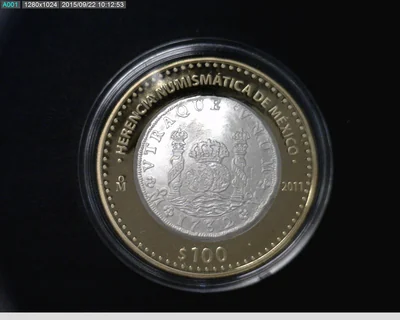
Reproduction of the bust of the colonial eight reales. Matte-brilliant finish.
Reproduction of the bust of the colonial eight reales. Matte-brilliant finish.
Design
Banxico
Obverse
Numismatic Heritage of Mexico I, bust, matte-and-brilliant
How much is the Mexico 100 Pesos Herencia Numismatica I (Busto, 2011) worth?
The market value of the Mexico 100 Pesos Herencia Numismatica I (Busto, 2011) is not yet documented with enough data to give a firm range. Weigh and measure your piece, compare it against the specifications, and check the forum for a second opinion.
The real price depends on four factors: the grade of preservation (a circulated piece is worth the low end of the range; an uncirculated one, or one still in its official blister pack, the high end), the finish (satin vs mirror/proof), the rarity within the series based on the mintage, and the metal spot price on the day of the deal when the piece is silver or gold. Check the value-by-grade table above and compare with equivalent pieces before buying or selling.
Where to buy or sell this coin?
Browse the national directory of numismatic shops or the community forum to trade directly with other collectors.
Description
If you inherited a Mexican 100 Pesos coin dated 2011 showing a colonial bust, you have a modern commemorative collector piece, not a circulating coin and not a hidden fortune. Its value comes mostly from its precious-metal content and its condition, typically running from around 50 to a few hundred USD depending on grade and whether it still sits in the original Banxico case.
This is the 100 Pesos Herencia Numismatica de Mexico I, Busto, struck in 2011. "Herencia Numismatica" translates to "Numismatic Heritage," a Banco de Mexico (Banxico, the country's central bank) collector series that reproduces designs from Mexico's coinage history. This first issue copies the bust from the colonial Real de a 8, the Spanish silver "piece of eight" that circulated across the Americas.
What it is, in plain terms
This is a bimetallic commemorative, meaning it has two metals: a precious-metal center in a different-metal ring. It was sold to collectors, not spent at the store. The finish is described as matte-brilliant (mate-brillo), a contrast finish where the raised design is frosted and the field is mirror-like. That finish is fragile, and it drives a big part of the price.
Real specifications (verify yours against these)
| Spec | Detail |
|---|---|
| Face value | 100 Pesos |
| Year | 2011 (single year of issue) |
| Weight | 33.967 grams |
| Diameter | 39 mm |
| Composition | Bimetallic |
| Edge | Interrupted reeded (canto estriado discontinuo) |
| Series | Herencia Numismatica de Mexico I |
| Obverse | Bust reproduced from the colonial Real de a 8 |
If your coin does not weigh 33.967 grams and measure 39 mm, treat it as suspect until proven otherwise.
What it is worth
Be honest with yourself about condition first. A matte-brilliant collector coin lives or dies on preservation. A piece still sealed in its original Banxico blister with paperwork commands the top of the range. A coin pulled out, handled, and scratched drops fast.
As a general guide:
- In original Banxico packaging, untouched: the strongest prices, several hundred USD is realistic for a clean example with demand behind it.
- Loose but attractive, no damage: a middle range, often in the low hundreds of USD.
- Handled, spotted, or with fingerprints on the matte: value falls toward metal-and-collector-floor territory, roughly 50 to 100 USD.
These are ranges, not guarantees. Mexican commemorative prices swing with metal spot prices and with how many collectors are chasing the series at a given moment. For a step-by-step condition read, use the Pesoteca coin grading guide.
Why the mintage matters (and why nobody quotes an exact one)
Banxico did not publish a firm mintage figure for this issue that we can cite as fact. When a central bank stays quiet on numbers, it usually means the coin came out in a limited numismatic set or a small dedicated run. Collector forums throw around figures, but none are confirmed, so ignore any listing that states an exact mintage as gospel.
Low, undocumented mintages can support a price over time, but they do not turn a modern commemorative into a rarity worth thousands. Set your expectations by grade and metal, not by rumor.
The myth to kill
"It is old-looking, so it must be valuable." This coin looks colonial because it copies a colonial design, but it was minted in 2011. It is not a 1700s Real de a 8. A genuine early colonial piece of eight is a different object at a different price. Do not let a seller (or a hopeful memory) blur the two.
How to tell if yours is genuine
- Weigh and measure it. 33.967 grams, 39 mm. Off-spec means walk away.
- Study the relief. Compare the bust detail against official Banxico images. Counterfeits show flat, mushy relief and weak edges.
- Check the edge. It should show the interrupted reeded pattern, not a smooth or fully-reeded edge.
- For anything above pocket-change value, get it graded. NGC or PCGS certification is the final word on authenticity and grade, and it raises resale value.
Where to sell it (US and beyond)
You have real options:
- US-based coin dealers and shows that handle world coins will make offers on the spot; ask more than one.
- NGC- or PCGS-graded pieces sell far more easily online because buyers trust the slab.
- Major world-coin auctions (Heritage Auctions, Stack's Bowers) are worth it only if your example is top-grade and sealed.
- Serious collector marketplaces for Mexican coinage. Always demand photos of the edge and the exact weight when you buy, since online listings are where fakes concentrate.
Compare the grade ranges above before you accept any offer, and never dump it on the first buyer who messages you.
Have the 2011 Herencia Numismatica in hand and unsure of its grade? Post clear photos of the obverse, reverse, and edge on the Pesoteca forum and let collectors weigh in before you sell.
Historical context
100 pesos silver, Numismatic Heritage of Mexico series I, 2011, a reproduction of the bust from the colonial Real de a 8. A piece from the Bank of Mexico's Heritage project dedicated to the late pillar or bust Real de a 8 struck in New Spain between 1772 and 1821. It is the successor to the classic pillar type, introduced under Carlos III with the explicit royal portrait on the obverse, replacing the Habsburg shield. The bust Real de a 8 became the most widely used international coin in world trade for five decades and was the basis of the U.S. dollar until 1857. The official weight of the Heritage reproduction is close to 31.10 grams with a silver fineness of 0.999. The matte-and-brilliant finish combines a satin field with mirror relief. Under the administration of the Bank of Mexico led by Agustín Carstens. The complete series I included six pieces in 2011 dedicated to colonial and early republican numismatic milestones. Collectible pieces for reproducing in modern format the archetype of the bust Real de a 8, the Hispanic coin with the greatest global commercial influence of the late 18th and early 19th centuries. The piece is, alongside the pillar type, the emblem of the Mexican colonial gold system.
This piece belongs to the era
Nuevos Pesos y actualidad →Explore all the Mexican coins of this era, their historical context and how they connect to the monetary system of the period.
Go deeper on this coin
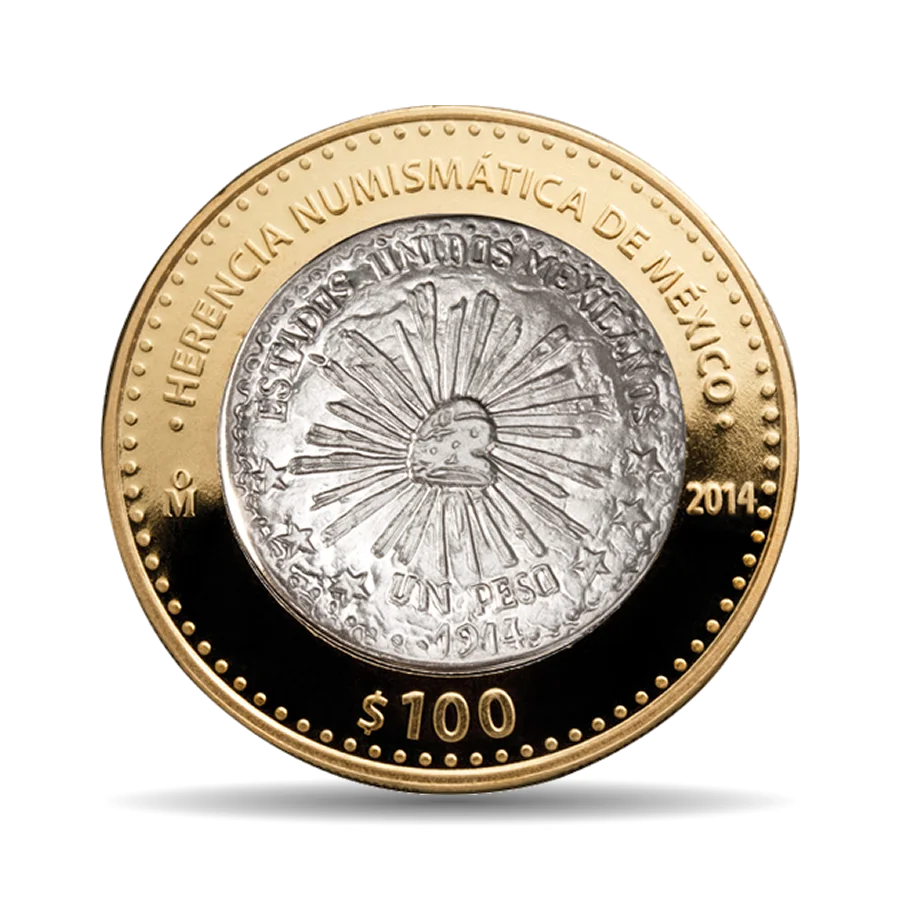
Herencia Numismática de México: la guía completa de la serie de 100 pesos de plata
La única serie mexicana de plata donde cada moneda reproduce otra moneda de nuestra historia: el Caballito, la Macuquina, el Columnario. Aquí te la explico completa, emisión por emisión, para que la caces sin que te vean la cara.
Read the full article →Value range of this piece
Value range without enough data for this piece.
See the full breakdown by grade (VG, F, VF, EF, AU, MS-60, MS-63, MS-65) for the whole series →
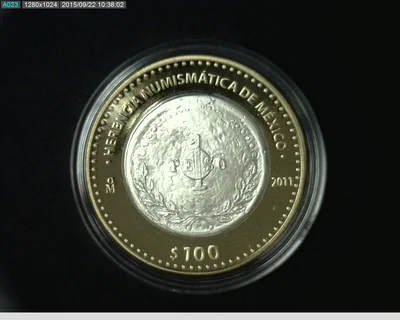
Other denominations from 2011
Herencia Numismática de México · Bimetálica
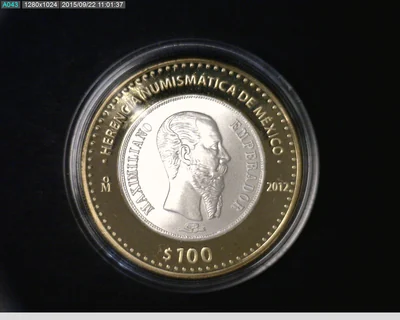
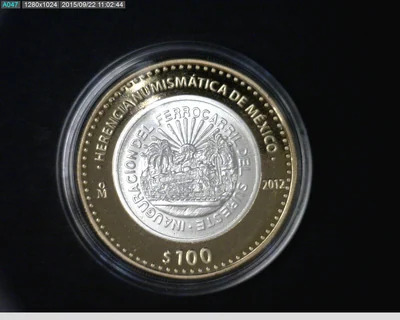
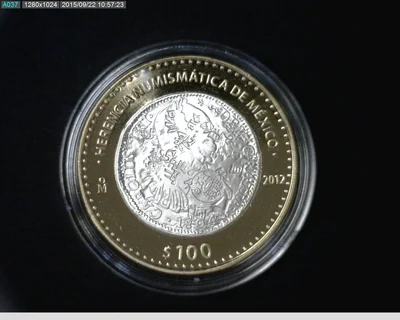
Same denomination, other years
100 pesos Bimetálica · Herencia Numismática de México
Official sources
Frequently asked questions
How much is the 2011 Mexico 100 Pesos Herencia Numismatica I (Busto) worth?
It depends heavily on condition. Sealed in its original Banxico case, a clean example can reach several hundred USD. Loose but undamaged coins typically sell in the low hundreds, while handled or spotted pieces drop toward 50 to 100 USD. Certified NGC or PCGS coins always bring more than ungraded ones.
Is the 2011 Herencia Numismatica 100 Pesos rare?
Banxico never published an exact mintage, which usually points to a limited numismatic run. That scarcity supports the price but does not make it a high-dollar rarity. It is a collectible modern commemorative, valued mainly by grade and metal content, not by extreme rarity.
How do I know if my coin is genuine?
Weigh and measure it first: a real one is 33.967 grams and 39 mm. Compare the bust relief to official Banxico images, since fakes look flat, and confirm the interrupted reeded edge. For any valuable example, NGC or PCGS certification is the definitive proof of authenticity.
Where can I sell it?
Sell through a US or international world-coin dealer, at a coin show, or via a trusted collector marketplace. Getting it graded by NGC or PCGS makes online resale easier and safer. For top-grade sealed examples, major auction houses like Heritage or Stack's Bowers are an option. Get more than one offer before selling.
Conversation
0 comments
Sources
Images for informational and educational purposes, attributed to their original source. Reference values; the real price depends on the grade, the specific variant and demand.
Loading comments…