
100 Pesos Herencia Numismatica I (Columnario, 2011): Value Guide
Prices updated: August 2026
Reproduction of the colonial Pillar Dollar. Matte-brilliant finish.
Reproduction of the colonial Pillar Dollar. Matte-brilliant finish.
Design
Banxico
Obverse
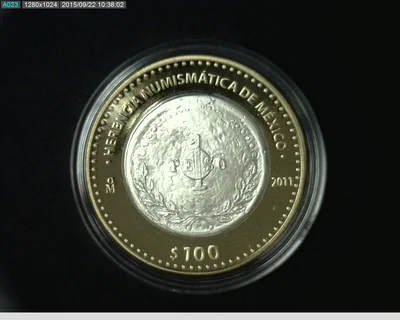
Herencia Numismática de México I, Columnario, matte-and-shine
How much is the 100 Pesos Herencia Numismatica I (Columnario, 2011): Value Guide worth?
The market value of the 100 Pesos Herencia Numismatica I (Columnario, 2011): Value Guide is not yet documented with enough data to give a firm range. Weigh and measure your piece, compare it against the specifications, and check the forum for a second opinion.
The real price depends on four factors: the grade of preservation (a circulated piece is worth the low end of the range; an uncirculated one, or one still in its official blister pack, the high end), the finish (satin vs mirror/proof), the rarity within the series based on the mintage, and the metal spot price on the day of the deal when the piece is silver or gold. Check the value-by-grade table above and compare with equivalent pieces before buying or selling.
Where to buy or sell this coin?
Browse the national directory of numismatic shops or the community forum to trade directly with other collectors.
Description
If you inherited a Mexican 100 Pesos Herencia Numismatica I, Columnario dated 2011, the short answer is this: it's worth real money, but not a fortune. This is a modern silver commemorative, so its floor is the metal it contains, and clean, uncirculated examples trade for more. In 2026, expect anywhere from roughly 30 to 100 USD depending on condition.
What you actually have
The "Herencia Numismatica de Mexico" (Numismatic Heritage of Mexico) series is a set of modern commemoratives issued by Banxico, Mexico's central bank. This particular coin, the first in the series, reproduces the design of the colonial Columnario or Pillar Dollar, the famous 8 reales that circulated across the Americas and Asia in the 1700s. The 2011 coin is a tribute reproduction, not the antique original.
Here are the exact specs, and they matter for authentication:
- Face value: 100 pesos
- Year: 2011 (single year of issue, no annual variants)
- Weight: 33.967 grams
- Diameter: 39 mm
- Composition: bimetallic, with a silver center
- Edge: discontinuous reeded (interrupted reeding)
- Finish: matte-and-brilliant (a mix of frosted and polished surfaces)
That weight and diameter are your first authentication check. If your coin is off on either number, something is wrong.
What it's worth in USD
Because this is a silver-content commemorative, it has a hard floor at melt value, then a collector premium on top for condition. Modern commemoratives like this are common enough that being "old" or "unusual-looking" does not make it rare on its own.
| Condition | What it means | Approx. value (USD) |
|---|---|---|
| Circulated, worn | Handled, scratches, dull surfaces | 30 to 45 |
| Uncirculated (UNC) | No wear, original luster | 50 to 80 |
| Certified MS-65+ | Graded gem by NGC or PCGS | 90 to 150 |
| In original Banxico blister/case | Sealed, untouched presentation packaging | Adds a premium |
These are guideline ranges for 2026, not fixed quotes. Two things move the number: the grade (how well preserved it is) and whether it still sits in its original Banxico presentation packaging. A sealed, never-opened example from the mint set carries the strongest premium.
Do not expect the headline prices you see attached to genuinely rare Mexican gold like the Centenario or the antique original Pillar Dollars. This is a modern issue, and the market prices it accordingly.
Is it rare?
Banxico did not publish an exact mintage for this issue, which usually points to a limited numismatic set release rather than mass circulation. That makes it scarcer than everyday coinage, but scarce is not the same as rare-and-record-breaking. The real value driver here is silver content plus condition, not runaway rarity.
How to tell if yours is genuine
Counterfeits of modern silver commemoratives exist, so run these checks before you buy or sell:
- Weigh it. It should hit 33.967 grams. A cheap scale that reads to 0.1 g is enough to catch fakes.
- Measure it. 39 mm across. Off-size is a red flag.
- Compare the relief. Fakes tend to have flat, mushy detail. Line up the columns and lettering against official Banxico images.
- Check the edge. It should show the discontinuous reeding described above.
- For anything you're paying a premium for, get it certified. NGC or PCGS grading is the definitive protection and adds resale confidence.
Errors and varieties
Genuine mint errors (off-center strikes, die rotation, doubled strikes) can multiply a coin's value, but most "errors" people spot are post-mint damage: dings, corrosion, cleaning marks. Those lower value, they don't raise it. If you think you have a real error, post clear photos in the Pesoteca forum and let the community weigh in before assuming it's worth extra.
Where to sell it
Your best options, in order of safety:
- A verified numismatic shop from the Pesoteca directory: they appraise on the spot and pay fair market, no middleman markup.
- The Pesoteca buy-and-sell forum, where you deal directly with collectors.
- Coin shows and reputable collector groups.
Before you list it, photograph the obverse, reverse, and edge under good light, and confirm which grade band above your coin falls into. That way you won't sell a UNC coin at a worn-coin price. Avoid dumping it to the first buyer on social media.
Not sure which grade band your Columnario lands in? Post your photos in the Pesoteca forum and get a second opinion before you sell.
Historical context
100 pesos silver Herencia Numismática de México series I, 2011, reproduction of the colonial Pillar Dollar. Inaugural issue of the Banco de México's Herencia Numismática project, a series of 100 pesos silver with a matte-and-shine finish that reproduces emblematic historical pieces from the Mexican catalog. The referenced piece is the so-called Pillar Dollar, the pillar eight reales struck in New Spain between 1732 and 1772 with the two crowned Pillars of Hercules over the sea and the bands with the legend PLVS VLTRA. The Columnario was the most influential Mexican silver coin in Atlantic and Pacific trade, and served as the basis for the U.S. dollar and the Chinese yuan of the era. Official weight of the reproduction close to 31.10 grams with .999 silver fineness. The matte-and-shine finish combines a satin field with mirror relief. Under the administration of the Banco de México led by Agustín Carstens. The complete series included six pieces in 2011 dedicated to colonial and early republican numismatic milestones. Pieces collectible for documenting the first phase of the Herencia project and for reproducing the most influential Hispanic coin in the global trade of the 18th century.
This piece belongs to the era
Nuevos Pesos y actualidad →Explore all the Mexican coins of this era, their historical context and how they connect to the monetary system of the period.
Go deeper on this coin
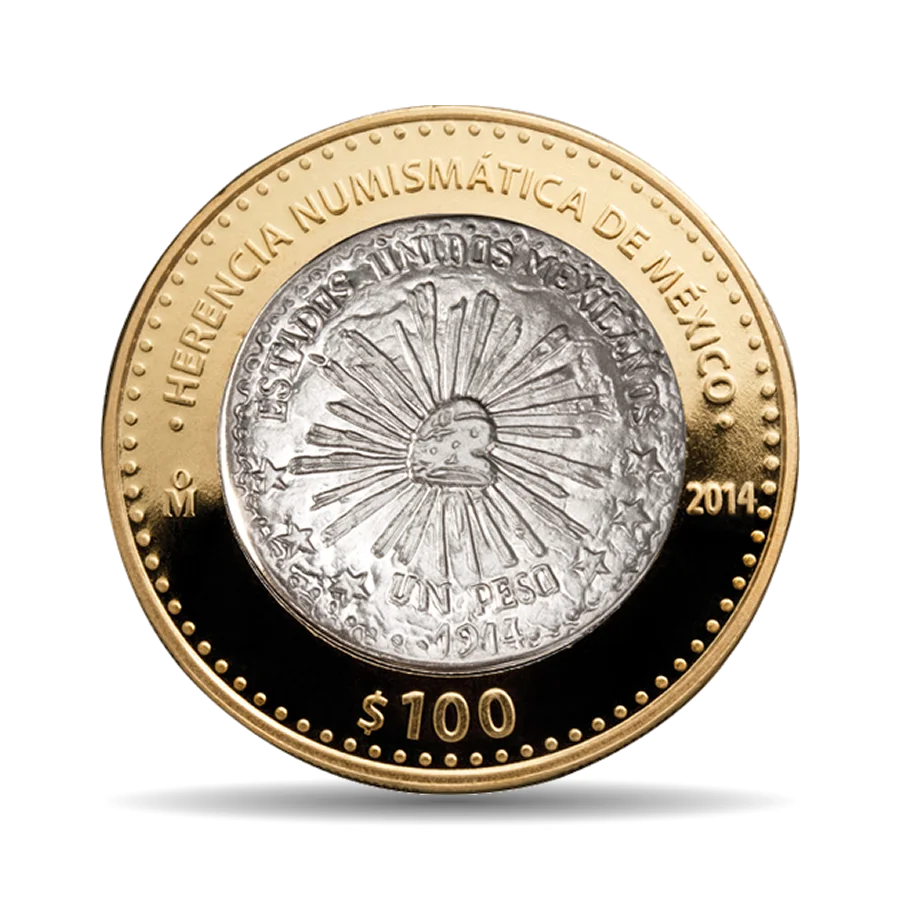
Herencia Numismática de México: la guía completa de la serie de 100 pesos de plata
La única serie mexicana de plata donde cada moneda reproduce otra moneda de nuestra historia: el Caballito, la Macuquina, el Columnario. Aquí te la explico completa, emisión por emisión, para que la caces sin que te vean la cara.
Read the full article →Value range of this piece
Value range without enough data for this piece.
See the full breakdown by grade (VG, F, VF, EF, AU, MS-60, MS-63, MS-65) for the whole series →
Other denominations from 2011
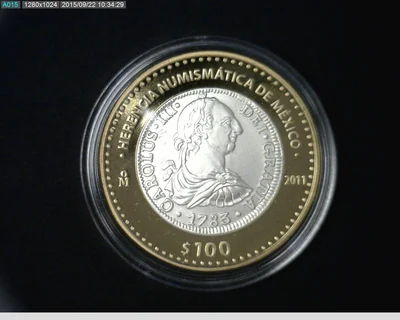
Herencia Numismática de México · Bimetálica
Same denomination, other years
100 pesos Bimetálica · Herencia Numismática de México
Official sources
Frequently asked questions
How much is a 2011 Mexican 100 Pesos Herencia Numismatica I, Columnario worth?
It depends heavily on condition. Circulated, worn examples run roughly 30 to 45 USD in {{AÑO}}, uncirculated coins bring 50 to 80 USD, and certified gem examples (MS-65 and up) can reach 90 to 150 USD. A sealed coin in its original Banxico packaging carries an added premium. For a precise figure on your exact coin, take it to a formal numismatic dealer.
Is the 100 Pesos Columnario 2011 rare?
It's scarce but not record-rare. Banxico never published an exact mintage, which usually means it was released in limited numismatic sets rather than general circulation. That makes it harder to find than everyday coinage, but its value is driven mostly by silver content and condition, not extreme rarity.
How do I know if my Columnario 2011 is genuine?
Weigh and measure it first: it should be exactly 33.967 grams and 39 mm in diameter. Off numbers mean trouble. Compare the relief against official Banxico images (fakes look flat and soft) and check for the discontinuous reeded edge. For any coin you're paying a premium for, NGC or PCGS certification is the definitive proof.
Where can I sell a 100 Pesos Herencia Numismatica I, Columnario 2011?
The safest routes are a verified shop from the Pesoteca directory, which appraises on the spot, or the Pesoteca buy-and-sell forum among collectors. Photograph the obverse, reverse, and edge, and confirm your coin's grade band before listing so you don't undersell it. Avoid selling to the first buyer on social media.
Conversation
0 comments
Sources
Images for informational and educational purposes, attributed to their original source. Reference values; the real price depends on the grade, the specific variant and demand.
Loading comments…