
100 Pesos Caballito 2011 (Herencia Numismática I): Value & Silver Content
Prices updated: August 2026
Reproduction of the Caballito Peso 1910. Matte-brilliant finish.
Reproduction of the Caballito Peso 1910. Matte-brilliant finish.
Design
Banxico
Obverse
Numismatic Heritage of Mexico I, caballito, matte-brightness
How much is the 100 Pesos Caballito 2011 (Herencia Numismática I): Value & Silver Content worth?
The market value of the 100 Pesos Caballito 2011 (Herencia Numismática I): Value & Silver Content is not yet documented with enough data to give a firm range. Weigh and measure your piece, compare it against the specifications, and check the forum for a second opinion.
The real price depends on four factors: the grade of preservation (a circulated piece is worth the low end of the range; an uncirculated one, or one still in its official blister pack, the high end), the finish (satin vs mirror/proof), the rarity within the series based on the mintage, and the metal spot price on the day of the deal when the piece is silver or gold. Check the value-by-grade table above and compare with equivalent pieces before buying or selling.
Where to buy or sell this coin?
Browse the national directory of numismatic shops or the community forum to trade directly with other collectors.
Description
If you inherited or found a large, two-tone 2011 Mexican 100 pesos with a horse and rider on it, here is the straight answer: it is a genuine silver coin, not a rare fortune. Most examples in circulated condition are worth roughly 100 to 500 pesos (a few US dollars to about 25 USD), while a certified high-grade piece can climb into the thousands of pesos. The value driver is condition and certification, not age.
This is the first coin in Mexico's Herencia Numismática ("Numismatic Heritage") series, launched in 2011. It revives the Caballito ("Little Horse"), one of the most admired designs in Mexican history: the original silver peso struck from 1910 to 1914 showing Liberty on horseback. So the design is old, but the coin you are holding was minted in 2011.
What you actually have
This is a bimetallic coin: a center core surrounded by an outer ring, similar in construction to a euro coin but larger and heavier. The specs matter because they are your first authenticity check.
| Detail | Specification |
|---|---|
| Denomination | 100 pesos |
| Year | 2011 (single year of issue) |
| Weight | 33.967 grams |
| Diameter | 39 mm |
| Edge | Discontinuous reeded edge |
| Series | Herencia Numismática de México, piece No. I |
| Design | The Caballito (Liberty on horseback), after Charles Pillet |
The size and weight alone separate it from any modern circulating Mexican coin. At nearly 40 mm and 34 grams, it feels substantial in the hand. The center core carries silver content, which gives the coin a floor value tied to its metal, even if the collector market is soft.
Is it rare?
Honestly, no, not in the sense most people hope. The exact mintage of this issue was never published officially by Banxico (the Bank of Mexico). When a mint does not release a figure, it usually means the coin was distributed in limited numismatic sets rather than general circulation, so it is uncommon but not scarce enough to command big money on its own.
What this coin has going for it is that it is the No. I of the series. Anyone assembling the complete Herencia Numismática collection needs this piece, which keeps steady demand under it. That collector demand, plus the silver content, is why it holds value better than most modern commemoratives.
What drives the price
Age does not make this coin valuable. Three things do:
- Grade. A coin with no wear, clean fields, and full detail on the rider is worth several times more than a handled, scuffed example. Proof and high uncirculated (MS-65 and above) pieces show the contrast between the silver core and the golden ring at its best, and that is what collectors pay for.
- Certification. A coin slabbed by NGC or PCGS (the two major US grading services) sells for a premium because the buyer knows exactly what they are getting. For a piece worth more than a couple thousand pesos, certification is worth the cost.
- Silver content. The center core is silver, giving the coin a metal floor. Even a beat-up example will not fall below its melt value.
Die errors (off-center strikes, die rotation, doubling) can multiply the value if they are genuine and verifiable. Be skeptical: most "errors" people post online are post-mint damage (dings, corrosion), not factory errors. If you think you have a real one, get a second opinion before you get excited.
How to tell if yours is genuine
Start with the numbers above. Your coin should weigh 33.967 grams and measure 39 mm. If it is off on either, you have a fake or a different coin. A kitchen scale accurate to 0.1 grams and a caliper settle most cases.
Next, look at the relief. Counterfeits tend to have flat, mushy detail. Compare the sharpness of the horse and rider against official Banxico images. The two-tone construction should show a clean, crisp seam between core and ring, not a blurry or peeling transition. For any coin you believe is worth real money, NGC or PCGS certification is the definitive answer.
Where to sell it
Your realistic options in the US and Mexico:
- A verified numismatic dealer will appraise it on the spot and pay fair market. If your coin might clear a few thousand pesos, a formal dealer with certified grading is worth the small fee.
- Serious collector groups and coin shows, where buyers know the Herencia Numismática series and will pay for the No. I.
- Online marketplaces can bring good prices but also carry the most fakes. If you sell there, provide clear photos of the front, back, and edge, plus the weight, so serious buyers trust the listing.
Before selling, photograph the obverse, reverse, and edge, and check the current price range for your grade. Do not dump it on the first offer from a social media group.
Unsure whether yours is a plain uncirculated example or something a dealer would fight over? Post clear photos of both sides and the edge in the Pesoteca forum and let collectors who track this series weigh in before you sell.
Historical context
100 pesos silver Numismatic Heritage of Mexico series I, 2011, a reproduction of the 1910 Caballito Peso. A piece from the Bank of Mexico's Heritage project dedicated to the Caballito Peso, a silver coin issued between 1910 and 1914 with the design of an allegorical female figure riding a horse forward, the work of the French engraver Charles Pillet. The design was considered one of the most beautiful in twentieth-century world numismatics and coincided with the Centenary of Independence celebrated in 1910. Production was interrupted by the Mexican Revolution in 1914. The official weight of the Heritage reproduction is close to 31.10 grams with silver fineness 0.999. The matte-brightness finish combines a satin field with mirror relief, a technique characteristic of the project. Under the Bank of Mexico administration led by Agustin Carstens. The complete series I included six pieces in 2011 dedicated to emblematic numismatic milestones. They are collectible pieces for reproducing in modern format the most emblematic silver coin of the Porfiriato-to-Revolution transition and for documenting the French engraving legacy in Mexican coinage design of the early twentieth century.
This piece belongs to the era
Nuevos Pesos y actualidad →Explore all the Mexican coins of this era, their historical context and how they connect to the monetary system of the period.
Go deeper on this coin
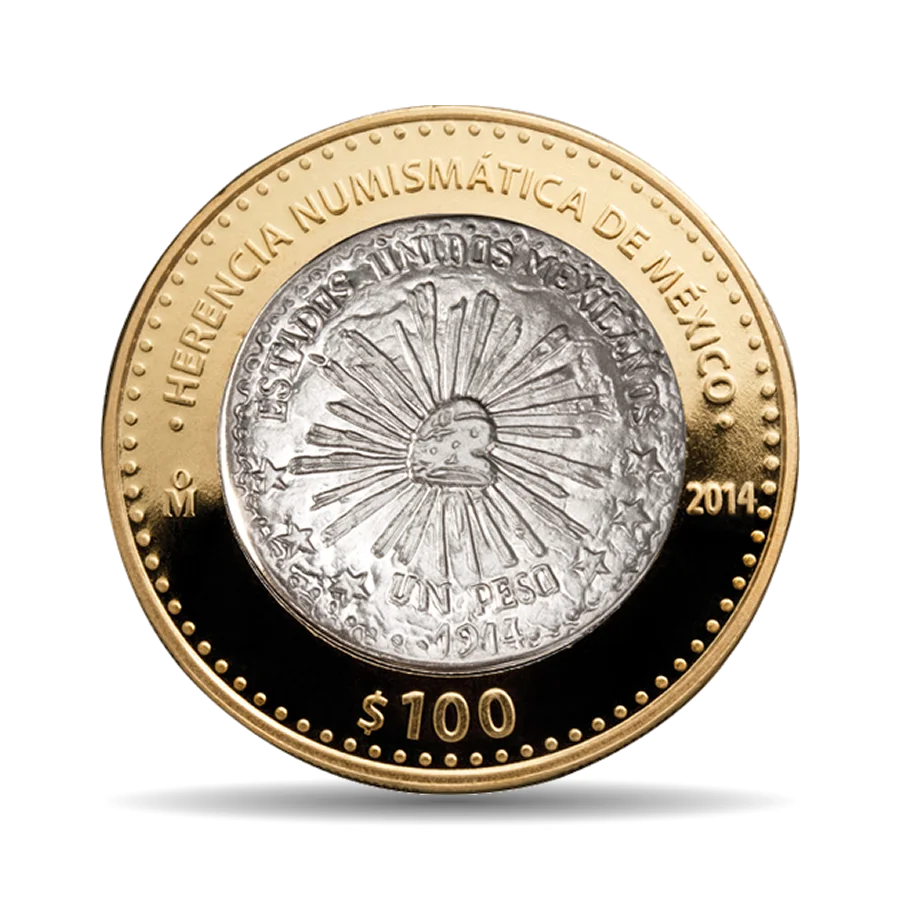
Herencia Numismática de México: la guía completa de la serie de 100 pesos de plata
La única serie mexicana de plata donde cada moneda reproduce otra moneda de nuestra historia: el Caballito, la Macuquina, el Columnario. Aquí te la explico completa, emisión por emisión, para que la caces sin que te vean la cara.
Read the full article →Value range of this piece
Value range without enough data for this piece.
See the full breakdown by grade (VG, F, VF, EF, AU, MS-60, MS-63, MS-65) for the whole series →
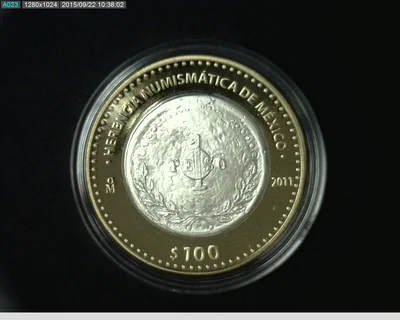
Other denominations from 2011
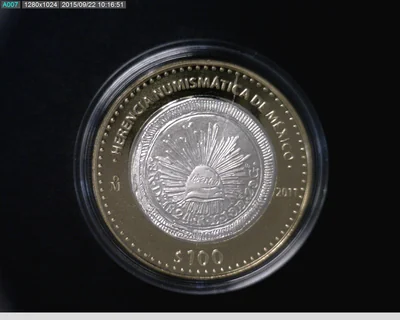
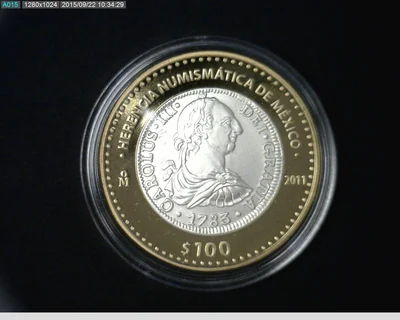
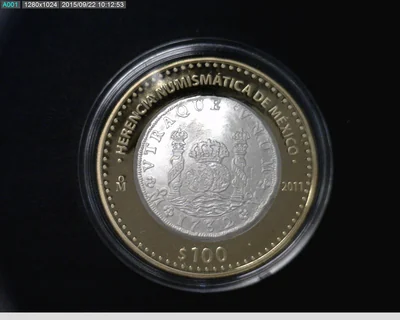
Herencia Numismática de México · Bimetálica
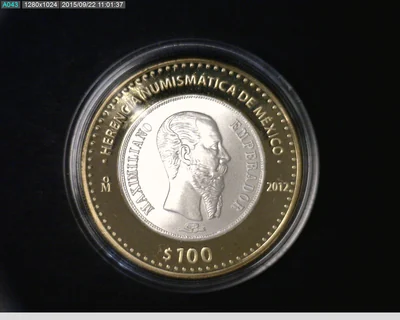
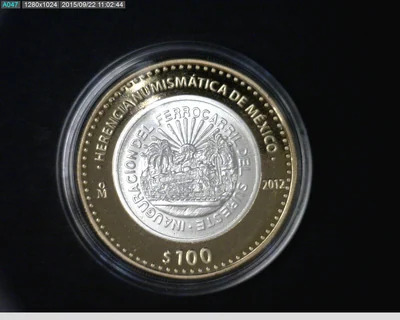
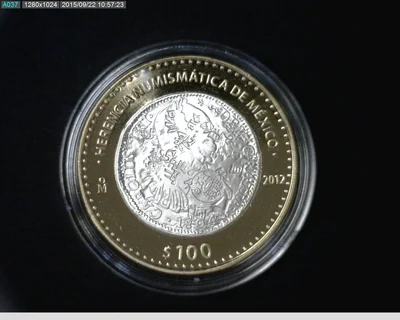
Same denomination, other years
100 pesos Bimetálica · Herencia Numismática de México
Official sources
Frequently asked questions
How much is the 2011 Caballito 100 pesos worth?
It depends heavily on grade. Circulated examples with visible wear typically run 100 to 500 pesos (roughly a few US dollars up to about 25 USD). A certified uncirculated or MS-65 piece can reach several thousand pesos. For your exact coin, an appraisal from a formal numismatic dealer gives you the real figure.
Is the 2011 Caballito 100 pesos rare?
Not exactly. Banxico never published an official mintage, which usually means it went out in limited numismatic sets rather than general circulation, so it is uncommon but not truly scarce. Its main appeal is being piece No. I of the Herencia Numismática series, which keeps steady collector demand.
How do I know if my 2011 Caballito 100 pesos is genuine?
It should weigh exactly 33.967 grams and measure 39 mm. If the specs are off, it is fake or a different coin. Compare the relief detail to official Banxico images, since counterfeits look flat and mushy. For a valuable piece, NGC or PCGS certification is the definitive check.
Where can I sell the 2011 Caballito 100 pesos?
The safest route is a verified numismatic dealer who appraises it on the spot, or a collector forum where buyers know the series. Photograph the front, back, and edge, and check the price range for your grade before selling. Online marketplaces work but carry the most counterfeits.
Conversation
0 comments
Sources
Images for informational and educational purposes, attributed to their original source. Reference values; the real price depends on the grade, the specific variant and demand.
Loading comments…