
20 Nuevos Pesos Hidalgo 1995: Value & Silver Content
The 20 Nuevos Pesos Hidalgo 1995: Value & Silver Content is worth between $7,800 and $14,400 MXN depending on its grade of preservation (prices validated by a real purchase).
Prices updated: August 2026
Extremely scarce variant: it practically never entered circulation, only in official sets
Extremely scarce variant: it practically never entered circulation, only in official sets
Design
Banxico
Reverse
Aluminum-bronze center with the effigy of Miguel Hidalgo y Costilla. Denomination «N$20» with the words «NUEVOS PESOS» at the bottom.
Obverse
Silver ring, 0.925 fine (about 7 g of pure silver) with the legend «ESTADOS UNIDOS MEXICANOS», the National Coat of Arms and the year of minting.
The 20 Nuevos Pesos Hidalgo 1995: Value & Silver Content is worth between $7,800 and $14,400 MXN depending on its grade of preservation (prices validated by a real purchase).
Prices updated: August 2026
How much is the 20 Nuevos Pesos Hidalgo 1995: Value & Silver Content worth?
Based on real purchases recorded by Pesoteca, the 20 Nuevos Pesos Hidalgo 1995: Value & Silver Content is worth approximately $7,800 circulated (XF), $9,600 lightly circulated (AU), $12,000 uncirculated (UNC) and $14,400 in the official Mint blister pack.
The real price depends on four factors: the grade of preservation (a circulated piece is worth the low end of the range; an uncirculated one, or one still in its official blister pack, the high end), the finish (satin vs mirror/proof), the rarity within the series based on the mintage, and the metal spot price on the day of the deal when the piece is silver or gold. Check the value-by-grade table above and compare with equivalent pieces before buying or selling.
Where to buy or sell this coin?
Browse the national directory of numismatic shops or the community forum to trade directly with other collectors.
Description
If you have a 20 Nuevos Pesos Hidalgo dated 1995, you may be holding the most valuable coin of its whole series. This is the one collectors chase. With only 160,000 pieces struck, it sells for roughly 450 to 850 USD depending on condition, far above its 1993 and 1994 twins that trade for a few dollars each. The date is everything here.
What this coin actually is
This is a circulating bimetallic coin, not a special commemorative. It came out of Mexico's 1993 currency reform, when the country introduced the "Nuevo Peso" (New Peso) and dropped three zeros from the old peso. "20 Nuevos Pesos" simply means 20 New Pesos, the highest denomination Banxico (Mexico's central bank) put into everyday circulation at the time. The portrait is Miguel Hidalgo, a national independence figure.
The coin has two parts: a silver center ring surrounded by an outer ring of aluminum-bronze. That silver center is the reason it has a value floor, and the reason so many people ask if it is worth money.
Official specifications (keep these to check yours)
| Spec | Value |
|---|---|
| Catalog reference | KM-561 |
| Shape | Round |
| Diameter | 32 mm |
| Total weight | 16.996 g |
| Center metal | Sterling silver .925 |
| Silver alloy weight | 8.406 g (7.776 g pure silver, about 1/4 troy ounce) |
| Outer ring | Aluminum-bronze |
| Edge | Interrupted reeding |
| Decree | December 8, 1992 (Mexican federal gazette) |
The silver center holds about a quarter ounce of pure silver, so even the common dates carry a bullion floor tied to the silver spot price. The 1995, though, sells well above melt because of rarity, not metal.
Why 1995 is the valuable one
The entire value story is the mintage. Banxico struck:
- 1993: 5,000,000 pieces
- 1994: 1,600,000 pieces
- 1995: 160,000 pieces
The 1995 is a small fraction of the earlier years, the shortest run of the entire 20 New Pesos bimetallic family. That scarcity is what drives the price. The 1993 and 1994 are worth close to their silver content, roughly 8 to 12 USD in average condition. The 1995 jumps to a different tier entirely.
Price by grade
| Year | Grade | Approx. value (USD) |
|---|---|---|
| 1995 | Circulated (VF/XF) | 400 to 500 |
| 1995 | Uncirculated (UNC) | 600 to 850 |
| 1995 | In original Banxico blister | Top of range and above |
| 1993 / 1994 | Any circulated | 8 to 12 (near silver value) |
These are market ranges based on validated sales tracked in the Pesoteca catalog through 2026. A gem uncirculated example can push past the top figure; a worn, cleaned, or damaged one sits at the low end.
How to tell 1995 apart from 1993 and 1994
This matters because people confuse them constantly. All three share the exact same design: the Hidalgo bust, the "N$20" value, the same round 32 mm bimetallic format with a silver center. The only difference is the year engraved on the reverse, next to the value. Check it with a loupe. A 1995 is worth many times more than a 1993 or 1994, and at a glance they look identical.
How to check if yours is genuine
- Weigh it. A real one is 16.996 g. Use a jewelry scale. Off-weight is a red flag.
- Measure it. 32 mm across. A caliper settles it fast.
- Magnet test. The silver center is not magnetic. If it sticks to a magnet, it is a fake.
- Inspect the relief. Genuine pieces have sharp lettering and crisp detail. Fakes tend to show soft edges, mushy legends, and poor color separation between the two metals.
- Ping test. Silver rings with a clear tone; a dull thud suggests a base-metal replica.
When in doubt, submit it for grading with NGC or PCGS, or post clear photos of the front, back, and edge in the Pesoteca forum for a second opinion before you buy or sell.
Where to sell it
Don't dump it on social media to the first offer. Better options:
- A verified coin dealer from the Pesoteca shop directory, who can appraise it on the spot.
- The Pesoteca buy-and-sell forum, where collectors deal with each other.
- Established numismatic auction houses if the coin is high grade or slabbed.
Photograph the coin (obverse, reverse, and edge), confirm the date is 1995, and check the price range above before you accept anything. Compare it to its sister coins, the Hidalgo 1994 and the Hidalgo 1993, so you know exactly which one you have.
A word on "error" coins
Genuine mint errors (off-center strikes, die rotation, doubled strikes) can multiply value if verified. But most "errors" floating around online are post-mint damage: dings, corrosion, or scratches, not factory mistakes. If you think you have a real one, post it in the forum for the community to review before you get your hopes up.
Have a 1995 Hidalgo sitting in a drawer? Confirm the date, weigh it, and bring it to the forum for a read on grade and value before you sell.
Historical context
The effigy that crowns the reverse of this piece is that of Miguel Hidalgo y Costilla, the priest of Dolores whom Mexico recognizes as the Father of the Nation. In the early hours of September 16, 1810, from his parish in Dolores (today Dolores Hidalgo, Guanajuato), he issued the call to arms known as the Grito de Dolores and ignited the War of Independence against Spanish rule. His popular army, swelled by indigenous people and peasants, came to threaten the capital, but Hidalgo was captured and executed by firing squad in Chihuahua in 1811. He did not see the struggle completed (Independence was sealed only in 1821), but he remained the founding face of the nation.
That's why his figure presides over the highest denomination of the bimetallic family born with the "nuevo peso" monetary reform: the decree was published in the Diario Oficial on December 8, 1992, and took effect on January 1, 1993, with the "N$" symbol on the reverse. Among collectors, the 1995 issue is the gem everyone wants to hunt: it practically didn't circulate and today it's chased at auction more than in store change.
Why the 1995 is the hardest to hunt
Of the Hidalgo 1995, Banxico struck barely 160,000 pieces, the shortest run of the entire bimetallic 20-peso family. To put it in perspective: the Hidalgo 1993 had 5 million and the 1994 one million six hundred thousand; among the modern commemoratives, the 2026 World Cup ones run around 25 million each. The 1995 had less than a tenth of its 1993 sister. That scarcity, and not a different metal, is what drives its price.
It shares design and specifications with the other two (round bimetallic, 32 mm, 16.996 g, .925 silver center, aluminum-bronze ring, discontinuous reeded edge, KM-561). The only thing that changes is the year engraved next to the N$20 value on the reverse. That's why it's worth checking the date with a loupe: the 1993 and 1994 look very much alike and are worth much less.
The real challenge is not the list price, it's finding it sound and authentic. With 160,000 pieces spread across three decades of circulation, those that survive uncirculated (UNC) are very few; most are circulated, with rubs on Hidalgo's effigy or spots on the bronze. Always ask for photos of the edge and the mint luster before paying a UNC price, and be wary of one that comes cleaned or polished: a piece scrubbed to "make it shine" loses value, it doesn't gain it.
Why its price is so high
It's worth clarifying a figure that several catalogs get wrong. It's common to read that five million pieces of the Hidalgo 1995 were struck. That figure corresponds, at most, to the total minting. What matters to the collector is how many actually went into circulation, and there the real figure is around 160,000 pieces, or even fewer.
The reason lies in the metal. The coin carries a quarter ounce of .925 silver in its center, and in the mid-nineties the price of silver rose to the point where the value of the metal approached the face value of the piece. Faced with that risk, most of the 1995 issue was not released for ordinary change: it was allocated to Mint sets and cases, or simply not put into circulation. That containment, and not a low factory mintage, explains its real scarcity.
The clearest example of that context is the Hidalgo 1996. Its design was even prepared, but it did not enter official circulation because of the same pressure from the price of silver. The few pieces that exist are kept in the collection of the Bank of Mexico Museum, which makes it a practically nonexistent issue for the market.
Hence the Hidalgo 1995 trades well above its two sisters. It's not just about how many were struck, but how many actually reached the public: few circulated, a good part of the survivors comes from sets, and the cycle closed with a 1996 piece that barely exists. Effective circulation scarcity, silver content, and an underlying monetary crisis: those are the factors that sustain its value.
Official decree data (DOF, December 8, 1992)
These are the exact specifications of the decree that reformed the Monetary Law and created the twenty-peso coin of Family B (not estimates):
| Characteristic | Official specification |
|---|---|
| Face value | Twenty pesos (N$20 until 1996, then $20) |
| Shape | Circular |
| Diameter | 32.0 mm |
| Total weight | 16.996 g |
| Edge | Discontinuous reeded |
| Center | Sterling silver .925 fineness; 8.406 g of alloy with 7.776 g of pure silver (1/4 troy ounce) |
| Perimeter ring | Aluminum-bronze (92% copper, 6% aluminum, 2% nickel) |
| Mint | Mexican Mint (M) |
| Type | Ordinary legal-tender coin (circulating), not commemorative |
Obverse: National Coat of Arms with the legend "ESTADOS UNIDOS MEXICANOS" forming an upper semicircle. Reverse: at the center the effigy of Don Miguel Hidalgo y Costilla, with the mint mark "M" and the year of minting below; in the exergue the symbol "$" and the number 20 as face value; at the bottom the legend "HIDALGO" and a garland of laurels.
Official sources: Diario Oficial de la Federación, December 8, 1992 · Reform to the Monetary Law of the United Mexican States, Dec 8, 1992 (PDF, Chamber of Deputies)
This piece belongs to the era
Nuevos Pesos y actualidad →Explore all the Mexican coins of this era, their historical context and how they connect to the monetary system of the period.
Go deeper on this coin
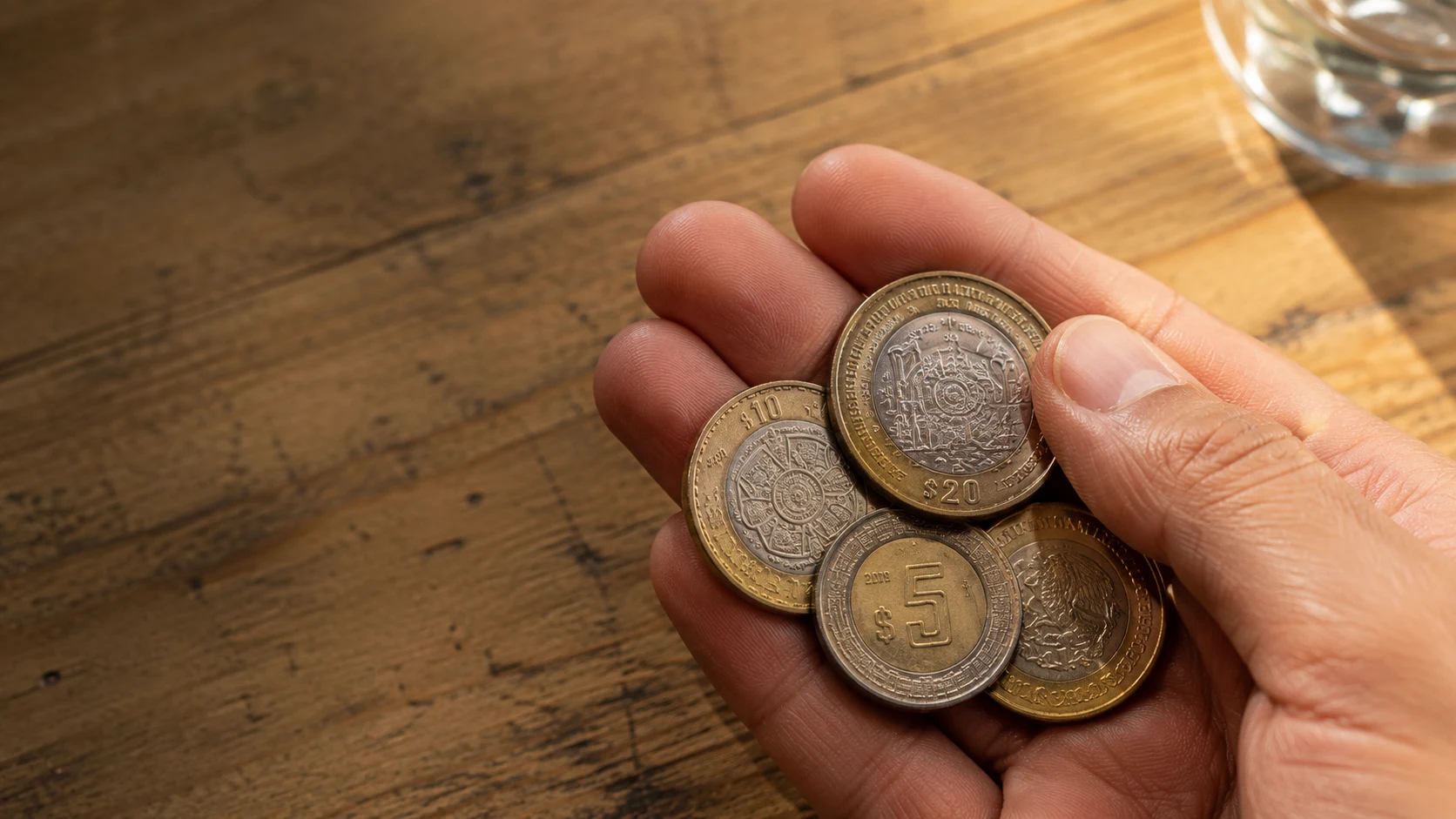
5 monedas mexicanas que circulan y valen más de lo que te imaginas (revísalas en tu cambio hoy)
Hay 5 monedas mexicanas que circulan hoy mismo en tu bolsillo y valen 5 a 50 veces lo que dicen en el reverso. Antes de gastarlas en el OXXO, revísalas.
Read the full article →Piezas por grado en circulación
Proyección de cuántas piezas sobreviven hoy y cómo se distribuyen entre grados de conservación, a partir de la acuñación oficial y la antigüedad de esta moneda.
| Grado | Piezas | % |
|---|---|---|
| MS-65 Gem | 4,834 | 5.0% |
| MS-60–64 | 17,402 | 18.0% |
| AU-50–58 | 19,335 | 20.0% |
| XF-40–45 | 21,269 | 22.0% |
| VF-20–35 | 17,402 | 18.0% |
| F-12–15 | 9,668 | 10.0% |
| VG / G | 4,834 | 5.0% |
| AG-3 | 1,934 | 2.0% |
| Totales | 96,676 de 160,000 (60.4%) | |
Estimaciones basadas en la acuñación oficial, la antigüedad y curvas estándar de desgaste numismático (curva conmemorativa moderna (post-1990)). Los valores reales pueden variar según preservación específica, eventos de fundido, y demanda del mercado.
Same denomination, other years
20 pesos Bimetálica · Monedas de 20 pesos
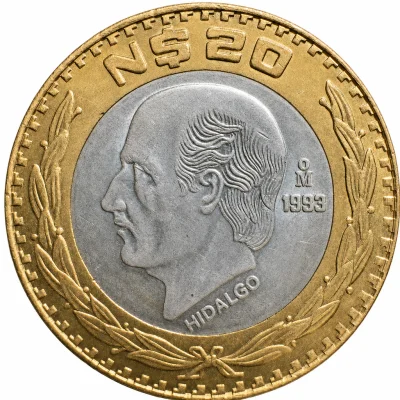
20 Nuevos Pesos Hidalgo
1993
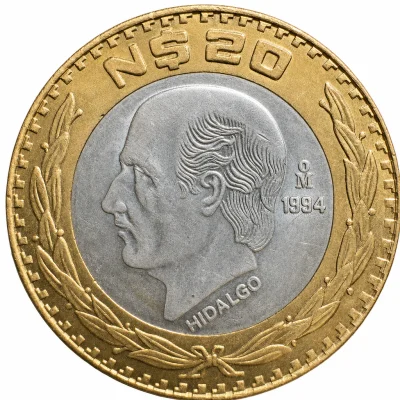
20 Nuevos Pesos Hidalgo
1994
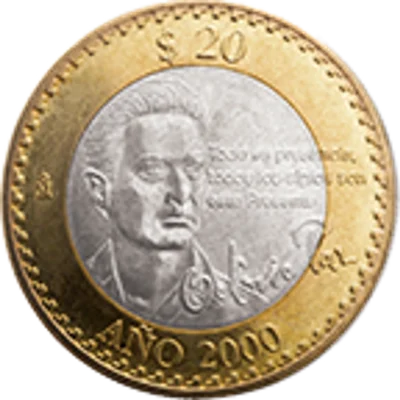
Llegada del Año 2000 y el Inicio del Tercer Milenio. Busto de tres cuartos de perfil a la derecha de Octavio Paz
2000
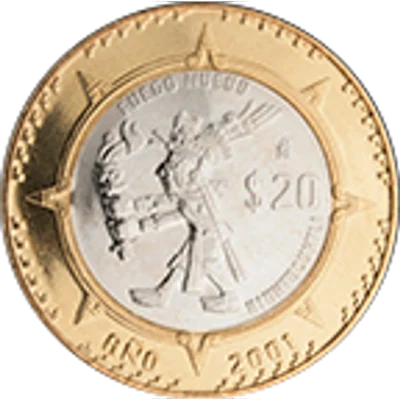
20 Pesos Año 2000, inicio del Tercer Milenio. Representación prehispánica de Xiuhtecuhtli "Señor del fuego, S
2000
20 Pesos Año 2000, inicio del Tercer Milenio. Representación prehispánica de Xiuhtecuhtli "Señor del fuego, S
2001
Official sources
Frequently asked questions
How much is the 1995 Hidalgo 20 Nuevos Pesos worth?
In {{AÑO}}, a genuine 1995 Hidalgo 20 Nuevos Pesos runs roughly 400 to 500 USD in circulated condition and 600 to 850 USD uncirculated, with pieces in the original Banxico blister at the top of that range. Grade drives the number: a gem uncirculated example can exceed the range, while a worn or cleaned coin sits lower. Because the center is sterling silver (.925), it also holds a floor tied to the silver spot price.
Is the 1995 Hidalgo really rare?
Yes. Banxico struck only 160,000 pieces of the 1995, the shortest run of the entire 20 New Pesos bimetallic series. Compare that to 5 million in 1993 and 1.6 million in 1994. That scarcity is the main reason the 1995 commands a high collector price while the other two dates trade near their silver value, about 8 to 12 USD.
How do I tell the 1995 apart from the 1993 and 1994?
All three coins share the exact same design: the Hidalgo bust, the N$20 value, and the round 32 mm bimetallic format with a silver center. The only difference is the year engraved on the reverse, next to the value. Check it under a loupe. The 1995 is worth many times more than the 1993 or 1994, and they are easy to mix up.
How can I tell if my coin is genuine?
Match it to the official specs: 16.996 g total weight, 32 mm diameter, sterling silver center. Weigh it on a jewelry scale, measure it with a caliper, and try a magnet (silver is not magnetic, so if it sticks it is fake). Genuine coins show sharp lettering and crisp relief; fakes have soft edges and poor color separation between the two metals. For certainty, submit it to NGC or PCGS or post photos in the Pesoteca forum.
Where can I sell it for a fair price?
Use a verified coin dealer from the Pesoteca shop directory for an on-the-spot appraisal, or the Pesoteca buy-and-sell forum to deal with collectors directly. High-grade or slabbed examples do well at established numismatic auction houses. Photograph the obverse, reverse, and edge, confirm the 1995 date, and check the price range before accepting an offer. Avoid selling to the first bidder on social media.
Conversation
0 comments
Sources
- Diseño tipo de la familia 20 nuevos pesos bimetálicas
- Imagen propia del catálogo Pesoteca
- Banco de México
Images for informational and educational purposes, attributed to their original source. Reference values; the real price depends on the grade, the specific variant and demand.
Loading comments…