
8 Escudos Felipe V (1740): What This Gold Coin Is Worth
The 8 Escudos Felipe V : What This Gold Coin Is Worth is worth between $51,365 and $86,510 MXN depending on its grade of preservation.
Prices updated: August 2026
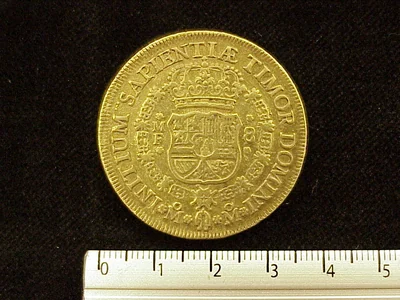
Overdate.
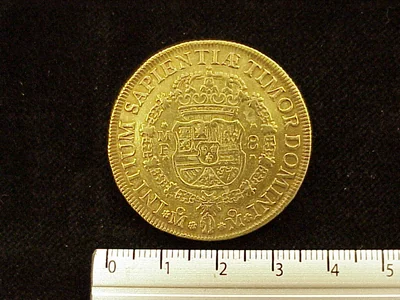
Overdate.
The 8 Escudos Felipe V : What This Gold Coin Is Worth is worth between $51,365 and $86,510 MXN depending on its grade of preservation.
Prices updated: August 2026
How much is the 8 Escudos Felipe V (1740): What This Gold Coin Is Worth worth?
The estimated value of the 8 Escudos Felipe V (1740): What This Gold Coin Is Worth ranges from $51,365 (circulated, XF) up to $86,510 (official blister pack), with $73,730 as a reference for an uncirculated (UNC) piece. The estimate is based on the official mintage and the historical behavior of the family.
The real price depends on four factors: the grade of preservation (a circulated piece is worth the low end of the range; an uncirculated one, or one still in its official blister pack, the high end), the finish (satin vs mirror/proof), the rarity within the series based on the mintage, and the metal spot price on the day of the deal when the piece is silver or gold. Check the value-by-grade table above and compare with equivalent pieces before buying or selling.
Where to buy or sell this coin?
Browse the national directory of numismatic shops or the community forum to trade directly with other collectors.
Description
If you inherited a heavy gold Mexican coin dated 1740 with a Spanish king's portrait or the Spanish coat of arms, you likely have an 8 Escudos of Felipe V. The short answer: it is real gold with a hard floor value near 1,600 USD at melt, and depending on condition and variety, genuine examples trade from roughly 2,000 USD into the tens of thousands. This is one of the few old Mexican coins that is actually worth real money.
What you actually have
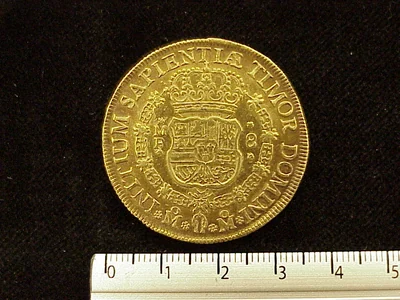
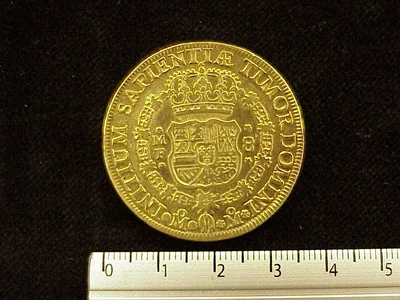
The 8 Escudos was the largest gold denomination of the Spanish colonial system, popularly called an "onza" (ounce). Yours was struck at the Mexico City mint (the Casa de Moneda de México), which was the main silver and gold supplier of the Spanish Empire at the time.
Here are the exact specs. Weigh and measure yours against these before you do anything else.
| Specification | Detail |
|---|---|
| Denomination | 8 Escudos (gold "onza") |
| Ruler | Felipe V, second period |
| Date | 1740 |
| Mint | Mexico City |
| Assayer initials | MF |
| Metal | Gold, .875 fine |
| Weight | 27.01 g |
| Diameter | 37 mm |
| Edge | Diagonal reeding |
| Catalog reference | KM#148 |
The MF you may see near the coat of arms are the initials of the assayer, the mint official who certified the metal's fineness. That detail matters for identification and authentication, so do not dismiss it.
What it is worth in USD
Start with the metal. At 27.01 g and .875 fine, the coin contains about 23.6 g of pure gold, roughly 0.76 troy ounces. At current gold prices that is a bullion floor in the low four figures, and that floor moves with the gold market. No genuine 8 Escudos of this type sells below its gold content.
Above melt, value is driven by condition, eye appeal, and whether the specific date, mint, and assayer combination is scarce. A worn but genuine 1740 Mexico 8 Escudos typically brings a modest premium over melt. Sharp, well-struck examples with clear detail sell for several thousand dollars. Top-grade certified pieces, or scarcer varieties, can climb well beyond that at major auctions. Colonial gold from Mexico City is actively collected worldwide, which supports demand.
Because the grade swing is large, treat any single "it's worth X" claim with suspicion until your coin is graded. A coin in About Uncirculated condition can be worth many times one that is heavily worn or has been cleaned, mounted, or damaged.
The myths to ignore
Being from 1740 does not automatically make it a fortune. Age is not rarity. Millions of colonial coins were struck, and survival is not as scarce as sellers imply. What actually drives the number is condition, authenticity, and the specific date/mint/assayer combination.
Be skeptical of "error" claims too. Genuine mint errors on colonial gold (off-center strikes, die rotation, doubling) can add real value, but most "errors" people spot online are post-mint damage: dents, corrosion, tooling, or cleaning marks. Those lower value, not raise it.
And the biggest trap with gold coins: fakes are everywhere. Because the metal alone is worth over 1,000 USD, this coin has been reproduced heavily, including cast copies and modern struck counterfeits.
How to tell if yours is genuine
Do these checks before you buy, sell, or celebrate:
- Weight and diameter. Use a jeweler's scale and calipers. Genuine pieces should sit at 27.01 g and 37 mm. A coin that is light, thin, or oversized is a red flag.
- Edge. The genuine coin has diagonal reeding. A plain or seam-visible edge suggests a cast fake.
- Engraving style, mint, and assayer. Compare the portrait or shield detail, the Mexico City mint mark, and the MF assayer initials against verified references. Counterfeiters often get these subtly wrong.
- Any offer far below gold value is a warning, not a bargain. No honest seller gives away gold.
For a coin at this value level, professional grading and authentication (NGC or PCGS) is worth the cost. A certified, slabbed coin sells faster and for more, and it removes the authenticity question entirely.
Where to sell it
Do not dump it on Facebook for the first offer. Your safest routes:
- A verified numismatic shop from the Pesoteca directory, which can appraise it in person and pay you on the spot.
- The Pesoteca buy-and-sell forum, where collectors who actually want colonial gold will bid.
Because this is a precious-metal coin, only deal with buyers who let you present the piece, confirm the weight, and verify authenticity before money changes hands. Photograph the obverse, reverse, and edge in good light, and check the price range on this page before agreeing to any number.
If you want a second opinion on whether yours is a common example or something scarcer, post clear photos on the Pesoteca forum and let the community weigh in before you sell.
Historical context
Eight escudos Felipe V second period, 1740, Mexico mint. The record lists the variant as an overdate, a sign of restriking over an earlier die. That year Pedro de Castro y Figueroa, Duke of the Conquest, took office, succeeding Vizarron y Eguiarreta after six years of interim viceroyalty. The new viceroy died barely a year later, in 1741. In Europe the War of the Austrian Succession broke out following the death of Emperor Charles VI, a conflict that would draw in Spain as an ally of France against Austria and England. The onza weighs a theoretical 27.06 grams with a fineness of 0.916. Produced by mill press with a round planchet under the pillar system of 1732. The reverse retains the classic design with the crowned Pillars of Hercules and PLVS VLTRA. The edge, treated with mechanical inscription, made clipping difficult. Overdates are technical variants where the final digit was punched over the previous one to save dies, a practice documented at the capital mint. Pieces from 1740 are collectible for the overdate variant noted in the record and for marking the start of the War of the Austrian Succession within the Mexican pillar cycle.
This piece belongs to the era
Colonial / Virreinato →Explore all the Mexican coins of this era, their historical context and how they connect to the monetary system of the period.
Value range of this piece
Market estimate: $51,365 - $86,510 MXN depending on the grade of preservation (typical range between a circulated and an uncirculated piece).
See the full breakdown by grade (VG, F, VF, EF, AU, MS-60, MS-63, MS-65) for the whole series →
Same denomination, other years
8 escudos Oro 0.875 (21k) · 8 Escudos Felipe V Segunda Epoca
Frequently asked questions
How much is an 8 Escudos Felipe V 1740 gold coin worth?
It contains about 0.76 troy ounces of gold, giving it a bullion floor in the low four figures in USD that moves with the gold market. Above melt, worn genuine examples bring a modest premium, sharp examples sell for several thousand dollars, and top-grade certified pieces can go well beyond that at major auctions. Get it graded before accepting any single price.
Is the 8 Escudos Felipe V 1740 rare?
It is genuinely valuable because it is gold, but age alone does not make it rare. Value depends on condition, authenticity, and the specific date, mint, and assayer combination (Mexico City, assayer MF, KM#148). High-grade, well-struck examples are the scarce ones and command the biggest premiums; heavily worn or cleaned coins sell closer to melt value.
Where can I sell my 8 Escudos Felipe V 1740?
Use a verified numismatic shop from the Pesoteca directory for an in-person appraisal and immediate payment, or the Pesoteca buy-and-sell forum to reach collectors. Since it is precious metal, only sell to buyers who verify the piece and its weight in front of you. Photograph the obverse, reverse, and edge, and avoid taking the first Facebook offer.
How do I tell if my 8 Escudos Felipe V 1740 is genuine?
Weigh it (27.01 g) and measure it (37 mm) with a jeweler's scale and calipers, and check for the diagonal reeded edge. Compare the engraving, the Mexico City mint mark, and the MF assayer initials against verified references, since fakes are common on gold this valuable. Any offer far below the gold value is a warning sign. For a coin at this level, professional grading from NGC or PCGS is worth it.
Conversation
0 comments
Loading comments…