
8 Escudos 1738 Felipe V Gold Coin: Value & Prices (2026)
The 8 Escudos 1738 Felipe V Gold Coin: Value & Prices is worth between $51,403 and $86,574 MXN depending on its grade of preservation.
Prices updated: August 2026
The 8 Escudos 1738 Felipe V Gold Coin: Value & Prices is worth between $51,403 and $86,574 MXN depending on its grade of preservation.
Prices updated: August 2026
How much is the 8 Escudos 1738 Felipe V Gold Coin: Value & Prices (2026) worth?
The estimated value of the 8 Escudos 1738 Felipe V Gold Coin: Value & Prices (2026) ranges from $51,403 (circulated, XF) up to $86,574 (official blister pack), with $73,785 as a reference for an uncirculated (UNC) piece. The estimate is based on the official mintage and the historical behavior of the family.
The real price depends on four factors: the grade of preservation (a circulated piece is worth the low end of the range; an uncirculated one, or one still in its official blister pack, the high end), the finish (satin vs mirror/proof), the rarity within the series based on the mintage, and the metal spot price on the day of the deal when the piece is silver or gold. Check the value-by-grade table above and compare with equivalent pieces before buying or selling.
Where to buy or sell this coin?
Browse the national directory of numismatic shops or the community forum to trade directly with other collectors.
Description
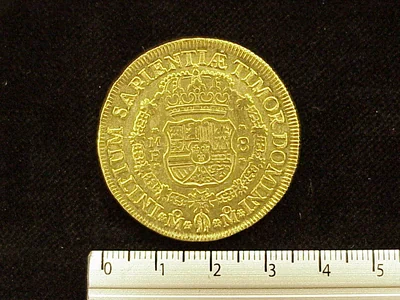
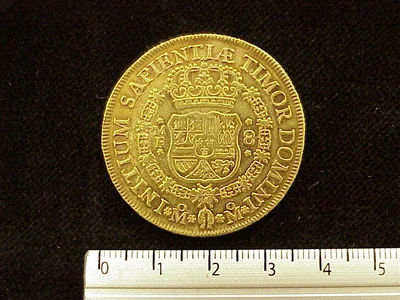
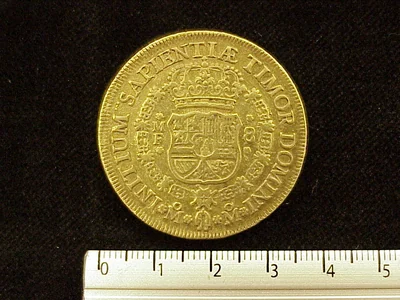
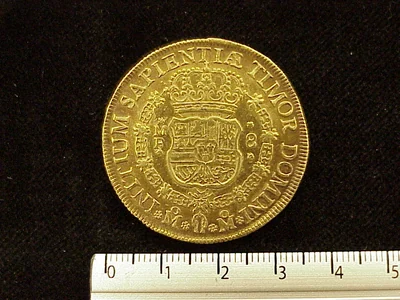
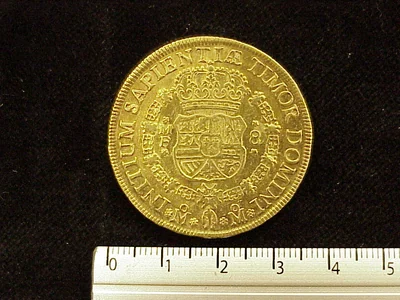
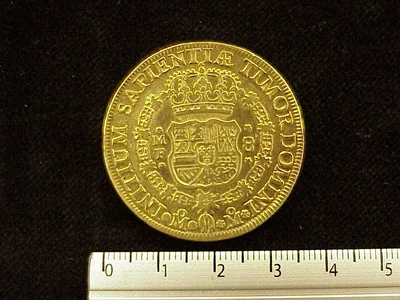
If you inherited or found an 8 escudos gold coin dated 1738 with the name Felipe V, you are holding one of the most valuable colonial pieces struck in the Americas. Even in worn condition, the gold content alone puts it well into the thousands of US dollars, and a genuine, high-grade example can sell for tens of thousands at auction.
This is not a coin to sell at a pawn shop or melt for scrap. Here is what it actually is, what it is worth, and how to check before you do anything.
Quick answer: what a 1738 8 escudos is worth
The 1738 8 escudos (KM#148) contains 27.03 grams of gold at .875 fineness, which is roughly 0.76 troy ounces of pure gold. That metal alone is worth well over 1,500 US dollars at current gold prices, and that is the absolute floor. As a genuine, collectible colonial gold coin, it trades far above melt.
- Worn but genuine, correctly identified: several thousand US dollars.
- Attractive, problem-free examples: five figures at auction.
- Rare varieties or top certified grades: can climb well past 20,000 US dollars.
The single biggest factor is authenticity. Colonial gold is heavily faked, so confirming the coin is real comes before any price discussion.
What you actually have
This is an 8 escudos gold coin from the reign of Felipe V (his second period on the throne). "Escudos" was the Spanish colonial gold denomination, and 8 escudos was the largest gold coin in the system. Collectors often call these pieces "onzas" because they roughly equal a troy ounce.
Key details to match against yours:
| Feature | Specification |
|---|---|
| Denomination | 8 escudos (gold) |
| Date | 1738 |
| Ruler | Felipe V (second reign) |
| Mint | Mexico City (Casa de Moneda de México) |
| Assayer initials | MF |
| Metal | Gold, .875 fine |
| Weight | 27.03 g |
| Diameter | 37 mm |
| Edge | Diagonal reeding |
| Catalog reference | KM#148 |
The "MF" you may see on the coin are the initials of the assayer, the official who certified the metal's purity. The Mexico City mint was the main silver and gold supplier of the Spanish Empire in this era, which is why so many of these coins survive today.
Why it is valuable
Three things drive the price:
- Gold content. Nearly three quarters of a troy ounce of gold gives every genuine example a solid floor value in the thousands.
- Historical demand. Colonial 8 escudos are actively collected worldwide, not just in Mexico. That demand supports prices well above melt.
- Condition and rarity. Sharp strikes, full detail, and certified grades from NGC or PCGS command large premiums. A specific assayer, date, or die variety can add more.
What does not drive value: age by itself. A coin being from 1738 does not make it a fortune. Value comes from the gold, the demand, and the grade, not the calendar.
The myth to avoid
Many people assume any old Spanish colonial gold coin is worth a fortune automatically. Two problems here. First, the market is full of counterfeits and modern cast copies that are worth essentially nothing. Second, even genuine coins with heavy cleaning, mount marks, or damage sell for a fraction of a clean example. Do not assume six figures because you saw a headline; those numbers apply to museum-grade rarities, not the typical circulated piece.
How to check if yours is genuine
Before you value or sell, confirm it is real:
- Weigh it. Use a jeweler's scale. A genuine coin should be close to 27.03 g. A significantly light coin is a red flag.
- Measure it. Diameter should be about 37 mm. Check the edge for diagonal reeding.
- Look at the strike. Genuine dies produce crisp, consistent lettering. Fuzzy, soft, or grainy detail suggests a cast copy.
- Check the assayer and mint marks. They should match known 1738 Mexico City records. Wrong or missing marks are a warning sign.
- Be suspicious of any deal far below gold value. If someone offers you scrap price, they may know something you do not, or they are trying to underpay.
For a coin at this value level, professional authentication is worth it. A certified holder from NGC or PCGS both confirms the coin and raises what buyers will pay.
How to find out exactly what yours is worth
Grade is everything at this price level. The difference between a heavily worn coin and a sharp, original one can be tens of thousands of dollars. Photograph the obverse, reverse, and edge in good light, then get it evaluated before selling.
To see what comparable coins have brought, look at recent sales from major houses like Heritage Auctions and Stack's Bowers, which regularly sell Mexican colonial 8 escudos. Match your date, mint, assayer, and condition as closely as possible.
Where to sell it
Because this is a high-value precious-metal coin, sell only where you can verify the buyer and show the coin in person or under protection:
- A verified numismatic shop from the Pesoteca directory can appraise it on the spot.
- The Pesoteca buy-and-sell forum connects you with collectors who understand what the coin is worth.
Avoid dumping it on social media to the first bidder, and never sell it as scrap gold. You would leave thousands on the table.
Have one of these in a box of inherited coins? Post clear photos of both sides and the edge in the Pesoteca forum and let the community help you confirm what you have before you sell.
Historical context
Eight escudos Felipe V, second period, 1738, Mexico City mint. It was the third year of the matlazahuatl epidemic that had affected New Spain since 1736. In Europe, the preliminary Treaty of Vienna was signed in November, closing the War of the Polish Succession, a conflict in which Spain recovered Naples and Sicily for Felipe V's son, the future Carlos III. In Mexico, Vizarrón y Eguiarreta continued as interim viceroy with the dual miter. The ounce weighs 27.06 grams with .916 fineness. Produced by mill (screw press) with a round planchet standardized since the 1732 reform. The pillar reverse showed the two crowned Pillars of Hercules and the bands with PLVS VLTRA, symbol of the Hispanic overseas empire. The New Spain fleet that year carried accumulated treasure to Cádiz by way of the Havana route. Gold production in 1738 was sustained despite the internal epidemic context, a sign of the administrative resilience of the capital workshop. Surviving pieces are collectible for the European political density of that year and for their place in the Felipe V pillar cycle.
This piece belongs to the era
Colonial / Virreinato →Explore all the Mexican coins of this era, their historical context and how they connect to the monetary system of the period.
Value range of this piece
Market estimate: $51,403 - $86,574 MXN depending on the grade of preservation (typical range between a circulated and an uncirculated piece).
See the full breakdown by grade (VG, F, VF, EF, AU, MS-60, MS-63, MS-65) for the whole series →
Same denomination, other years
8 escudos Oro 0.875 (21k) · 8 Escudos Felipe V Segunda Epoca
Frequently asked questions
How much is a 1738 Felipe V 8 escudos gold coin worth?
Its gold content alone (27.03 g at .875 fine, about 0.76 troy ounces) is worth well over 1,500 US dollars, and that is the floor. As a genuine collectible, worn examples sell for several thousand dollars, attractive coins reach five figures, and top certified grades or rare varieties can exceed 20,000 US dollars. Authenticity and grade decide the exact number.
Is the 1738 8 escudos rare?
It is a scarce and highly collectible colonial gold coin, though the Mexico City mint produced these in meaningful numbers. Common circulated examples appear at auction periodically, so "rare" depends on the specific grade, assayer, and variety. Problem-free, high-grade coins are genuinely rare and command the largest premiums.
Where can I sell a 1738 Felipe V 8 escudos?
Sell only where you can verify the buyer. A [verified numismatic shop from the Pesoteca directory](/tiendas) will appraise it in person, or use the [Pesoteca buy-and-sell forum](/foro/compra-venta) to reach collectors. Photograph the obverse, reverse, and edge, and get it certified first. Do not sell it as scrap gold or to the first social-media offer.
How do I tell if my 1738 8 escudos is genuine?
Weigh it (should be near 27.03 g) with a jeweler's scale and measure the diameter (about 37 mm) with the diagonal-reeded edge. Genuine dies show crisp, consistent lettering; fuzzy or grainy detail suggests a cast fake. Check the mint and assayer (MF) marks against known 1738 records. For a coin this valuable, professional certification from NGC or PCGS is strongly recommended.
Conversation
0 comments
Loading comments…