
1737 Mexico 8 Escudos Gold (Felipe V): Value Guide
The 1737 Mexico 8 Escudos Gold : Value Guide is worth between $51,308 and $86,414 MXN depending on its grade of preservation.
Prices updated: August 2026
The 1737 Mexico 8 Escudos Gold : Value Guide is worth between $51,308 and $86,414 MXN depending on its grade of preservation.
Prices updated: August 2026
How much is the 1737 Mexico 8 Escudos Gold (Felipe V): Value Guide worth?
The estimated value of the 1737 Mexico 8 Escudos Gold (Felipe V): Value Guide ranges from $51,308 (circulated, XF) up to $86,414 (official blister pack), with $73,648 as a reference for an uncirculated (UNC) piece. The estimate is based on the official mintage and the historical behavior of the family.
The real price depends on four factors: the grade of preservation (a circulated piece is worth the low end of the range; an uncirculated one, or one still in its official blister pack, the high end), the finish (satin vs mirror/proof), the rarity within the series based on the mintage, and the metal spot price on the day of the deal when the piece is silver or gold. Check the value-by-grade table above and compare with equivalent pieces before buying or selling.
Where to buy or sell this coin?
Browse the national directory of numismatic shops or the community forum to trade directly with other collectors.
Description
If you inherited a heavy gold coin dated 1737 with a Spanish king on it, you may be holding a Mexican 8 escudos, often called a gold "onza." This is a genuine colonial gold piece, not junk. Even worn, it carries real value from its metal alone, and choice examples cross 40,000 USD at auction. Here is what yours is actually worth in 2026.
Quick answer: what a 1737 Felipe V 8 escudos is worth
This coin contains 26.98 grams of gold at roughly .917 fineness (about 0.796 troy ounces of pure gold). That gives it a hard floor: no matter how worn or damaged, it is worth at least its melt value in gold, which typically runs a few thousand dollars depending on the daily gold price.
Above that floor, condition and eye appeal decide everything:
- Heavily worn or damaged (details grade): roughly 3,000 to 6,000 USD, driven mostly by gold content.
- Circulated but clear (VF to XF): roughly 6,000 to 15,000 USD.
- Sharp, high-grade examples (AU to Mint State): 20,000 to 45,000+ USD, depending on strike quality and how many survive from that year.
Colonial-era pillar and bust gold from Mexico City is genuinely scarce. Survivors are far fewer than most people assume, and buyers pay a strong premium over melt for original, undamaged pieces.
What exactly you have
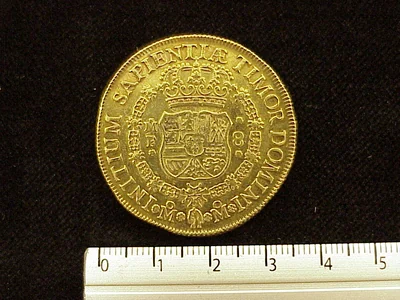
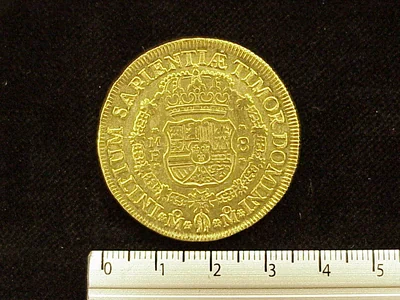
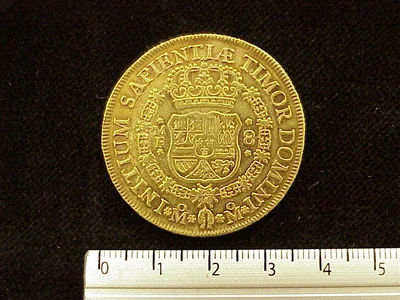
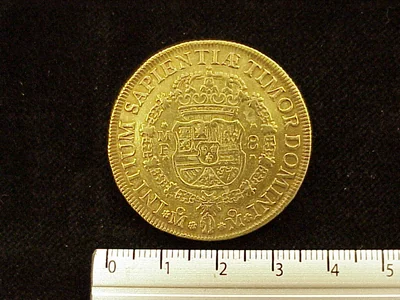
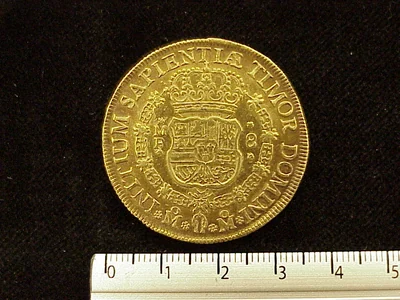
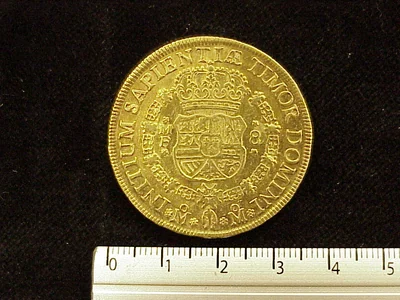
- Denomination: 8 escudos, the largest gold denomination of the Spanish colonial system.
- Ruler: Felipe V (second reign / "segunda época").
- Date: 1737.
- Mint: Mexico City (Casa de Moneda de México), then the primary supplier of silver and gold to the Spanish Empire.
- Assayer initials: MF, the official who certified the metal's fineness. On colonial coins the assayer letters matter for identification and value.
- Catalog reference: KM#148.
Specifications
| Feature | Detail |
|---|---|
| Metal | Gold (about .917 fine) |
| Weight | 26.98 g |
| Diameter | 37 mm |
| Pure gold content | ~0.796 troy oz |
| Edge | Diagonally reeded |
| Catalog | KM#148 |
What actually drives the value
Three things, in this order:
- Gold content. This is your guaranteed floor. A dealer will never pay less than melt for a genuine piece.
- Grade and originality. An undamaged, evenly struck coin with original surfaces is worth many times a bent, cleaned, or holed one. Cleaning and jewelry mounting (a soldered loop or file marks from removing one) can cut value hard.
- Rarity by date and assayer. Not every year and assayer combination is equally common. Some 1730s Mexico City gold is genuinely rare in high grade, and that is where the biggest numbers come from.
Age alone is not the driver. A 1737 date sounds ancient and valuable, but the price is set by how many exist and what shape yours is in, not by the year on it.
How to check what yours is worth
Weigh and measure it first. Use a jewelry scale and a caliper. A genuine coin should be very close to 26.98 g and 37 mm. Significantly light or off-diameter pieces are red flags for a fake or a coin that has been altered.
Look for cleaning, mounting, or damage. Bright, unnaturally shiny surfaces often mean the coin was cleaned, which lowers value. Check the edge and rim for solder residue or file marks from a former necklace mount.
Get it authenticated. For a coin in this value range, professional certification pays for itself. NGC or PCGS will authenticate and grade it, which both confirms it is real and sets a market-recognized grade. Counterfeits of colonial gold exist and can be convincing, so do not skip this step before selling.
The myth to ignore
Online you will see claims that any old Spanish colonial coin is worth a fortune. Reality: a worn, cleaned, or damaged 8 escudos is worth close to its gold value, which is real money but not life-changing. The record prices belong to sharp, original, certified examples. Sell an uncertified worn coin expecting 40,000 USD and you will be disappointed. Know which category yours falls in before you talk to anyone.
Also be skeptical of "error" claims. Genuine mint errors on colonial gold are rare and can add value, but most so-called errors circulating online are post-mint damage: knocks, corrosion, or wear. If you think you have a real one, post clear photos in the Pesoteca forum for a second opinion before assuming it is worth extra.
Where to sell it
For a gold coin at this level, avoid dumping it to the first buyer on social media or a scrap-gold shop that only pays melt.
- Get it graded by NGC or PCGS first, then sell through a verified numismatic dealer from the Pesoteca shop directory, who will value it on the spot.
- Or list it in the Pesoteca buy/sell forum, where collectors of colonial gold pay strong prices for original pieces.
- Photograph the obverse, reverse, and edge in good light before you sell, and compare your grade against the ranges above.
Because this is a precious-metal coin, only deal with buyers who let you show the piece and confirm its weight in person, and verify before any money changes hands.
Not sure whether your 1737 is a genuine strike or a later restrike or copy? Post the weight and photos of both sides in the Pesoteca forum and let collectors who handle colonial gold weigh in before you sell.
Historical context
Eight escudos Felipe V second period, 1737, Mexico mint. The year the Virgin of Guadalupe was sworn as patroness of Mexico City in gratitude for the drop in deaths from the matlazahuatl epidemic then entering its second year. The religious act took place on April 27 with a massive procession. Viceroy Vizarron y Eguiarreta continued in the dual civil and ecclesiastical command. The onza weighs 27.06 grams with the 0.916 fineness typical of the early pillar coinage. Produced by mill press with a round planchet, under the technical system of the 1732 reform. The reverse retains the classic pillar design with the crowned Pillars of Hercules and PLVS VLTRA. The obverse bears the modified Habsburg royal shield that Felipe V kept after his Bourbon accession. The edge was treated with a mechanical collar. Pieces from 1737 are a testimony of the densest religious year of the epidemic and are collectible for the documented Guadalupan context. They form part of the sustained production of the Mexican pillar coinage under Felipe V, a cycle that would remain stable until 1746 without significant iconographic changes.
This piece belongs to the era
Colonial / Virreinato →Explore all the Mexican coins of this era, their historical context and how they connect to the monetary system of the period.
Value range of this piece
Market estimate: $51,308 - $86,414 MXN depending on the grade of preservation (typical range between a circulated and an uncirculated piece).
See the full breakdown by grade (VG, F, VF, EF, AU, MS-60, MS-63, MS-65) for the whole series →
Same denomination, other years
8 escudos Oro 0.875 (21k) · 8 Escudos Felipe V Segunda Epoca
Frequently asked questions
How much is a 1737 Felipe V 8 escudos gold coin worth?
It depends on condition, but there is a floor: the coin holds 26.98 g of gold (about 0.796 troy ounces), worth a few thousand dollars in metal alone. Worn or damaged examples run roughly 3,000 to 6,000 USD, circulated pieces 6,000 to 15,000 USD, and sharp high-grade certified coins 20,000 to over 45,000 USD.
Is the 1737 Mexico 8 escudos rare?
Yes, colonial gold from the Mexico City mint is genuinely scarce, far scarcer than people expect. Survivors are limited, especially in high grade, which is why undamaged original pieces command a large premium over their gold value. The specific date and assayer combination (MF) also affects rarity.
How can I tell if my 1737 8 escudos is genuine?
Weigh and measure it: a real coin is close to 26.98 g and 37 mm with a diagonally reeded edge. Check the engraving style, mint mark, and assayer letters. Counterfeits of colonial gold are common, so for a coin worth this much, have it authenticated by NGC or PCGS before selling. Be suspicious of any offer far below the gold value.
Where should I sell a 1737 8 escudos gold coin?
Get it graded by NGC or PCGS first, then sell through a verified dealer from the Pesoteca shop directory or in the Pesoteca buy/sell forum among collectors. Photograph both sides and the edge, and only deal with buyers who let you confirm the coin and its weight in person. Avoid scrap-gold shops that pay only melt.
Conversation
0 comments
Loading comments…