
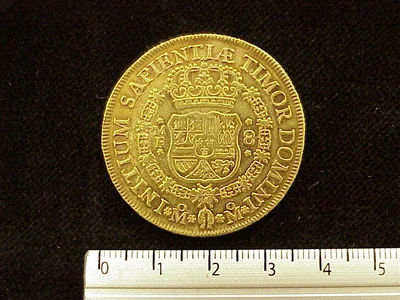
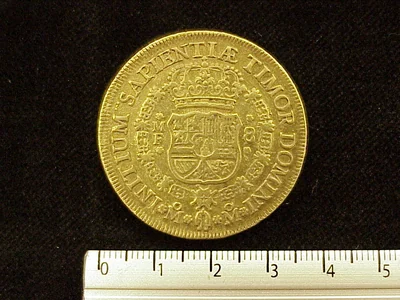
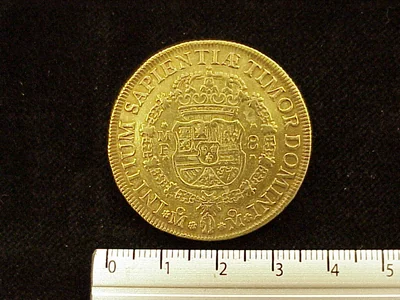
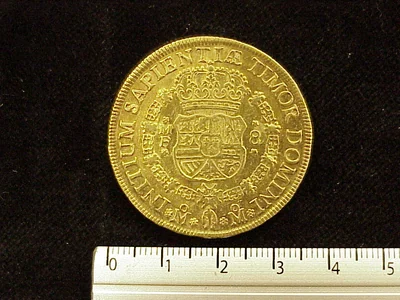
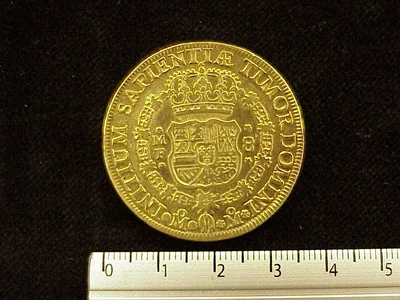
8 Escudos Gold Coin, Felipe V, 1739 (Mexico Mint)
The 8 Escudos Gold Coin, Felipe V, 1739 is worth between $51,441 and $86,638 MXN depending on its grade of preservation.
Prices updated: August 2026
The 8 Escudos Gold Coin, Felipe V, 1739 is worth between $51,441 and $86,638 MXN depending on its grade of preservation.
Prices updated: August 2026
How much is the 8 Escudos Gold Coin, Felipe V, 1739 (Mexico Mint) worth?
The estimated value of the 8 Escudos Gold Coin, Felipe V, 1739 (Mexico Mint) ranges from $51,441 (circulated, XF) up to $86,638 (official blister pack), with $73,839 as a reference for an uncirculated (UNC) piece. The estimate is based on the official mintage and the historical behavior of the family.
The real price depends on four factors: the grade of preservation (a circulated piece is worth the low end of the range; an uncirculated one, or one still in its official blister pack, the high end), the finish (satin vs mirror/proof), the rarity within the series based on the mintage, and the metal spot price on the day of the deal when the piece is silver or gold. Check the value-by-grade table above and compare with equivalent pieces before buying or selling.
Where to buy or sell this coin?
Browse the national directory of numismatic shops or the community forum to trade directly with other collectors.
Description
If you have a 1739 Mexico 8 Escudos in gold, you are holding real money, not a novelty. A genuine example runs from a few thousand dollars in worn condition to well over 20,000 USD for a sharp, certified piece. In 2026, colonial Mexican gold is one of the strongest segments at auction, so authentication and grade matter more than the date alone.
What this coin actually is
This is an 8 Escudos gold coin struck in 1739 at the Mexico City Mint during the reign of Felipe V (Philip V of Spain). In the colonial world this denomination was known as an onza ("ounce"), the largest gold coin in the Spanish system. It carries the assayer initials MF, the official who certified the metal's purity.
| Feature | Detail |
|---|---|
| Denomination | 8 Escudos (gold "onza") |
| Date | 1739 |
| Mint | Mexico City |
| Ruler | Felipe V (second period) |
| Assayer | MF |
| Metal | Gold, .875 fine |
| Weight | 27.05 g |
| Diameter | 37 mm |
| Edge | Diagonal reeding |
| Catalog | KM#148 |
Is it worth money? (Yes, and here is why)
Three things drive the value of this piece, in order:
- Gold content. At 27.05 g of .875 fine gold, the coin contains roughly 23.7 g of pure gold, about 0.76 troy ounces. That gives it a hard floor at melt value: no matter how worn, it is worth its bullion weight. That floor alone puts it in the low thousands of dollars at current gold prices.
- Numismatic premium. A genuine, well-preserved 8 Escudos from this period trades well above melt. Milled colonial gold with clear devices and an identifiable assayer is in steady demand from collectors of Spanish colonial and Latin American gold.
- Grade and certification. A coin certified by NGC or PCGS in a high grade can command a large multiple over a raw, worn example. The difference between a battered piece and a sharp, problem-free coin is often the difference between a few thousand dollars and five figures.
Honest range: expect anywhere from the low thousands (worn, uncertified, verified genuine) to over 20,000 USD for a top-grade certified example. Exact figures depend on grade, eye appeal, and whether the coin has been cleaned or damaged.
Watch out: fakes are common
Colonial Spanish gold is one of the most counterfeited areas in the entire hobby. Cast copies, tooled coins, and outright modern fakes circulate widely, and the metal value makes them worth a forger's effort. Before you buy or sell, confirm:
- Weight: should be very close to 27.05 g on a jeweler's scale.
- Diameter: should measure about 37 mm with calipers.
- Edge: diagonal reeding, not smooth or crudely filed.
- Details: the engraving style, the Mexico mintmark, and the MF assayer initials should match documented examples.
If a coin weighs light, measures wrong, or is offered far below its gold value, treat it as suspect. The single best protection is a slab from NGC or PCGS. If yours is raw, submit it for grading before selling a coin at this value level.
How to check what yours is worth
- Weigh and measure it and compare to the specs above.
- Photograph it clearly: obverse, reverse, and edge, in good light.
- Get it authenticated. For a coin worth thousands, third-party grading pays for itself.
- Check comparable sales for the same date, assayer, and grade before you accept any offer.
Most of the "error" claims you see online for old coins are post-strike damage (scratches, corrosion, rim dings), not genuine mint errors. Real striking varieties on colonial gold exist and can add value, but they need to be verified, not assumed.
Where to sell it
Because this is a precious-metal coin worth serious money, do not hand it to the first buyer. Your safest routes:
- A verified numismatic dealer who will value it in person and let you inspect the coin and confirm its weight before any money changes hands.
- A collector-to-collector marketplace where buyers understand grade and provenance.
- For the highest-value certified examples, a major auction house that specializes in world and colonial gold.
Always verify authenticity and weight before payment, and never rush a sale on a general social media post to the first bidder.
Got one in an inherited box and not sure if it is genuine or a copy? Post clear photos of both sides and the edge on the Pesoteca forum and let the community weigh in before you sell.
Historical context
Eight escudos Philip V second period, 1739, Mexico mint. Final year of the great matlazahuatl epidemic that had devastated New Spain since 1736. It is also the year of the Royal Decree creating the Viceroyalty of New Granada as a territory separate from Peru, which reorganized the Spanish American administrative map. In Mexico, Vizarrón y Eguiarreta continued as interim viceroy in his sixth year of dual command. The onza weighs 27.06 grams with 0.916 fineness. Mill press production had already been operating for seven years at the Mint with consolidated standardization of weight and diameter. The columnario reverse remained without significant changes from the start of the series in 1732: crowned Pillars of Hercules, banners with PLVS VLTRA, crowned royal shield on the obverse. In Europe the War of Jenkins' Ear was beginning between Spain and England over English smuggling in the Caribbean, the first sustained military conflict of the columnario cycle. The piece documents the numismatic start of that new transatlantic confrontation. Pieces of 1739 form part of the epidemic close of the viceroyalty.
This piece belongs to the era
Colonial / Virreinato →Explore all the Mexican coins of this era, their historical context and how they connect to the monetary system of the period.
Value range of this piece
Market estimate: $51,441 - $86,638 MXN depending on the grade of preservation (typical range between a circulated and an uncirculated piece).
See the full breakdown by grade (VG, F, VF, EF, AU, MS-60, MS-63, MS-65) for the whole series →
Same denomination, other years
8 escudos Oro 0.875 (21k) · 8 Escudos Felipe V Segunda Epoca
Frequently asked questions
How much is a 1739 Mexico 8 Escudos gold coin worth?
It has a hard floor at its gold value (about 0.76 troy ounces of pure gold), which puts it in the low thousands of dollars even when worn. A genuine, high-grade certified example can bring well over 20,000 USD. Exact value depends on grade, eye appeal, and certification.
Is the 8 Escudos Felipe V 1739 rare?
Colonial Mexican 8 Escudos gold is scarce and always in demand, but the 1739 date is not the rarest in the series. Condition drives price far more than the date: a sharp, problem-free coin is worth a large multiple of a worn one, and certified examples command a strong premium.
How can I tell if my 8 Escudos coin is genuine?
Weigh it (should be near 27.05 g) and measure the diameter (about 37 mm) against the specs above. Check for diagonal reeding on the edge and confirm the Mexico mintmark and MF assayer initials. Fakes are common in colonial gold, so for a coin this valuable, get it certified by NGC or PCGS. Be suspicious of any offer far below the gold value.
Where should I sell a 1739 8 Escudos gold coin?
Use a verified numismatic dealer who values it in person, a collector-to-collector marketplace, or a major auction house for top-grade certified pieces. Photograph the obverse, reverse, and edge, confirm authenticity and weight before any payment, and never sell to the first bidder on social media.
Conversation
0 comments
Loading comments…