
8 Escudos Fernando VII 1808 Gold Coin: Value Guide
The 8 Escudos Fernando VII 1808 Gold Coin: Value Guide is worth between $51,270 and $86,350 MXN depending on its grade of preservation.
Prices updated: August 2026
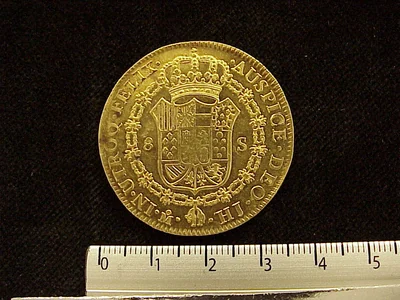
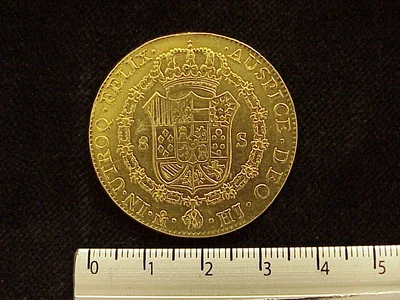
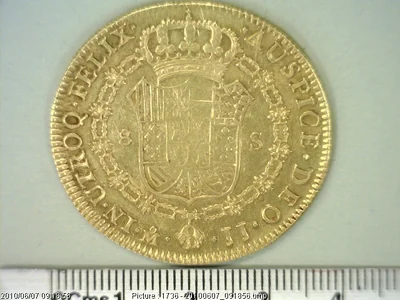
First type; armored bust.
First type; armored bust.
The 8 Escudos Fernando VII 1808 Gold Coin: Value Guide is worth between $51,270 and $86,350 MXN depending on its grade of preservation.
Prices updated: August 2026
How much is the 8 Escudos Fernando VII 1808 Gold Coin: Value Guide worth?
The estimated value of the 8 Escudos Fernando VII 1808 Gold Coin: Value Guide ranges from $51,270 (circulated, XF) up to $86,350 (official blister pack), with $73,594 as a reference for an uncirculated (UNC) piece. The estimate is based on the official mintage and the historical behavior of the family.
The real price depends on four factors: the grade of preservation (a circulated piece is worth the low end of the range; an uncirculated one, or one still in its official blister pack, the high end), the finish (satin vs mirror/proof), the rarity within the series based on the mintage, and the metal spot price on the day of the deal when the piece is silver or gold. Check the value-by-grade table above and compare with equivalent pieces before buying or selling.
Where to buy or sell this coin?
Browse the national directory of numismatic shops or the community forum to trade directly with other collectors.
Description
If you inherited or found an 1808 Mexico 8 Escudos with a bust of Fernando VII, you are holding almost a full ounce of gold. That alone puts a floor of roughly 2,000 to 2,300 USD on it at melt in 2026. In collector grades, the coin sells from about 2,500 USD to well over 20,000 USD depending on condition and the exact type.
This is a genuine gold coin, not a token or a medal, so it will never be "worth nothing." The question is whether yours is worth its gold or a multiple of it.
What this coin actually is
The 8 Escudos was the largest gold denomination of the Spanish colonial system. Collectors call it an "onza" (Spanish for ounce) because it weighs close to a troy ounce. Yours was struck at the Mexico City mint, the main silver and gold supplier of the Spanish Empire at the time.
Key specs to verify against your coin:
| Feature | Value |
|---|---|
| Denomination | 8 Escudos (gold) |
| Year | 1808 |
| Ruler | Fernando VII, first type, armored bust |
| Mint | Mexico City |
| Assayer initials | TH |
| Metal | Gold, .875 fineness |
| Weight | 26.96 g |
| Diameter | 37 mm |
| Edge | Diagonal reeded |
| Catalog reference | KM#160 |
The assayer initials TH belong to the mint official who certified the metal's purity. On colonial gold, the assayer letters and the mint mark matter for both authenticity and value.
How much is an 1808 8 Escudos worth?
Start with the metal. At 26.96 grams of .875 gold, the coin contains about 0.759 troy ounces of pure gold. That gives it a hard floor of around 2,000 to 2,300 USD at recent gold prices, no matter how worn it is.
Above that floor, condition drives everything.
| Condition | Typical value (USD) |
|---|---|
| Heavily worn / damaged | Melt value, about 2,000 to 2,300 |
| Circulated (VF) | 2,500 to 4,000 |
| Lightly circulated (XF) | 4,000 to 7,000 |
| About Uncirculated (AU) | 7,000 to 12,000 |
| Uncirculated / choice (MS) | 12,000 to 25,000+ |
These are ranges, not guarantees. Colonial gold varies a lot by strike quality, the specific portrait type, and eye appeal. An 1808 with a sharp armored bust and original luster sits at the top of the range. A cleaned, scratched, or mounted example (many were worn as jewelry) drops toward melt.
The transition year that adds interest
1808 is the year Fernando VII took the throne, and Mexico produced two portrait styles during his early reign. The "first type" armored bust, which is what you have per the specs above, is the sought-after early portrait. Type and assayer combinations can shift the price, so confirm exactly what is on your coin before you assume a number.
Watch out for fakes
Spanish colonial gold is heavily counterfeited, and 8 Escudos are a prime target because the metal is valuable. Two quick checks:
- Weight and diameter. Use a jeweler's scale and calipers. It should hit 26.96 g and 37 mm. A fake in base metal will usually be off on weight or feel wrong for its size.
- Detail and edge. The engraving should be crisp and period-correct, and the edge should show diagonal reeding. Soft, mushy detail or a plain edge is a red flag.
If someone offers to sell you one for well below the value of the gold, walk away. That price only makes sense if the coin is fake or stolen. For any high-value piece, third-party certification from NGC or PCGS removes the guesswork and often adds to the resale price.
Where to sell it
Because this is a precious-metal coin, sell only where you can show the piece and its weight in person, or through a buyer who verifies before paying:
- A verified numismatic shop from the Pesoteca directory, which can appraise it on the spot.
- The Pesoteca buy-and-sell forum, where collectors who understand colonial gold will pay a fair price.
Before you sell, photograph the obverse, reverse, and edge, and compare your grade to the table above. Do not dump it on the first social-media buyer, and be careful of anyone who lowballs a genuine gold coin below its melt value. For more on colonial pieces, see our guide to Mexican colonial coins and the Onza Libertad, the modern gold bullion coin US buyers often confuse with these old escudos.
Got an 1808 8 Escudos and not sure which portrait type or assayer it shows? Post clear photos of both sides on the Pesoteca forum and the community will help you pin down the exact variant and value.
Historical context
Eight escudos Ferdinand VII, 1808, Mexico Mint. The listing describes the first type with an armored bust, an idealized portrait of the king dressed in military armor that was used in the first American issues of his reign due to the absence of an updated official portrait. A year of dynastic crisis in Spain: in March Charles IV abdicated in favor of Ferdinand VII after the Mutiny of Aranjuez, and in May Napoleon forced Ferdinand VII to renounce the throne at Bayonne in favor of Joseph Bonaparte. On May 2 the Spanish War of Independence broke out in Madrid. In New Spain, Jose de Iturrigaray as viceroy tried to navigate the crisis by recognizing both the Junta of Seville and the New Spanish town council, but on September 15 he was deposed by the coup of Gabriel de Yermo and replaced by Pedro Garibay. It was the first episode of political rupture that foreshadowed Independence two years later. The ounce weighs 27.06 grams at 0.875 fineness. Produced by mill with a round planchet. 1808 pieces document the year of the greatest Spanish dynastic crisis of the nineteenth century and the start of the political cycle that would lead to New Spanish independence.
This piece belongs to the era
Colonial / Virreinato →Explore all the Mexican coins of this era, their historical context and how they connect to the monetary system of the period.
Value range of this piece
Market estimate: $51,270 - $86,350 MXN depending on the grade of preservation (typical range between a circulated and an uncirculated piece).
See the full breakdown by grade (VG, F, VF, EF, AU, MS-60, MS-63, MS-65) for the whole series →
Same denomination, other years
8 escudos Oro 0.875 (21k) · 8 Escudos Fernando VII
Frequently asked questions
How much is an 1808 8 Escudos Fernando VII worth?
It contains about 0.759 troy ounces of .875 gold, giving it a floor of roughly 2,000 to 2,300 USD at melt. In collector grades it sells from about 2,500 USD (circulated) to over 20,000 USD in uncirculated condition. Grade, portrait type, and eye appeal decide where in that range yours falls.
Is the 1808 8 Escudos rare?
It is scarce and always valuable because of its gold content, but it is not a one-off rarity. Value depends heavily on condition. A worn or jewelry-mounted example is worth its gold, while a sharp, high-grade 1808 with the first-type armored bust commands a strong premium over melt.
Where can I sell my 1808 8 Escudos?
Sell through a verified numismatic shop from the Pesoteca directory, which can appraise and pay in person, or through the Pesoteca buy-and-sell forum among collectors. For a coin this valuable, get it certified by NGC or PCGS first, and never sell below the value of the gold itself.
How do I tell if my 8 Escudos is genuine?
Weigh it on a jeweler's scale (should be 26.96 g) and measure the diameter (37 mm) with calipers. Check for crisp period engraving and diagonal reeding on the edge. Colonial gold is heavily faked, so any offer far below the gold value is a warning sign. Third-party certification confirms authenticity.
Conversation
0 comments
Loading comments…