
8 Reales Columnario Felipe V 1733-1747 (Pillar Dollar)
The 8 Reales Columnario Felipe V 1733-1747 is worth between $745 and $3,137 MXN depending on its grade of preservation.
Prices updated: August 2026
Classic Pillar Dollar · Philip V · Assayers MF
Classic Pillar Dollar · Philip V · Assayers MF
Design
Banxico
Reverse
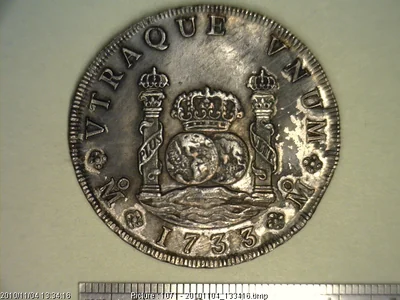
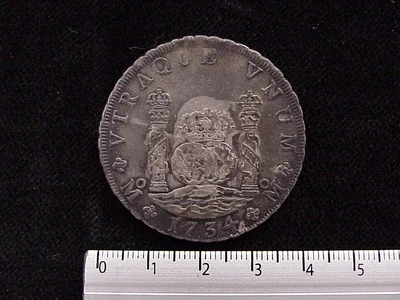
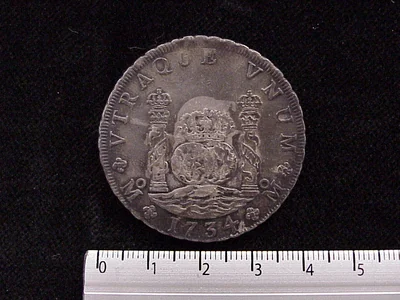
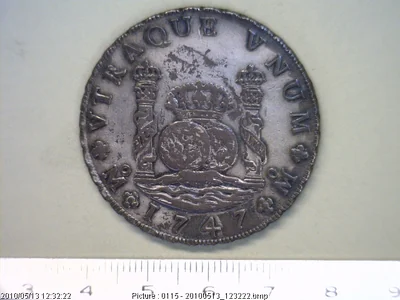
Two crowned hemispheres (Old World + New World) flanked by the two columns of Hercules with banners reading "PLUS ULTRA". Inscription "VTRAQUE VNUM" (both are one) above the hemispheres. Year of minting at the base between the columns. Value "8 R" below the year.
Obverse
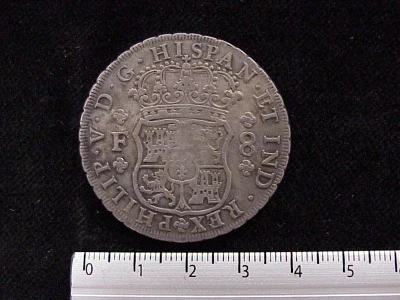
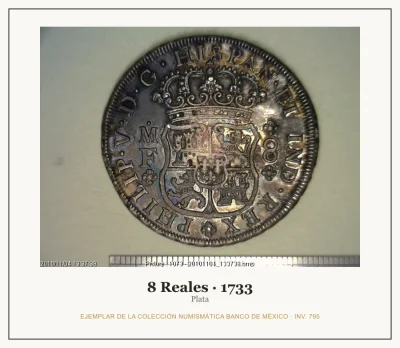
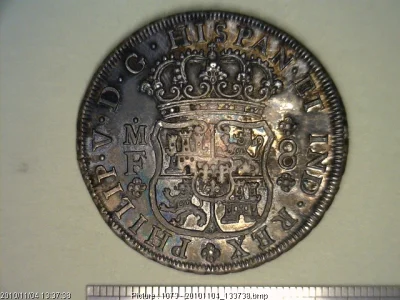
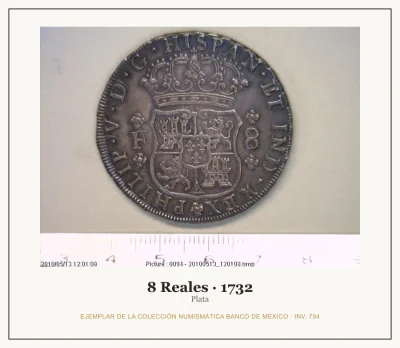
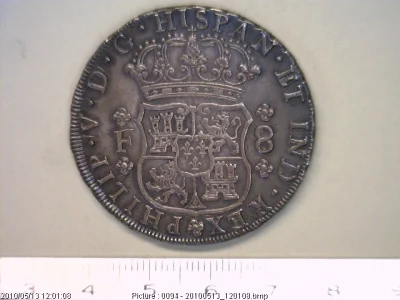
Crowned Habsburg-Bourbon coat of arms. Inscription "PHILIP V D G HISPAN ET IND REX". Mint mark "Mo" (Mexico) and assayer's initials "MF".
The 8 Reales Columnario Felipe V 1733-1747 is worth between $745 and $3,137 MXN depending on its grade of preservation.
Prices updated: August 2026
How much is the 8 Reales Columnario Felipe V 1733-1747 (Pillar Dollar) worth?
The estimated value of the 8 Reales Columnario Felipe V 1733-1747 (Pillar Dollar) ranges from $745 (circulated, XF) up to $3,137 (official blister pack), with $2,267 as a reference for an uncirculated (UNC) piece. The estimate is based on the official mintage and the historical behavior of the family.
The real price depends on four factors: the grade of preservation (a circulated piece is worth the low end of the range; an uncirculated one, or one still in its official blister pack, the high end), the finish (satin vs mirror/proof), the rarity within the series based on the mintage, and the metal spot price on the day of the deal when the piece is silver or gold. Check the value-by-grade table above and compare with equivalent pieces before buying or selling.
Where to buy or sell this coin?
Browse the national directory of numismatic shops or the community forum to trade directly with other collectors.
Description
If you inherited an old Spanish-Mexican silver coin with two columns on the back, you may have a Columnario, known to US collectors as the Pillar Dollar. The 8 Reales Felipe V struck at Mexico City from 1733 to 1747 typically sells from around 150 USD in worn condition to several thousand dollars for sharp, high-grade examples. This is a genuine collectible with real silver content, not a wall-hanger replica (though plenty of fakes exist).
Here is what yours is worth and how to check it.
Quick answer: what it's worth in 2026
The Felipe V Pillar Dollar is one of the more common types in the Columnario series, which keeps most examples affordable. Value depends almost entirely on wear (grade), the specific date, and whether it's a rare overdate variety.
- Heavily worn (Good to Fine): roughly 100 to 250 USD.
- Moderate wear (Very Fine): roughly 250 to 600 USD.
- Light wear (Extremely Fine): roughly 600 to 1,500 USD.
- Mint State or near-uncirculated: 2,000 to 5,000+ USD, especially for scarce dates.
A badly cleaned, scratched, or corroded piece drops toward its silver melt value, which is still meaningful because the coin holds about 0.78 troy ounces of pure silver.
What this coin actually is
Columnario means "pillar coin." The reverse shows two crowned columns (the Pillars of Hercules) flanking two globes over waves, a design that made this the most recognized silver trade coin in the Americas. It was the first Mexican 8 Reales struck by machine press ("a molino"), replacing the crude hand-struck cob coinage called macuquina.
Specifications (verify yours against these):
- Weight: 27.07 g
- Diameter: 38 mm
- Fineness: silver, approximately 0.900
- Mint: Mexico City (mintmark Mo)
- Assayers: MF (Manuel de León and Francisco de la Peña y Flores)
- Denomination: 8 Reales
The series ended in 1747 when Felipe V died and Fernando VI took the throne, which is why 1747 is the cutoff for this type.
Value by grade
| Grade | Condition | Approx. value (USD) |
|---|---|---|
| G-VG | Heavy wear, readable | 100 to 250 |
| Fine | Clear detail, worn high points | 200 to 400 |
| Very Fine | Moderate wear | 300 to 600 |
| Extremely Fine | Light wear, strong detail | 600 to 1,500 |
| AU / Mint State | Little to no wear | 2,000 to 5,000+ |
These are market ranges. A common date in Very Fine sits at the low end; a scarce date or an exceptional strike pushes toward the top.
The overdates: where the real money can be
Several dates in this run are overdates, meaning the die was re-engraved from a previous year and you can see the older digit underneath. Documented overdates include:
1733/2, 1738/7, 1739/8, 1740/39, 1742/1, 1744/3, and 1746/5.
A genuine, verifiable overdate can carry a premium over the same date without the overdate feature, sometimes substantially, because specialists chase them. If you look closely at the date and see a faint ghost of a different digit, get it authenticated before you sell. Do not assume it, and do not let a buyer talk you out of it either.
Silver content sets the floor
Because this coin is roughly 0.900 fine silver at 27.07 g, it contains about 0.78 troy ounces of pure silver. That gives it a baseline melt value no matter how worn it is. As a collectible, though, even a low-grade authentic Columnario is worth well above melt to a numismatist, so never sell one for scrap price. Anyone offering you only melt value is undervaluing it.
How to tell if yours is genuine
Counterfeits of Pillar Dollars are common, both old contemporary fakes and modern reproductions.
- Weigh it. Use a jeweler's scale. It should be close to 27.07 g. A light or overweight coin is a red flag.
- Measure it. Diameter should be about 38 mm.
- Check the edge. Genuine milled coins have a decorated (tulip/floral) edge design, not a plain or reeded modern edge.
- Study the engraving. Look at the mintmark (Mo), the assayer letters (MF), and the overall style. Cast fakes look soft, mushy, or grainy in the fields.
- Be suspicious of a bargain. Any offer far below the silver value is either a fake or a trap.
For anything you plan to sell above a few hundred dollars, third-party grading from NGC or PCGS is worth it. A certified, slabbed coin sells faster and higher because the buyer trusts the authentication.
Where to sell it
- Verified coin dealers. Browse the Pesoteca dealer directory to find a shop that will appraise and buy on the spot. Get more than one quote.
- Collector marketplace. The Pesoteca buy-and-sell forum puts you in front of collectors who actually want this series, which usually beats a dealer's buy price.
- Major auction houses. For a high-grade or rare overdate, Heritage Auctions and Stack's Bowers regularly sell Mexican colonial silver to a worldwide bidder base.
Photograph the obverse, reverse, and edge in good light before you list or ask for offers. Avoid dumping it on a general social-media sale to the first buyer; colonial silver is easy to underprice if you don't know what you have.
Want a second opinion on your date, grade, or a possible overdate? Post clear photos in the Pesoteca forum and let collectors who specialize in Columnarios weigh in before you sell.
Historical context
Felipe V reigned 45 years (1700-1746), the longest reign of the Hispanic monarchy. The pillar coinage stabilized colonial money by replacing the crude cob (macuquina) with a regular piece, of laureate edges and uniform design. The reverse shows two crowned hemispheres (Old World + New World) flanked by the columns of Hercules with the motto PLVS VLTRA. The piece became the standard of world trade: it circulated from Manila to Philadelphia and was the basis of the United States silver dollar. The Pillar series as a whole was struck at the Mexico Mint (Mo mint mark) between 1732 and 1772 under three monarchs: Felipe V, Fernando VI, and Carlos III. It is considered the monetary standard of eighteenth-century world trade for its purity and consistency. The Mexican pieces circulated in Asia (with frequent Chinese chopmarks over the die), in the Thirteen North American Colonies (they served as the basis of the U.S. dollar), and throughout Europe. Today they are a central object of world numismatic collecting, especially for their role as precursor of the international Spanish Dollar / Pillar Dollar.
This piece belongs to the era
Colonial / Virreinato →Explore all the Mexican coins of this era, their historical context and how they connect to the monetary system of the period.
Value range of this piece
Market estimate: $745 - $3,137 MXN depending on the grade of preservation (typical range between a circulated and an uncirculated piece).
See the full breakdown by grade (VG, F, VF, EF, AU, MS-60, MS-63, MS-65) for the whole series →
Other denominations from 1733
8 Reales Coloniales · Plata 0.900
Same denomination, other years
8 reales Plata 0.900 · 8 Reales Coloniales
Frequently asked questions
How much is the 8 Reales Columnario Felipe V 1733-1747 worth?
It ranges from about 100 to 250 USD in heavily worn condition, 300 to 600 USD in Very Fine, and 2,000 to over 5,000 USD in Mint State. Scarce dates and verified overdates carry a premium. Even a worn genuine example is worth well above its silver melt value.
Is this Pillar Dollar rare?
The Felipe V type is one of the more common Columnarios, so most dates are affordable. Value comes from grade and from scarce overdate varieties like 1733/2, 1738/7, 1739/8, 1740/39, 1742/1, 1744/3, and 1746/5, which sell for more than the standard dates.
Where can I sell my 8 Reales Columnario Felipe V?
Use a verified dealer from the [Pesoteca directory](/tiendas) for an on-the-spot appraisal, or the [collector forum](/foro/compra-venta) to reach buyers who want this series. For high-grade or rare overdates, consider Heritage or Stack's Bowers. Photograph both sides and the edge before selling.
How do I know if it's genuine?
Weigh it (should be about 27.07 g) and measure it (about 38 mm). Check for the decorative floral edge and clean, sharp engraving on the Mo mintmark and MF assayer letters. Cast fakes look soft or grainy. For valuable examples, get it certified by NGC or PCGS.
Conversation
0 comments
Sources
Images for informational and educational purposes, attributed to their original source. Reference values; the real price depends on the grade, the specific variant and demand.
Loading comments…