
1732 Mexico 8 Reales, Felipe V: Value & Prices
The 1732 Mexico 8 Reales, Felipe V: Value & Prices is worth between $742 and $3,124 MXN depending on its grade of preservation.
Prices updated: August 2026
The 1732 Mexico 8 Reales, Felipe V: Value & Prices is worth between $742 and $3,124 MXN depending on its grade of preservation.
Prices updated: August 2026
How much is the 1732 Mexico 8 Reales, Felipe V: Value & Prices worth?
The estimated value of the 1732 Mexico 8 Reales, Felipe V: Value & Prices ranges from $742 (circulated, XF) up to $3,124 (official blister pack), with $2,258 as a reference for an uncirculated (UNC) piece. The estimate is based on the official mintage and the historical behavior of the family.
The real price depends on four factors: the grade of preservation (a circulated piece is worth the low end of the range; an uncirculated one, or one still in its official blister pack, the high end), the finish (satin vs mirror/proof), the rarity within the series based on the mintage, and the metal spot price on the day of the deal when the piece is silver or gold. Check the value-by-grade table above and compare with equivalent pieces before buying or selling.
Where to buy or sell this coin?
Browse the national directory of numismatic shops or the community forum to trade directly with other collectors.
Description
If you have a 1732 Mexico 8 Reales from Felipe V, you may be holding one of the most historically important coins ever struck in the Americas. Most circulated examples trade from a few hundred to a couple thousand USD, but pristine first-year strikes have sold for over 100,000 USD. Here is what actually drives the value in 2026.
What you actually have
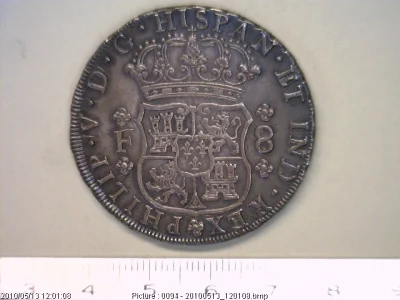
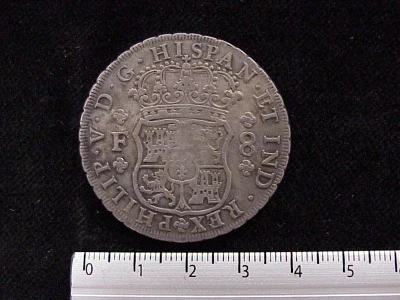
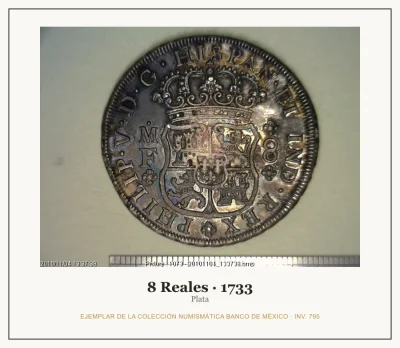
The 1732 eight reales is a large silver coin (26.96 grams, 38 mm) struck at the Mexico City Mint, catalogued as KM#103. It was made of .900 fine silver, has a laurel-decorated edge, and carries the assayer initial F, the mint official who certified the metal's purity. Felipe V ruled Spain, and Mexico City was the empire's main silver mint.
The eight reales was the Spanish silver dollar, the coin that circulated worldwide for centuries and inspired the US dollar. The word "dollar" and the value of "pieces of eight" both trace back to this denomination.
Why 1732 is the year that matters
This is the point people miss. The 1732 dated coins are the very first machine-struck (milled) eight reales from the Americas. Before 1732, Mexican silver was hammered by hand into crude, irregular "cobs." In 1732 the Mexico Mint switched to a screw press, producing round, even, milled coins with a decorated edge. That makes 1732 the debut year of the famous "Pillar dollar" or "columnario" series.
First-year coins from a landmark design draw serious collector demand. A well-preserved 1732 is not just old silver, it is a foundational piece of world coinage.
What it is worth
Condition (grade) is the single biggest factor. A worn, cleaned, or salvaged coin sits near its silver content plus a modest historical premium. A sharp, original coin certified by NGC or PCGS can be worth many thousands. Auction records reflect that spread.
| Coin | Year | Grade / condition | Approx. value (USD) |
|---|---|---|---|
| Mexico 8 Reales, Felipe V (KM#103) | 1732 | Worn / damaged, low grade | 300 to 1,200 |
| Mexico 8 Reales, Felipe V | 1732 | Mid-grade, honest circulated | 2,000 to 8,000 |
| Mexico 8 Reales, Felipe V | 1732 | High grade, certified AU/UNC | 15,000 to 100,000+ |
Standout examples have crossed six figures at major US auctions when they combine the 1732 date, strong strike, and top certified grade. That level is reserved for the finest survivors, not an average inherited coin.
The silver alone gives you a hard floor. At 26.96 grams of .900 fineness, the coin holds roughly 0.78 troy ounces of pure silver, so its melt value tracks the silver spot price. No genuine 1732 eight reales should ever sell below that floor.
The reality check
Many "1732" coins online are not what they seem. This design was heavily copied and outright forged, especially the desirable first-year date. Replicas, tourist reproductions, and modern fakes flood the market. A worn or altered date, a wrong weight, or a fantasy assayer letter all crush the value. Do not assume yours is a six-figure rarity until it is authenticated.
How to check yours
- Weigh and measure it. Genuine coins are 26.96 grams and 38 mm. Use a jewelry scale and calipers. A coin that is significantly light or off-size is almost certainly a fake or a plated copy.
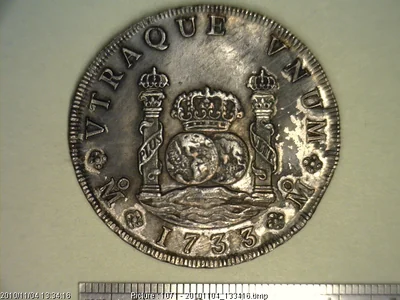
- Read the details. Confirm the 1732 date, the Mexico City mint mark, and the assayer initial. Study the pillars, the crowned globes, and the lettering style against verified references.
- Get it graded. For anything that looks original, send it to NGC or PCGS. A certified grade is what separates a 300 USD coin from a five-figure one, and it settles the authenticity question at the same time.
- Check the edge. The laurel-decorated edge is a security feature. Cast fakes often show a seam or a flat, wrong edge.
Where to sell it
Sell where buyers know colonial silver:
- A verified numismatic dealer from the Pesoteca directory can appraise it in person and pay fair value based on grade.
- The Pesoteca buy-and-sell forum connects you directly with collectors of Spanish colonial coinage.
- For a high-grade certified piece, a major auction house (Heritage, Stack's Bowers) reaches the specialist bidders who pay record prices.
Always photograph the obverse, reverse, and edge before you sell, and never take the first Facebook offer. Because this is precious metal, only deal with a buyer who inspects and weighs the coin in front of you.
Think you have a genuine 1732 first-year Pillar dollar? Post clear photos of both sides and the edge in the Pesoteca forum and let collectors help you pin down the grade before you sell.
Historical context
This piece belongs to the reign of Philip V of Spain (1724-1746 (second period)). He returned to the throne in 1724 after the premature death of Louis I. His second period ends with the monarch's death in 1746.
The government of New Spain in 1732 was in the hands of Juan de Acuna, marquis of Casafuerte, driving the modernization of the Mexico Mint.
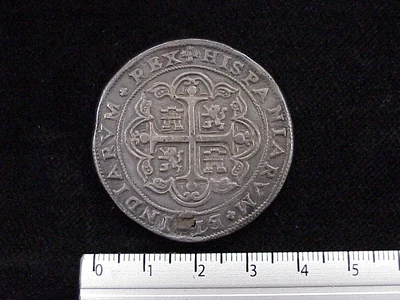
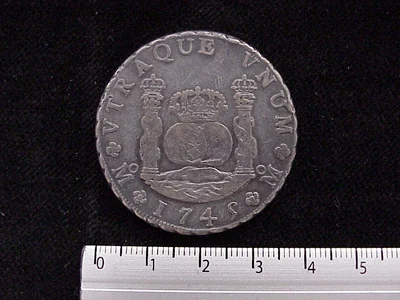
The numismatic type of the piece is pillar (columnario), officially introduced in New Spain in 1732. The reverse shows two crowned globes between the Pillars of Hercules with the motto PLVS VLTRA, and for the first time the coin was struck on a screw press with a laureled edge, which reduced the fraudulent clipping of silver and made the pillar real the most trusted trade coin of its era.
The Mexico Mint formally introduced the mechanized minting of pillar reales in 1732, and from then on the crowned Mo mark was accompanied by the assayer's initials. Production was enormous, exported as money of account to the Philippines, China, Protestant Europe, and the 13 English colonies. The dies were signed by the Mexico Mint assayer active in the period, an official charged by the Royal Treasury with certifying that the silver fineness met the viceregal standard.
Colonial catalogs trace this piece within the families of the Mexico Real de a ocho, with prices that respond to rarity by year and assayer signature.
Year of the pillar reform: the Mexico Mint introduced the screw press and the new design with the Pillars of Hercules.
This piece belongs to the era
Colonial / Virreinato →Explore all the Mexican coins of this era, their historical context and how they connect to the monetary system of the period.
Value range of this piece
Market estimate: $742 - $3,124 MXN depending on the grade of preservation (typical range between a circulated and an uncirculated piece).
See the full breakdown by grade (VG, F, VF, EF, AU, MS-60, MS-63, MS-65) for the whole series →
Other denominations from 1732
8 Reales Coloniales · Plata 0.900
Same denomination, other years
8 reales Plata 0.900 · 8 Reales Coloniales
Frequently asked questions
How much is a 1732 Mexico 8 Reales worth?
It depends heavily on condition. A worn, cleaned, or salvaged example runs roughly 300 to 1,200 USD, mid-grade circulated coins bring 2,000 to 8,000 USD, and high-grade certified pieces have sold for 15,000 to over 100,000 USD. The silver content (about 0.78 troy ounces) sets a hard price floor.
Is the 1732 Mexico 8 Reales rare?
It is genuinely significant because 1732 is the first year of milled (machine-struck) silver dollars in the Americas, the debut of the Pillar dollar series. Circulated examples exist, but well-preserved, certified first-year coins are scarce and command strong premiums. Beware of the many replicas and forgeries of this exact date.
How can I tell if my 1732 8 Reales is genuine?
Weigh it (26.96 grams) and measure it (38 mm) against the specs. Confirm the 1732 date, Mexico City mint mark, assayer initial, and the laurel-decorated edge. Cast fakes often show a seam or wrong weight. For any valuable-looking piece, get it certified by NGC or PCGS, which confirms both grade and authenticity.
Where should I sell a 1732 Mexico 8 Reales?
Use a [verified dealer from the Pesoteca directory](/tiendas) for an in-person appraisal, or the [Pesoteca buy-and-sell forum](/foro/compra-venta) to reach collectors directly. For a high-grade certified coin, a major auction house like Heritage or Stack's Bowers reaches the specialist bidders who pay top prices. Photograph both sides and the edge first.
Conversation
0 comments
Sources
Images for informational and educational purposes, attributed to their original source. Reference values; the real price depends on the grade, the specific variant and demand.
Loading comments…