
Pillar Dollar: Felipe V 8 Reales Columnario (1732-1733)
The Pillar Dollar: Felipe V 8 Reales Columnario is worth between $745 and $3,137 MXN depending on its grade of preservation.
Prices updated: August 2026
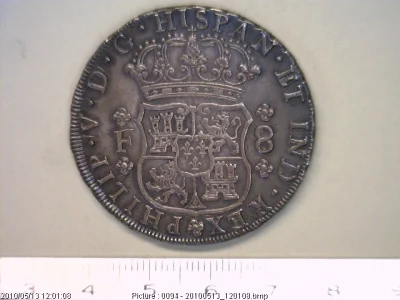
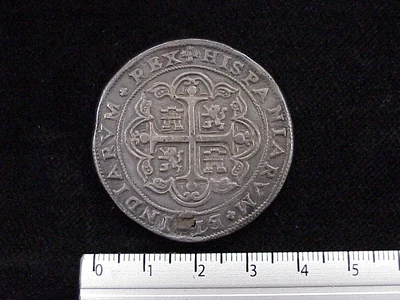
First Pillar Dollar · Transitional Philip V · Assayer F
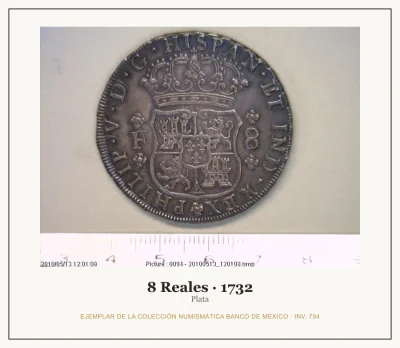
First Pillar Dollar · Transitional Philip V · Assayer F
Design
Banxico
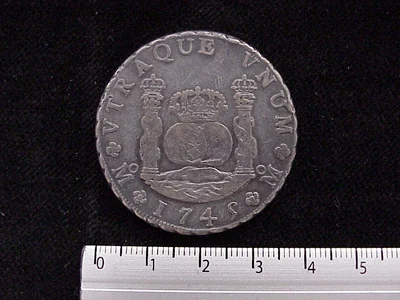
Reverse
Two crowned hemispheres (Old World + New World) flanked by the two Pillars of Hercules with banners reading "PLUS ULTRA". Inscription "VTRAQUE VNUM" (both are one) above the hemispheres. Year of minting at the base between the pillars. Value "8 R" below the year.
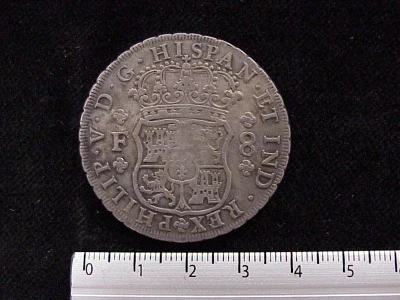
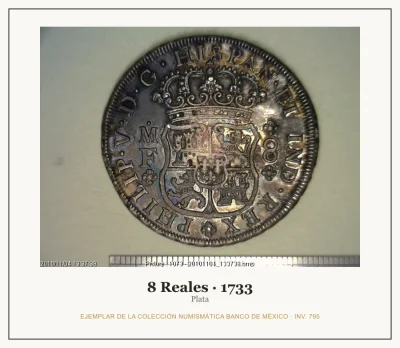
Obverse
Crowned Habsburg-Bourbon coat of arms. Inscription "PHILIP V D G HISPAN ET IND REX". Mint mark "Mo" (Mexico) and assayer's initial "F".
The Pillar Dollar: Felipe V 8 Reales Columnario is worth between $745 and $3,137 MXN depending on its grade of preservation.
Prices updated: August 2026
How much is the Pillar Dollar: Felipe V 8 Reales Columnario (1732-1733) worth?
The estimated value of the Pillar Dollar: Felipe V 8 Reales Columnario (1732-1733) ranges from $745 (circulated, XF) up to $3,137 (official blister pack), with $2,267 as a reference for an uncirculated (UNC) piece. The estimate is based on the official mintage and the historical behavior of the family.
The real price depends on four factors: the grade of preservation (a circulated piece is worth the low end of the range; an uncirculated one, or one still in its official blister pack, the high end), the finish (satin vs mirror/proof), the rarity within the series based on the mintage, and the metal spot price on the day of the deal when the piece is silver or gold. Check the value-by-grade table above and compare with equivalent pieces before buying or selling.
Where to buy or sell this coin?
Browse the national directory of numismatic shops or the community forum to trade directly with other collectors.
Description
If you inherited an old, heavy silver coin from Mexico with two columns and a pair of globes over ocean waves, you may be holding a Felipe V 8 Reales Columnario, dated 1732 or 1733. This is a genuinely important coin. Depending on condition, examples sell from a few hundred dollars up into six figures at major auctions.
The 1732 issue is the first year of the type, and first-year Pillar Dollars are the most sought-after. That makes the difference between "worth a few hundred" and "worth tens of thousands" almost entirely a matter of grade and authenticity. Here is what yours actually is, what it's worth, and how to verify it before you sell.
What you actually have
The coin American collectors call the Pillar Dollar is the 8 reales columnario. "Columnario" refers to the two Pillars of Hercules that frame two globes (representing Spain's dominions on both sides of the Atlantic) over ocean waves. It was struck at the Mexico City Mint (the Casa de Moneda de México), which is why you'll see the Mo mint mark. The F is the assayer's initial.
This was the first Mexican coin struck by screw press (a mechanical volante), authorized by Felipe V in 1728 to replace the crude hand-hammered macuquinas (cob coinage). The result was a round, well-made coin that circulated worldwide and became a trade standard in the Americas, Europe, and Asia.
Technical specs (check yours against these)
| Spec | Value |
|---|---|
| Denomination | 8 Reales |
| Metal | Silver, .900 fine |
| Weight | 27.07 grams |
| Diameter | 38 mm |
| Edge | Laureate (decorated, not smooth) |
| Mint | Mexico City (Mo) |
| Assayer | F |
| Dates | 1732, 1733 |
If your coin's weight is far off from 27 grams or the edge is plain and smooth, treat it with suspicion. Counterfeits of this type are common.
What it's worth in 2026
The silver alone gives this coin a floor. At 27.07 grams of .900 silver (about 24.4 grams pure, roughly 0.78 troy ounces), the melt value tracks the spot silver price, typically in the low tens of dollars. No genuine Pillar Dollar is worth only its melt, but that number tells you the minimum a real one commands.
Above melt, price is driven by grade and by the specific date. Rough guidance:
| Condition | Approximate value (USD) |
|---|---|
| Heavily worn, cleaned, or damaged | 200 to 600 |
| Circulated but honest, clear devices | 700 to 2,500 |
| Lightly circulated, strong columns and globes | 3,000 to 12,000 |
| Mint state / high grade (certified) | 20,000 to 100,000+ |
The single factor that moves the needle most is the sharpness of the columns and globes. A worn, flat center drops the value hard; crisp relief on those devices is what serious buyers pay for. The 1732 first-year date carries a premium over later years in comparable grade.
Top certified 1732 and 1733 Pillar Dollars have crossed into five and even six figures at Heritage Auctions and Stack's Bowers. If you think you have a high-grade example, do not sell it raw. Get it certified first.
The myth to kill
"Old Spanish colonial coin" does not automatically mean fortune. Most Pillar Dollars that show up in inherited boxes are heavily worn, cleaned with polish (which destroys value), or outright counterfeit. A cleaned coin with shiny, scratched surfaces can lose more than half its potential value. If yours has been polished bright, resist the urge to "clean it up" further, and let a professional assess it as-is.
How to tell if yours is genuine
- Weigh it. A jeweler's scale should read close to 27.07 grams. Silver is dense; convincing fakes are hard to get right on weight.
- Measure it. 38 mm diameter, using calipers.
- Check the edge. Genuine pieces have a laureate (decorated) edge, not a plain one.
- Study the details. Compare the engraving style, the Mo mint mark, and the F assayer initial against verified reference images. Cast fakes look soft and mushy; the lettering and column detail should be sharp on a real strike.
- When in doubt, certify. For anything you suspect is high grade or high value, submission to NGC or PCGS is the standard. Certification both authenticates and grades, which is exactly what buyers want to see.
Be suspicious of any offer far below the metal value, and equally suspicious of any "museum-quality" coin offered for a suspiciously low price.
Where to sell it
- A verified coin dealer for an on-the-spot valuation. See the Pesoteca shop directory to find one by city.
- The Pesoteca buy-sell forum to reach collectors directly.
- A major auction house (Heritage, Stack's Bowers) if the coin is certified and in high grade. That's where record prices for this type are set.
Before selling, photograph the obverse, reverse, and edge in good light, and compare against the value range above. Do not dump it to the first offer on social media. For colonial silver, always deal with someone who will show you the piece and its weight, and verify before money changes hands.
Not sure which date or grade you're looking at? Post clear photos of both sides on the Pesoteca forum and let the community weigh in before you decide what to do with it.
Historical context
On June 9, 1728 Felipe V authorized the construction of screw presses at the Mexico City Mint to replace the macuquinas (cob coinage) with regular struck coinage. The first series struck under this system was the Columnario, so called for the two columns of Hercules appearing on the reverse flanking the two hemispheres. The series formally begins in 1732 with the lone initial F of assayer Francisco de la Peña y Flores. In 1733 assayer Manuel de Leon enters and it is struck with the double initials MF. The Columnario series as a whole was struck at the Mexico City Mint (Mo mint) between 1732 and 1772 under three monarchs: Felipe V, Fernando VI and Carlos III. It is considered the monetary standard of 18th-century world trade for its purity and consistency. The Mexican pieces circulated in Asia (with frequent Chinese chopmarks over the die), in the Thirteen North American Colonies (they served as the basis for the U.S. dollar) and throughout Europe. Today they are a central object of world numismatic collecting, especially for their role as precursor of the international Spanish Dollar / Pillar Dollar.
This piece belongs to the era
Colonial / Virreinato →Explore all the Mexican coins of this era, their historical context and how they connect to the monetary system of the period.
Value range of this piece
Market estimate: $745 - $3,137 MXN depending on the grade of preservation (typical range between a circulated and an uncirculated piece).
See the full breakdown by grade (VG, F, VF, EF, AU, MS-60, MS-63, MS-65) for the whole series →
Other denominations from 1732
8 Reales Coloniales · Plata 0.900
Same denomination, other years
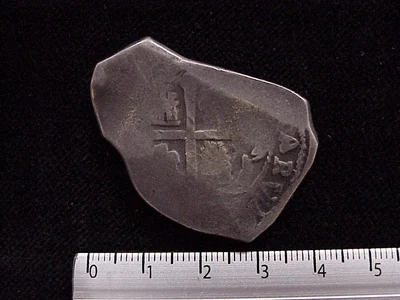
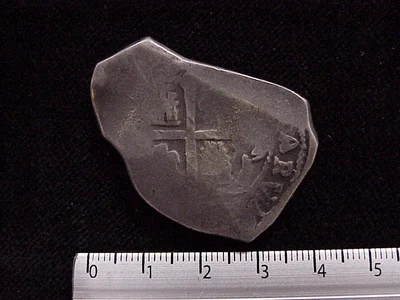
8 reales Plata 0.900 · 8 Reales Coloniales
Frequently asked questions
How much is a Felipe V 8 Reales Columnario (1732-1733) worth?
It ranges from about 200 to 600 USD for worn, cleaned, or damaged pieces, up to several thousand for honest circulated examples with strong columns and globes. Certified high-grade 1732 and 1733 coins have sold from 20,000 into six figures at Heritage and Stack's Bowers. Grade and date drive the price.
Is the 1732 Pillar Dollar rare?
The 1732 issue is the first year of the columnario type and the most sought-after date, so it carries a premium over later years in comparable condition. Genuine high-grade examples are scarce and valuable. Well-worn circulated pieces are more common but still worth well above their silver content.
Where can I sell my 8 Reales Columnario?
For a fast valuation, use a verified dealer from the [Pesoteca shop directory](/tiendas), or reach collectors on the [Pesoteca buy-sell forum](/foro/compra-venta). If the coin is certified and high grade, a major auction house like Heritage or Stack's Bowers is where record prices are set. Photograph both sides and the edge first.
How do I tell if my Pillar Dollar is genuine?
Weigh it (should be about 27.07 grams of .900 silver), measure it (38 mm), and check for a decorated laureate edge rather than a plain one. Compare the engraving, the Mo mint mark, and the F assayer initial against verified images; cast fakes look soft. Counterfeits are common, so certify anything you believe is high value with NGC or PCGS.
Conversation
0 comments
Sources
Images for informational and educational purposes, attributed to their original source. Reference values; the real price depends on the grade, the specific variant and demand.
Loading comments…