
1733 Mexico 8 Reales (Felipe V): Value & How to Sell
The 1733 Mexico 8 Reales : Value & How to Sell is worth between $744 and $3,133 MXN depending on its grade of preservation.
Prices updated: August 2026
The 1733 Mexico 8 Reales : Value & How to Sell is worth between $744 and $3,133 MXN depending on its grade of preservation.
Prices updated: August 2026
How much is the 1733 Mexico 8 Reales (Felipe V): Value & How to Sell worth?
The estimated value of the 1733 Mexico 8 Reales (Felipe V): Value & How to Sell ranges from $744 (circulated, XF) up to $3,133 (official blister pack), with $2,264 as a reference for an uncirculated (UNC) piece. The estimate is based on the official mintage and the historical behavior of the family.
The real price depends on four factors: the grade of preservation (a circulated piece is worth the low end of the range; an uncirculated one, or one still in its official blister pack, the high end), the finish (satin vs mirror/proof), the rarity within the series based on the mintage, and the metal spot price on the day of the deal when the piece is silver or gold. Check the value-by-grade table above and compare with equivalent pieces before buying or selling.
Where to buy or sell this coin?
Browse the national directory of numismatic shops or the community forum to trade directly with other collectors.
Description
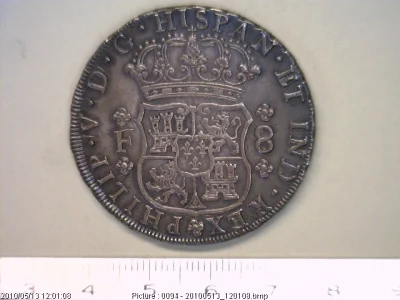
If you inherited or found a 1733 Mexico 8 reales of Felipe V, here is the honest answer: it is a genuine colonial silver coin with real value, typically from a few hundred dollars for a heavily worn example up to several thousand for a sharp, high-grade piece. It is not a coin worth a fortune by default, but it is far more than pocket change, and in 2026 demand for early Mexican silver stays strong.
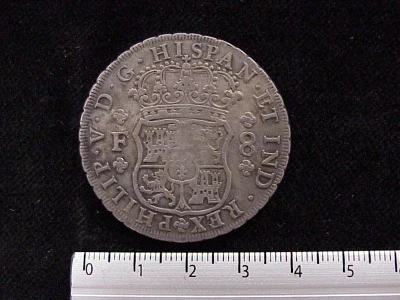
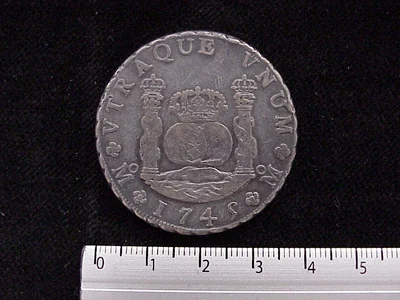
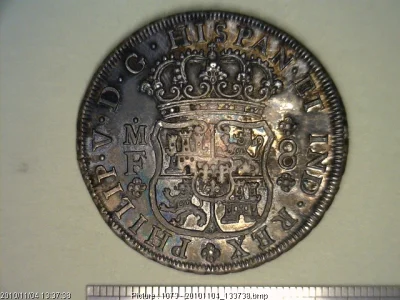
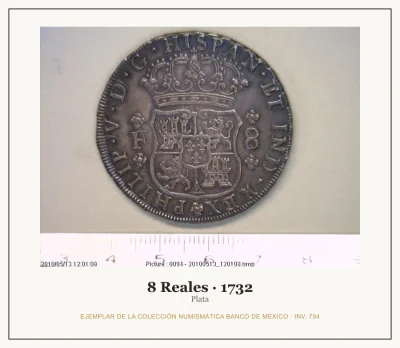
The 8 reales was the largest silver denomination of the Spanish colonial system, the famous "piece of eight" that circulated worldwide. The 1733 coin comes from what collectors call the second period of Felipe V's coinage at the Mexico City Mint (Casa de Moneda de México). These are pre-"pillar" (columnario) coins, struck by hand before the mint modernized its methods, which is part of why they draw collector interest.
What you actually have
| Feature | Detail |
|---|---|
| Denomination | 8 reales (largest silver unit) |
| Ruler | Felipe V (first Bourbon king of Spain) |
| Date | 1733 |
| Mint | Mexico City (México) |
| Metal | Silver, .917 fine |
| Weight | 27.04 grams |
| Diameter | 40 mm |
| Edge | Laureate (laurel-leaf) edge |
That weight and fineness matter to a US reader for one reason: even in rough shape, the coin has a silver floor. At roughly 0.797 troy ounces of pure silver, the melt value alone puts a baseline under it. But almost nobody sells a genuine 1733 8 reales for melt, because the collector value is higher.
What it's worth in 2026
Value on this coin swings hard with grade and eye appeal. A hand-struck colonial coin is judged on how much detail survives, how clean the surfaces are, and whether it has been cleaned, holed, or damaged.
- Heavily circulated, worn, or damaged: roughly a few hundred dollars, sometimes closer to its silver value if problems are severe.
- Mid-grade, honest wear, clear date and design: commonly the high hundreds to low four figures.
- High grade with sharp strike and original surfaces: several thousand dollars, with the best certified examples pushing higher at auction.
Early Mexico City 8 reales of this type have sold across a wide band at Heritage Auctions and Stack's Bowers, driven by grade and whether the piece is certified by NGC or PCGS. A slabbed, problem-free example will always outperform a raw coin of the same grade, because buyers pay a premium for certified authenticity.
The myth to kill
Old does not mean priceless. A 1733 coin sounds ancient to a US reader, and "nearly 300 years old" gets quoted like it means millions. It does not. Millions of pieces of eight were struck across the colonial era, and the 1733 8 reales is collectible, not ultra-rare. The pieces that hit record prices are the finest-known survivors in top grade, not average worn examples. If a listing screams "rare 300-year-old Spanish treasure worth a fortune," treat it as marketing, not a valuation.
How to tell if yours is genuine
Fakes and modern replicas of colonial 8 reales are everywhere, so verify before you get excited or before you buy.
- Weigh it. Use a jewelry scale. Genuine coins run near 27.04 grams. A significantly light coin is a red flag.
- Measure it. A caliper should read about 40 mm across.
- Check the edge. This issue has a laureate (laurel-leaf) edge, not a plain or reeded edge. A smooth edge on a supposed 1733 8 reales is a warning sign.
- Look at the engraving, mint mark, and assayer. Hand-struck coins show irregular but consistent period style. Cast fakes look mushy or have seams.
- Be suspicious of any deal below silver value. No honest seller prices a real one under melt.
When in doubt, submit it to NGC or PCGS for authentication and grading. Certification costs money but it is the difference between guessing and knowing, and it raises what buyers will pay.
Errors and varieties
Genuine mint errors (off-center strikes, die rotation, doubled strikes) can multiply value on colonial coins. But most "errors" people spot online are post-mint damage: dings, corrosion, and cleaning, not factory errors. If you think you have a true error, get a second opinion before assuming it adds a premium.
Where to sell it
- A verified numismatic dealer who can examine the coin in hand and appraise it on the spot. Get more than one quote.
- Major auction houses (Heritage, Stack's Bowers) if the coin is high grade or certified. Auction reaches serious collectors and usually gets the strongest price for a good example.
- Certified-coin marketplaces once it is graded by NGC or PCGS.
Before you sell anything: photograph the front, back, and edge in good light, know the weight, and compare against the price band above. Do not dump it to the first offer on a social-media group. Colonial silver is easy to undersell if you do not know the grade.
Not sure what grade yours falls in, or whether it's the real thing? Post clear photos of the obverse, reverse, and edge in the Pesoteca forum and let collectors who handle these coins weigh in before you sell.
Historical context
This piece belongs to the reign of Felipe V II of Spain (1724-1746 (second stage)). He returned to the throne in 1724 after the premature death of Luis I. His second period ends with the monarch's death in 1746.
The government of New Spain in 1733 was under Juan de Acuña, Marqués de Casafuerte, the first full year of pillar coinage.
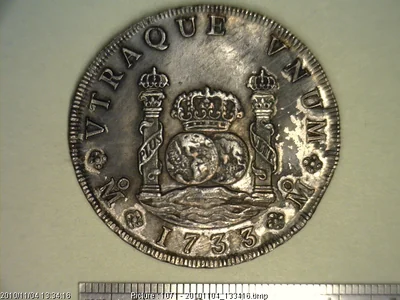
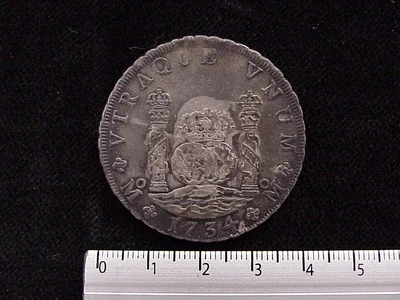
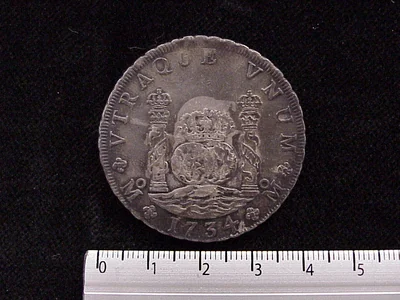
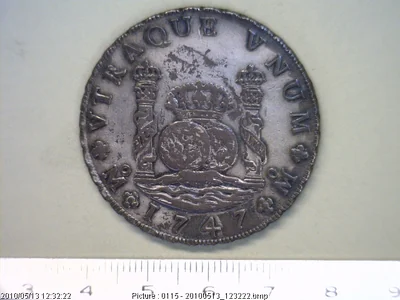
The numismatic type of the piece is pillar (columnario), officially introduced in New Spain in 1732. The reverse shows two crowned globes between the Pillars of Hercules with the motto PLVS VLTRA, and for the first time the coin was struck on a screw press with a laureate edge, which reduced the fraudulent clipping of silver and made the pillar real the most trusted trade coin of its time.
The Mexico mint formally introduced the mechanized striking of pillar reales in 1732, and from then on the crowned Mo mark was accompanied by the assayer's initials. Production was enormous, exported as trade money to the Philippines, China, Protestant Europe, and the 13 English colonies. The dies were signed by the Mexico mint assayer active in the period, the official charged by the Real Hacienda with certifying that the silver fineness met the viceregal standard.
Colonial catalogs trace this piece within the families of the Mexico Real de a ocho, with prices that respond to rarity by year and assayer's signature.
A year of consolidation of the pillar real, with a laureate edge that hindered the fraudulent clipping of silver.
This piece belongs to the era
Colonial / Virreinato →Explore all the Mexican coins of this era, their historical context and how they connect to the monetary system of the period.
Value range of this piece
Market estimate: $744 - $3,133 MXN depending on the grade of preservation (typical range between a circulated and an uncirculated piece).
See the full breakdown by grade (VG, F, VF, EF, AU, MS-60, MS-63, MS-65) for the whole series →
Other denominations from 1733
8 Reales Coloniales · Plata 0.900
Same denomination, other years
8 reales Plata 0.900 · 8 Reales Coloniales
Frequently asked questions
How much is a 1733 Felipe V 8 reales worth?
It depends almost entirely on grade. A heavily worn or damaged example runs from a few hundred dollars, sometimes near its silver value. Mid-grade coins with honest wear typically bring the high hundreds to low four figures, and sharp, high-grade certified examples can reach several thousand dollars. The coin contains about 0.797 troy ounces of pure silver, which sets a price floor, but genuine pieces almost always sell above melt for collector value.
Is the 1733 Mexico 8 reales rare?
It is collectible but not ultra-rare. Huge numbers of pieces of eight were struck during the colonial era, so an average worn example is not a fortune. Real rarity, and record prices, belongs to the finest-known survivors in top certified grades. Old age alone does not make this coin worth millions, despite what some listings claim.
Where can I sell a 1733 Felipe V 8 reales?
For the best result, use a verified numismatic dealer who can appraise it in hand, or a major auction house like Heritage or Stack's Bowers for a high-grade or certified coin. Once graded by NGC or PCGS, certified-coin marketplaces are also strong options. Photograph the front, back, and edge, know the weight, and get more than one offer before selling. Avoid taking the first low bid on a social-media group.
How do I tell if my 1733 8 reales is genuine?
Weigh it (genuine coins run near 27.04 grams), measure it (about 40 mm across), and confirm it has a laureate laurel-leaf edge rather than a plain or reeded one. Check the engraving style, mint mark, and assayer against known genuine examples, since cast fakes look mushy or show seams. Be suspicious of any price below silver value. For certainty, submit it to NGC or PCGS for authentication.
Conversation
0 comments
Sources
Images for informational and educational purposes, attributed to their original source. Reference values; the real price depends on the grade, the specific variant and demand.
Loading comments…