
8 Reales 1733 Felipe V (Mexico Mint): What It's Worth
The 8 Reales 1733 Felipe V : What It's Worth is worth between $729 and $3,070 MXN depending on its grade of preservation.
Prices updated: August 2026
Viceroyalty · Mexico City Mint · Assayer F
Viceroyalty · Mexico City Mint · Assayer F
The 8 Reales 1733 Felipe V : What It's Worth is worth between $729 and $3,070 MXN depending on its grade of preservation.
Prices updated: August 2026
How much is the 8 Reales 1733 Felipe V (Mexico Mint): What It's Worth worth?
The estimated value of the 8 Reales 1733 Felipe V (Mexico Mint): What It's Worth ranges from $729 (circulated, XF) up to $3,070 (official blister pack), with $2,219 as a reference for an uncirculated (UNC) piece. The estimate is based on the official mintage and the historical behavior of the family.
The real price depends on four factors: the grade of preservation (a circulated piece is worth the low end of the range; an uncirculated one, or one still in its official blister pack, the high end), the finish (satin vs mirror/proof), the rarity within the series based on the mintage, and the metal spot price on the day of the deal when the piece is silver or gold. Check the value-by-grade table above and compare with equivalent pieces before buying or selling.
Where to buy or sell this coin?
Browse the national directory of numismatic shops or the community forum to trade directly with other collectors.
Description
If you inherited a heavy silver coin dated 1733 with a Spanish king's name on it, you likely have a Felipe V 8 Reales struck at the Mexico City Mint. The good news: this is genuine 0.900 silver from the Spanish colonial period, and clean examples routinely sell in the hundreds of dollars, not the few dollars most old coins bring.
This is the coin the world called the "piece of eight," the silver dollar of the Spanish Empire that circulated across the Americas, Europe, and Asia. In 2026, colonial 8 Reales remain one of the most liquid and collectible Mexican coin types, which means yours has a real market whether you keep it or sell it.
What you actually have
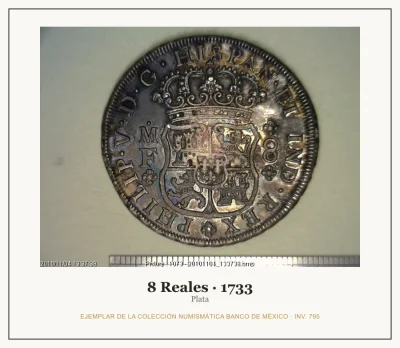
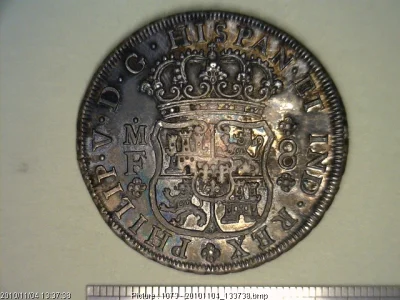
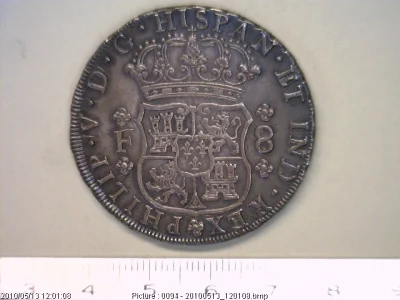
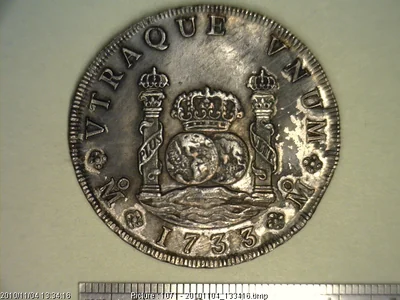
The 8 Reales was the largest circulating silver coin of the Spanish colonial system. This particular issue was struck in 1733 under King Felipe V (Philip V) at the Casa de Moneda de México, the Mexico City Mint, with assayer mark F. It belongs to the broader colonial 8 Reales series.
Hard specifications, exactly as recorded:
- Metal: Silver, 0.900 fine (90 percent pure silver)
- Weight: 26.49 grams
- Diameter: 40 millimeters
- Edge: Laureate (decorated, not plain)
- Mint: Mexico City (Ceca México)
- Assayer: F
- Year: 1733, a single year of issue
The 1733 date matters. This falls in the transitional era of early milled coinage from Mexico. Depending on the exact type, a 1733 8 Reales can be either a cob-style piece or an early pillar dollar, and that distinction affects value significantly. Have the design confirmed before you assume a price.
What it's worth in USD
Value is driven by condition (grade), authenticity, and how much silver the market wants that day. As a floor, the coin contains roughly 0.766 troy ounces of pure silver, so it never drops below its melt value. But collectors pay far more than melt for these because of the history and demand.
Honest ranges for a genuine 1733 Mexico Mint 8 Reales:
| Condition | Approximate value (USD) |
|---|---|
| Heavily worn / damaged (still silver) | 60 to 150 |
| Circulated, clear design | 150 to 500 |
| High grade, sharp detail | 500 to 2,000 |
| Exceptional / certified top grade | 2,000 and up |
Wide ranges are the honest answer here. A worn, cleaned, or corroded example sits near the bottom. A crisp, original-surface coin certified by NGC or PCGS can bring several times more. Early colonial silver in top preservation is genuinely scarce, and that scarcity is what pushes strong prices, not the age alone.
The myth to ignore
Being nearly 300 years old does not automatically make this coin worth thousands. Millions of 8 Reales were struck across the colonial period precisely because they were the working currency of a global empire. A common, worn 8 Reales is worth its silver plus a modest collector premium. What commands real money is a well-preserved example, a rare mint-assayer combination, or a verified striking variety. Age is the story; condition and rarity are the price.
How to tell if yours is genuine
Spanish colonial silver is heavily counterfeited, so verify before you value.
- Weigh it. A genuine coin should be very close to 26.49 grams. Underweight usually means a fake or a heavily worn/damaged piece.
- Measure it. Diameter should be about 40 millimeters.
- Check the edge. This issue has a laureate (decorated) edge. A plain or seamed edge is a warning sign.
- Ping test. Real silver produces a high, sustained ring when tapped gently. A dull, short thud suggests base metal.
- Get it certified. For any coin you think is worth more than a few hundred dollars, submission to NGC or PCGS is the definitive answer. They authenticate, grade, and seal the coin, which also raises its resale value.
If you are unsure about the design type, compare against the conservation grading guide and post clear photos of the obverse, reverse, and edge for a second opinion.
Where to sell it
Because this is a precious-metal coin with a global collector base, you have real options:
- Certified auction houses (Heritage, Stack's Bowers) for high-grade or certified examples. This is where colonial rarities bring their strongest prices.
- Established coin dealers who will appraise on the spot. Get more than one offer.
- The Pesoteca buy/sell forum, where collectors trade directly and you avoid dealer markup.
Before you sell, photograph the coin front, back, and edge, note the exact weight, and compare against the ranges above. Do not accept the first lowball offer on a social media marketplace, and never ship or pay without verifying the coin in person or through a certified holder.
Have a 1733 8 Reales sitting in a drawer and not sure if it's a cob or a pillar type? Post your photos in the Pesoteca forum and let collectors who handle these weekly help you pin down the type and a fair number.
Historical context
This piece belongs to the reign of Philip V II of Spain (1724-1746 (second period)). He returned to the throne in 1724 after the premature death of Louis I. His second period closes with the monarch's death in 1746.
The government of New Spain in 1733 was in the hands of Juan de Acuña, Marquis of Casafuerte, the first full year of pillar minting.
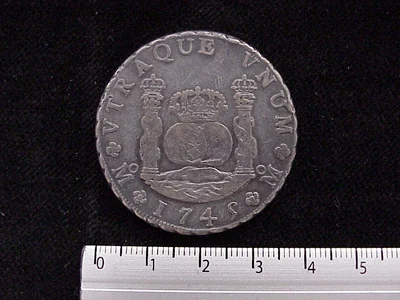
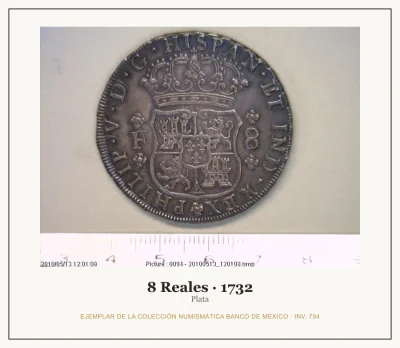
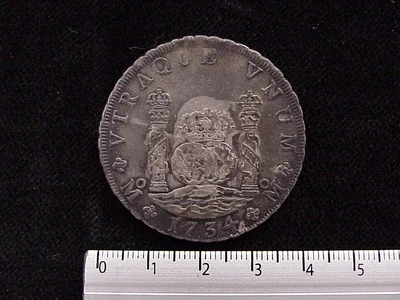
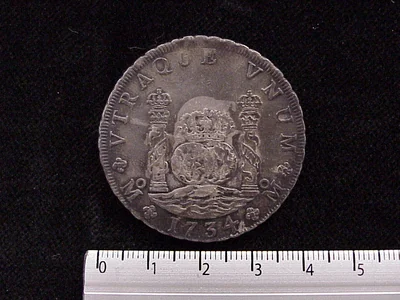
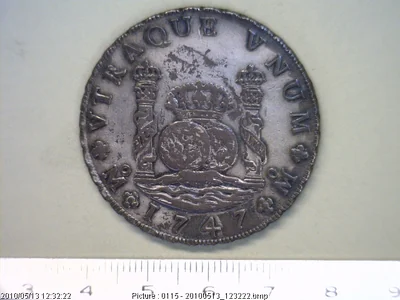
The numismatic type of the piece is pillar (columnario), officially introduced in New Spain in 1732. The reverse shows two crowned globes between the Pillars of Hercules with the motto PLVS VLTRA, and for the first time the coin was struck on a screw press with a laureate edge, which reduced fraudulent clipping of silver and made the pillar real the most trusted trade coin of its era.
The Mexico mint formally introduced the mechanized minting of pillar reals in 1732, and from then on the crowned Mo mark was accompanied by the assayer's initials. Production was enormous, exported as money of account to the Philippines, China, Protestant Europe, and the 13 English colonies. The assayer's initials declared on the piece are F, an official of the Royal Treasury charged with certifying the silver fineness (0.930 and later 0.903) per the viceregal standard.
The Krause catalog references this piece under KM#103, useful for cross-checking the listing against international auction records.
A year of consolidation of the pillar real, with a laureate edge that hindered fraudulent clipping of silver.
This piece belongs to the era
Colonial / Virreinato →Explore all the Mexican coins of this era, their historical context and how they connect to the monetary system of the period.
Value range of this piece
Market estimate: $729 - $3,070 MXN depending on the grade of preservation (typical range between a circulated and an uncirculated piece).
See the full breakdown by grade (VG, F, VF, EF, AU, MS-60, MS-63, MS-65) for the whole series →
Other denominations from 1733
8 Reales Coloniales · Plata 0.900
Same denomination, other years
8 reales Plata 0.900 · 8 Reales Coloniales
Frequently asked questions
How much is a 1733 Felipe V 8 Reales worth?
It depends heavily on condition. A worn but genuine silver example typically runs 60 to 150 USD, a clear circulated piece 150 to 500 USD, and a high-grade or certified coin can reach 2,000 USD or more. The coin never drops below its silver melt value (about 0.766 troy ounces of pure silver), so it always has a floor.
Is the 1733 8 Reales rare?
Millions of 8 Reales were struck across the colonial period, so a worn example is not rare, it's common. What is genuinely scarce is a high-grade coin with original surfaces, or a specific mint-assayer or striking variety. Early colonial silver in top preservation commands strong prices; a common circulated piece brings its silver value plus a modest premium.
How do I know if my 1733 8 Reales is genuine?
Start with the specs: it should weigh close to 26.49 grams, measure about 40 millimeters, and have a decorated (laureate) edge. Real silver rings high and long when tapped gently; fakes sound dull and short. For anything you believe is worth several hundred dollars or more, submit it to NGC or PCGS for authentication and grading. Colonial silver is heavily counterfeited, so verify before you value.
Where can I sell a 1733 Felipe V 8 Reales?
For high-grade or certified coins, certified auction houses like Heritage or Stack's Bowers get the strongest prices. For general examples, established coin dealers will appraise on the spot, or you can trade directly with collectors on the Pesoteca buy/sell forum to avoid markup. Photograph the obverse, reverse, and edge, confirm the weight, and get more than one offer before selling.
Conversation
0 comments
Sources
Images for informational and educational purposes, attributed to their original source. Reference values; the real price depends on the grade, the specific variant and demand.
Loading comments…